D66 Raja
D66 Raja Durian
Perak's Vintage Royalty In Every Sweet Bite
Registered in 1940 and originating from the historic orchards of Perak, D66, officially known as Durian Raja, is a quintessential vintage Malaysian cultivar. Treasured by heritage enthusiasts for its classic profile, this rare clone features a yellow, creamy aril wrapped around a prominent core, offering a traditional, smooth sweet flavor that evokes the authentic tastes of early Malaysian durian cultivation. Though less common than modern commercial varieties, Durian Raja remains a captivating piece of local botanical history for true durian connoisseurs.
The Origin of D66 Durian
Official registration records from the Department of Agriculture (Jabatan Pertanian Malaysia) show that D66, locally known as Durian Raja, originated in Perak and was registered in 1940. As one of the earliest clones cataloged during Malaysia’s pre-independence era of agricultural classification, Durian Raja reflects the traditional heritage of old-growth kampung orchards in Perak, where local farmers selected individual trees for systematic registration based on unique physical traits, growth habits, and yield characteristics.
Characteristics of D66 Raja Durian

外观特征
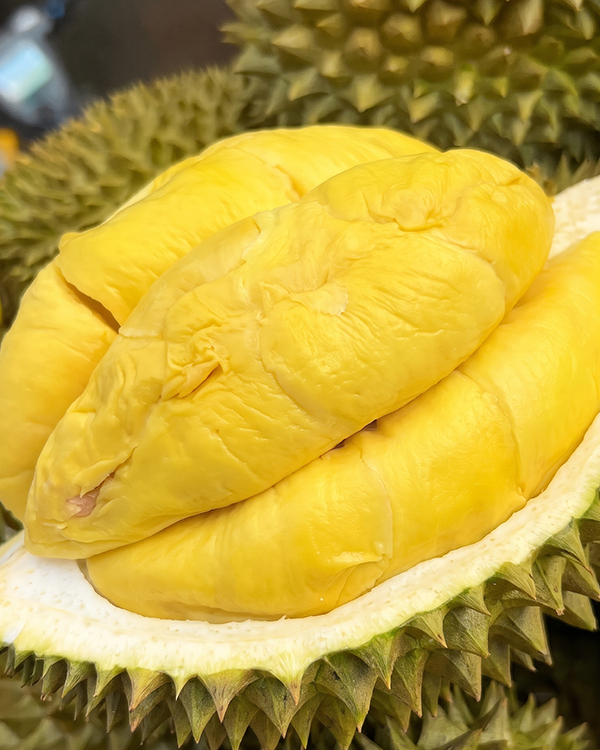
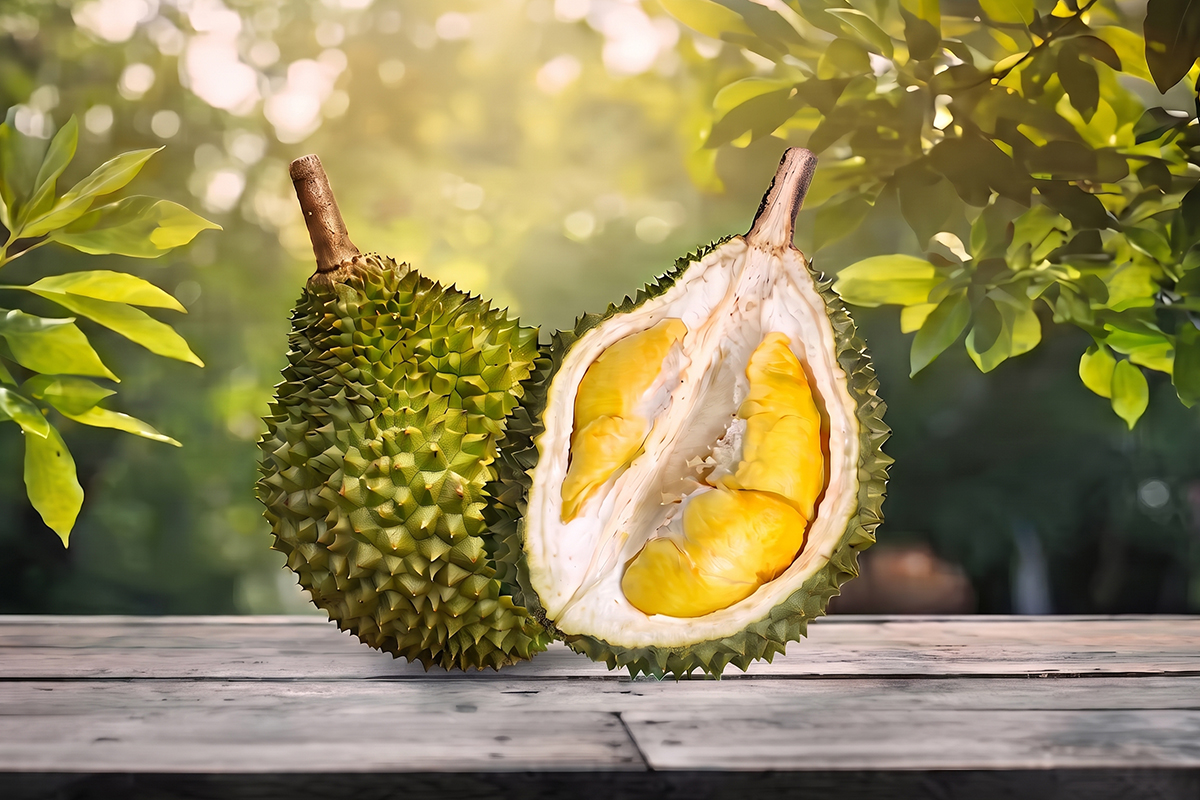
The physical appearance of D66 (Durian Raja) reflects the distinctive traits of vintage Malaysian clones. The fruit is typically globose in shape, encased in a thick, yellowish-green husk guarded by large, prominent thorns. Despite its sturdy exterior, the shell is remarkably easy to split open compared to tighter-husked varieties. Inside, the fruit opens to reveal pale yellow arils resting within its chambers, displaying the classic physical structure characteristic of mid-20th-century kampung durians.

香气
When opened, D66 (Durian Raja) emits a mild to moderate aroma that is distinctly gentle compared to the sharp, pungent scent of heavy modern clones. It carries a pleasant, clean fragrance with subtle sweet and earthy notes—offering an understated aromatic profile that invites you in without overpowering the senses, characteristic of traditional vintage varieties.

口感与质地:
In terms of taste and texture, D66 (Durian Raja) delivers a classic, nostalgic eating experience. Its pale yellow flesh offers a buttery, creamy consistency that melts smoothly on the palate, balanced by a gentle, clean finish. The flavor profile leans primarily toward a rich, pleasant sweetness with subtle fatty nuances rather than heavy bitterness, making it a delightfully light and approachable treat for fans of heritage cultivars.
Interesting Facts About D66 Durian
Health Benefits of D66
Like many traditional Malaysian varieties, D66 (Durian Raja) offers a wholesome range of natural health benefits alongside its rich heritage flavor. The pale yellow arils are packed with dietary fiber, which aids digestion and promotes smooth gastrointestinal health. D66 is also a great source of natural carbohydrates and essential minerals like potassium and magnesium, providing an immediate energy boost while supporting healthy heart function and blood pressure regulation. Additionally, its natural abundance of B-complex vitamins and antioxidants helps strengthen the immune system and combat oxidative stress, making this vintage cultivar a nourishing as well as delicious treat when enjoyed in moderation.
What's The Best Time for D66 Durian?
Like most classic Peninsular Malaysian cultivars originating from Perak, D66 (Durian Raja) follows the country’s primary mid-year harvest cycle. The best time to experience D66 at its peak freshness is during the main durian season from mid-June through August, with July typically serving as the optimal window when Perak’s legacy orchards yield their finest harvest. Because D66 is primarily preserved in older kampung orchards rather than large-scale commercial plantations, tracking down this rare vintage variety requires timing your visits to local heritage stalls during these peak mid-summer months when small-batch harvests make their brief appearance.
种植与收割
生长条件
The D66 Durian Raja grows best in Malaysia’s tropical climate, thriving in warm, humid conditions with consistent rainfall and ambient temperatures ranging around 24–32°C. Originally established in the heritage orchards of Perak, it prefers deep, well-drained, fertile soils that are slightly acidic to neutral, along with full sunlight exposure to support optimal flowering and fruit formation. Trees are recommended to be spaced approximately 10–12 meters apart to encourage healthy canopy expansion, optimize airflow, and reduce fungal disease risks. Regular irrigation during dry spells, coupled with balanced organic fertilization, proper canopy pruning, and active pest management, ensures D66 trees produce high-quality globose fruits with their signature pale yellow arils and classic, sweet-bitter flavor profile.
种植过程
The cultivation of D66 Durian Raja begins with vegetative propagation—primarily through grafting or budding—to preserve the specific genetic traits of the vintage parent tree, ensuring young saplings are true-to-type before being transplanted into deep, fertile soil with adequate spacing for mature canopy growth. Throughout its development, which sees grafted trees begin bearing fruit in about 4 to 6 years, rigorous orchard care is necessary, including controlled watering routines with a brief dry spell to stimulate flower bud initiation, balanced nutrient supply during flushing and fruit set, and targeted pruning to prevent disease. Finally, to ensure D66 reaches its full creamy consistency, pale yellow hue, and signature sweet flavor with subtle bitterness, the fruits are traditionally allowed to fully ripen on the branch and drop naturally before harvesting.
收割方法
D101 榴莲在果实自然脱落时采摘,这表明它们已经成熟,可以食用了。为了保持新鲜度,确保消费者品尝到风味和口感最佳的榴莲,我们会在清晨采摘。
烹饪用途

传统吃法
With its pale yellow arils, creamy consistency, and prominent sweetness paired with a subtle hint of bitterness, D66 (Durian Raja) translates beautifully into traditional Malaysian culinary staples. Its natural sweetness makes it an ideal base for heritage desserts such as Pengat Durian and Serawa Durian, where the flesh melts effortlessly into warm coconut milk and gula Melaka to create a comforting, fragrant sweet soup. Furthermore, the distinct vintage flavor profile of D66 provides an excellent foundation for fermented delicacies like Tempoyak, yielding a rich, savory-tangy paste that enhances classic Perak dishes like Gulai Tempoyak Ikan Patin and traditional Sambal Tempoyak.

创新烹饪方法
In contemporary dessert kitchens and artisanal bakeries, D66 (Durian Raja) brings a delightful vintage twist to modern fusion creations. Its smooth, buttery texture and sweet, lightly bitter undertones make it a superb ingredient for silky durian gelato, soft-serve ice cream, and chilled mousses where its pale yellow hue crafts an elegant presentation. Pastry chefs also incorporate D66's fragrant flesh into delicate cream puffs, mille-crêpe cakes, and chilled durian rolls, allowing the fruit's natural sweetness to shine through light dairy components without overpowering the palate.
总结
As a treasured piece of Malaysia’s botanical heritage, D66 (Durian Raja) stands as a testament to the timeless appeal of vintage cultivars. From its globose, yellowish-green shell to its pale yellow arils delivering a rich sweetness with a subtle touch of bitterness, Durian Raja offers a nostalgic tasting experience that modern commercial varieties rarely replicate. Whether enjoyed fresh off the orchard floor during Perak’s mid-summer harvest or incorporated into traditional and contemporary culinary creations, D66 remains a remarkable heirloom clone that continues to captivate durian purists and heritage enthusiasts alike.
常见问题
What makes D66 Durian Raja stand out from its counterparts?
Registered in 1940, D66 Durian Raja is a rare vintage Malaysian cultivar that stands out for its globose shape, yellowish-green thick husk, and pale yellow arils. Unlike many heavy, strongly bitter modern commercial clones, D66 offers a classic, nostalgic profile featuring a smooth, buttery texture with a mix of prominent sweetness and a subtle, gentle sense of bitterness.
When is the best time to find D66 Durian Raja?
The optimal time to find fresh D66 Durian Raja is during Peninsular Malaysia’s main mid-year durian season, which runs from mid-June through August, peaking in July. Because it is primarily cultivated in older heritage orchards in Perak rather than large commercial plantations, availability is limited and best found through specialized heritage fruit stalls during peak harvest months.
What are the health benefits of consuming D66 Durian Raja?
Consuming D66 Durian Raja in moderation provides a rich source of dietary fiber for digestive health, along with natural carbohydrates for sustained energy. It is packed with essential minerals like potassium and magnesium that support cardiovascular function, as well as immune-boosting B-complex vitamins and antioxidants.
How do I use D66 Durian Raja durians in culinary dishes?
Thanks to its sweet flavor and smooth texture, D66 works wonderfully in traditional Malay desserts like Pengat Durian or Serawa Durian, as well as savory fermented Tempoyak. For modern culinary applications, its pale yellow flesh integrates seamlessly into durian ice creams, gelatos, cream puffs, mille-crêpe cakes, and chilled mousses.
Where does the D66 Durian Raja durian originate from?
D66 Durian Raja originates from the historic kampung orchards of Perak, Malaysia. It was officially cataloged and registered by the Malaysian Department of Agriculture (Jabatan Pertanian) in 1940, making it one of the country’s earliest officially classified clone varieties.
其他榴莲品种

D200 黑刺

D197 猫山王

D175 红虾

D24 XO

D28 奶油王

D198 金凤

D163 葫芦

D13 金包

太原

D160 竹脚

D101 红肉

D158 昌平

老太婆

D2 Dato Nina

D10 Durian Hijau

D165 Green Skin

D18 Sunset

D3 Second Son

D164 Red Flesh

D1 Durian

D4 (Repok B2)

D5 Ibrahim

D6 Samsu

D7 Durian

D8 Durian

D11 Durian

D29 Durian

D30 Ho Keun No.1

D33 Sakai No. 1

D38 Haji Abu

D53 Durian

D63 Durian