D38 Haji Abu
D38 Haji Abu Durian
A Rare Vintage From Negeri Sembilan's Heritage
Officially registered on August 11, 1939, as Haji Abu in Kuala Pilah, Negeri Sembilan, D38 stands as a remarkable pre-independence heritage clone from Malaysia’s early agricultural registry. Unlike modern sweet and ultra-creamy cultivars, this vintage rarity yields a distinctive white to pale creamy flesh with a coarser, more fibrous texture. While rarely found in commercial orchards today, D38 offers a fascinating glimpse into the historical roots of local durian cultivation, making it a true collector’s piece for heritage enthusiasts.
The Origin of D38 Durian
The origins of D38 trace back to Kuala Pilah, Negeri Sembilan, where it was first selected and submitted by Sidak Ishak. On August 11, 1939, it officially entered Malaysia’s agricultural archives under the registered name Haji Abu, making it one of the earliest heritage cultivars cataloged by the Department of Agriculture during the pre-independence era. Deeply rooted in Negeri Sembilan’s early orchard landscape, D38 stands as an authentic historic entry from the foundational days of Malaysian durian classification.
Characteristics of D38 Durian

外观特征
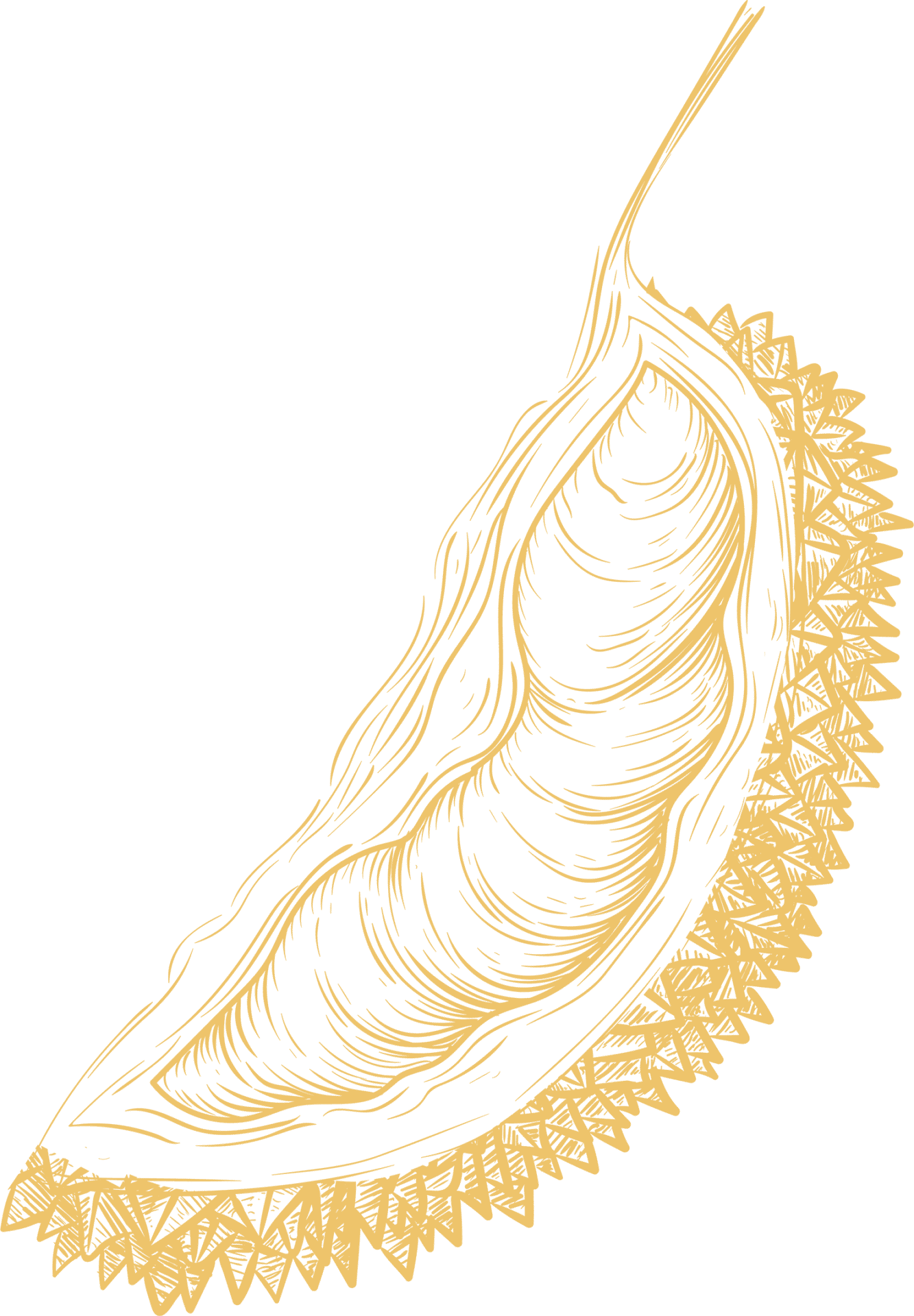
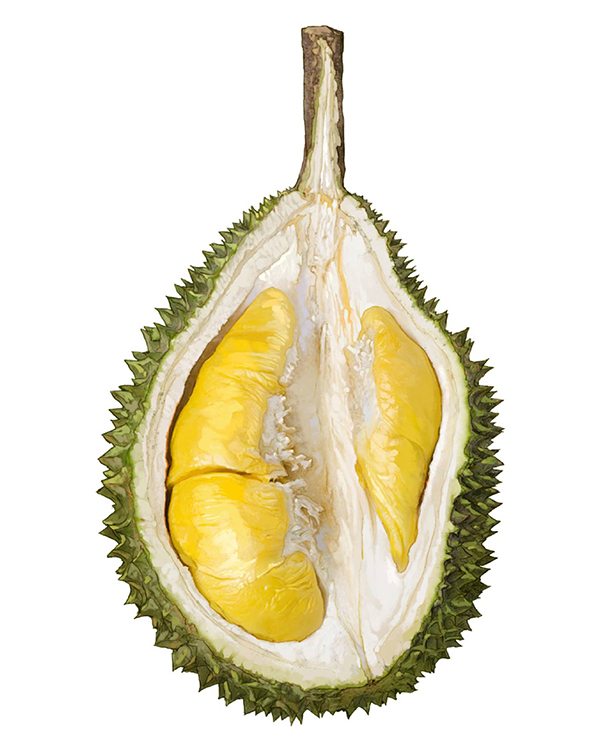
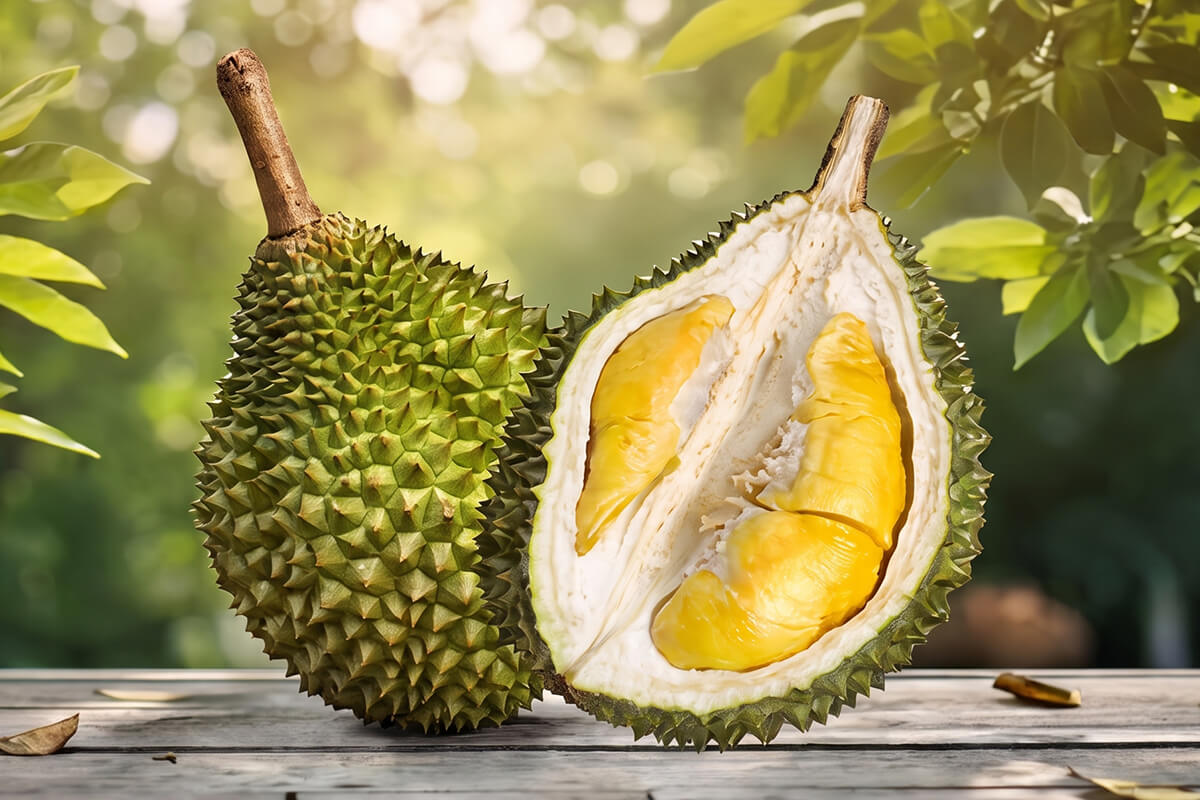
Visually, D38 stands apart from modern commercial cultivars as a large, impressive fruit with an unassuming, rustic look. Encased in a thick, brownish-green husk studded with standard medium-to-large thorns, the fruit conceals thick, white flesh inside rather than the deep golden hue typical of today’s popular clones. The arils wrap around the seeds with a distinctively firm, fibrous structure, offering an authentic glimpse into the classic aesthetic of pre-independence Malaysian heritage durians.

香气
The aroma of D38 carries a distinctly classic, intense profile. It emits a strong, pungent fragrance with an unmistakable punch that immediately fills the room. This bold olfactory footprint reflects its heritage origins with a sharp, traditional bouquet that signals its rich flavor profile before you even take a bite.

口感与质地:
On the palate, D38 delivers a nostalgically classic profile defined by a sharp, prominent bitterness with minimal sweetness. Its texture is uniquely firm and noticeably fibrous, with thick arils offering a distinctively coarse, substantial bite that sets it apart from the silky, custard-like flesh of modern varieties. Each aril provides a satisfying, traditional chew, presenting a rich, old-world taste that appeals directly to lovers of authentic heritage durians.
Interesting Facts About D38 Durian
Health Benefits of D38
While heritage durians like D38 are primarily celebrated for their unique flavor profile, they also offer a rich nutritional payload packed with essential nutrients and bioactives. The thick, fibrous white arils are a natural source of dietary fiber, which supports healthy digestion and sustained energy release without drastic blood sugar spikes. Furthermore, D38 contains a robust complex of essential vitamins and minerals—including vitamin C, potassium, B vitamins, and dietary antioxidants—which help combat oxidative stress, support immune function, and promote cardiovascular health. Enjoyed in moderation, this historic clone delivers a wholesome balance of dense energy, vital micronutrients, and traditional flavor.
What's The Best Time for D38 Durian?
The prime window to experience D38 at its absolute peak is during Malaysia's main mid-year durian season, running from June to August. Because D38 originates from Negeri Sembilan, its harvest aligns closely with the region's primary fruiting cycle, reaching its optimal taste and texture around July. A smaller, minor harvest window can also occur between December and January depending on localized dry spells. Catching D38 during these peak harvest months ensures you enjoy its signature bitter profile, thick white arils, and strong aroma at their absolute freshest right off the tree.
种植与收割
生长条件
The D38 Haji Abu durian grows best in Malaysia’s tropical climate, thriving in warm, humid conditions with consistent rainfall and temperatures around 24–32°C. It prefers deep, well-drained, fertile soils that are slightly acidic to neutral, along with full sun exposure to support healthy flowering and fruit development. Trees should be spaced about 10–12 meters apart to ensure good airflow and reduce disease risk. Regular watering during dry periods, combined with proper fertilization, pruning, and pest management, helps D38 trees produce large, high-quality fruits with their signature thick, fibrous white arils, strong aroma, and distinctively bitter flavor profile.
种植过程
The cultivation of the D38 Durian, or ‘Haji Abu,’ begins with grafting to guarantee the desirable traits of the parent tree, ensuring the young saplings are genetically true-to-type before being planted in well-drained, deep loamy soil at wide spacings to allow for full canopy development. Throughout the maturation process, which sees grafted trees begin to fruit within 4 to 6 years, intensive orchard management is essential, requiring precise water management (including a crucial dry period to induce flowering), targeted fertilization to support vegetative and reproductive phases, and rigorous pruning and pest control to maintain tree health. Finally, to ensure the signature thick, fibrous texture, large fruit size, and distinctively bitter flavor profile of the D38 are fully achieved, the fruit is traditionally allowed to fully ripen on the branch and drop naturally before collection.
收割方法
D101 榴莲在果实自然脱落时采摘,这表明它们已经成熟,可以食用了。为了保持新鲜度,确保消费者品尝到风味和口感最佳的榴莲,我们会在清晨采摘。
烹饪用途

传统吃法
Owing to its prominent bitterness and firm, fibrous white arils, D38 serves as an exceptional ingredient in traditional Malaysian culinary preparations. The clone's low moisture content and dense body make its flesh ideal for fermentation into tempoyak, where its distinct bitter notes balance the tangy acidity of traditional fish curries like Patin Tempoyak. Additionally, its thick, structured flesh holds up remarkably well when cooked, making it a favored choice for rich heritage desserts like pengat durian or serawa, where the cooked fruit infuses a deep, old-world aromatic depth into warm coconut milk and palm sugar without dissolving into paste.

创新烹饪方法
In contemporary kitchens and artisan patisseries, D38 offers pastry chefs and mixologists a unique playground thanks to its bold, bitter character and striking white flesh. Its low sweetness and firm, fibrous structure make it a standout component for savory fusion dishes, such as artisanal durian-infused compound butters, gourmet pizza toppings, or savory croquettes where a heavy sugar profile would otherwise overpower the palate. Modern dessert creators also leverage D38's pale color and intense, punchy aroma to craft contrasting visual and flavor profiles—featuring it in modern durian gelato, dark chocolate-durian truffles, or delicate choux pastries where its sharp bitterness cuts cleanly through rich, sweet creams.
总结
Whether you are a seasoned connoisseur seeking rare vintage clones or an adventurous foodie eager to explore Malaysia’s rich fruit heritage, D38 Haji Abu offers an unforgettable journey back in time. With its bold size, intense aroma, striking white flesh, and uncompromisingly bitter flavor profile, this 1939 classic stands as a proud testament to the foundational era of Malaysian durian cultivation. Experiencing D38 is more than just tasting a fruit; it is savoring a living piece of agricultural history that continues to intrigue and delight true durian enthusiasts today.
常见问题
What makes D38 durian stand out from its counterparts?
Unlike modern, ultra-sweet varieties with golden flesh, D38 stands out for its large fruit size, striking pale white arils, and firm, noticeably fibrous texture. It delivers an uncompromisingly sharp, bitter flavor profile accompanied by a heavy, intense aroma that immediately distinguishes it as an authentic pre-independence heritage clone.
When is the best time to find D38 durians?
The prime season for D38 aligns with Malaysia’s main mid-year durian harvest, running from June to August, with peak availability typically around July. A smaller secondary harvest window may also occur between December and January, depending on local weather conditions.
What are the health benefits of consuming D38 durians?
D38 is rich in dietary fiber from its thick arils, which aids digestion and helps stabilize energy release. It is also packed with essential micronutrients, including vitamin C, B-complex vitamins, potassium, and antioxidants, which support immune function and help fight oxidative stress when enjoyed as part of a balanced diet.
How do I use D38 durians in culinary dishes?
Thanks to its firm texture and pronounced bitterness, D38 is ideal for traditional cooked dishes like tempoyak (fermented durian paste) and rich coconut-based desserts like pengat durian. In modern kitchens, its low sweetness makes it a great candidate for savory applications like durian-infused compound butter or as a bitter contrast in dark chocolate truffles and gelato.
Where does the D38 durian originate from?
D38 originates from Kuala Pilah, Negeri Sembilan. It was officially registered with Malaysia’s Department of Agriculture under the name Haji Abu on August 11, 1939, after being submitted by Sidak Ishak.
其他榴莲品种

D200 黑刺

D197 猫山王

D175 红虾

D24 XO

D28 奶油王

D198 金凤

D163 葫芦

D13 金包

太原

D160 竹脚

D101 红肉

D158 昌平

老太婆

D2 Dato Nina

D10 Durian Hijau

D165 Green Skin

D18 Sunset

D3 Second Son

D164 Red Flesh

D1 Durian

D4 (Repok B2)

D5 Ibrahim

D6 Samsu

D7 Durian

D8 Durian

D11 Durian

D29 Durian

D30 Ho Keun No.1

D33 Sakai No. 1