D30 Ho Keun No.1
D30 Ho Keun No.1 Durian
A Classic 1939 Heritage Taste Of Rich, Golden Sweetness
Officially registered in 1939, D30, also known locally as Ho Keun No. 1, stands as a true heirloom piece of Malaysian agricultural history originating from Pahang. First cataloged long before modern commercial hybrids dominated the market, this classic cultivar captures the nostalgic essence of old-school durian kampung. Encased within its signature heart-shaped shell lies its pale flesh that delivers a delightfully rich profile. While rare today and prized mainly by heritage enthusiasts, tasting D30 offers an authentic glimpse into the foundational flavors that paved the way for Malaysia’s legendary durian legacy.
The Origin of D30 Durian
The story of D30 began in the lush agricultural landscapes of Bentong, Pahang, where it was first cultivated and selected for its outstanding traditional flavor profile. Recognized for its unique quality during the early expansion of Malaysian fruit registration, it was officially cataloged by the Department of Agriculture on November 16, 1939. Given the local name Ho Keun No. 1, this vintage clone represents one of the earliest documented efforts to preserve and standardise Malaysia’s premier native durians, carving out its place as a foundational piece of Pahang’s rich fruit-growing history.
Characteristics of D30 Durian

外观特征
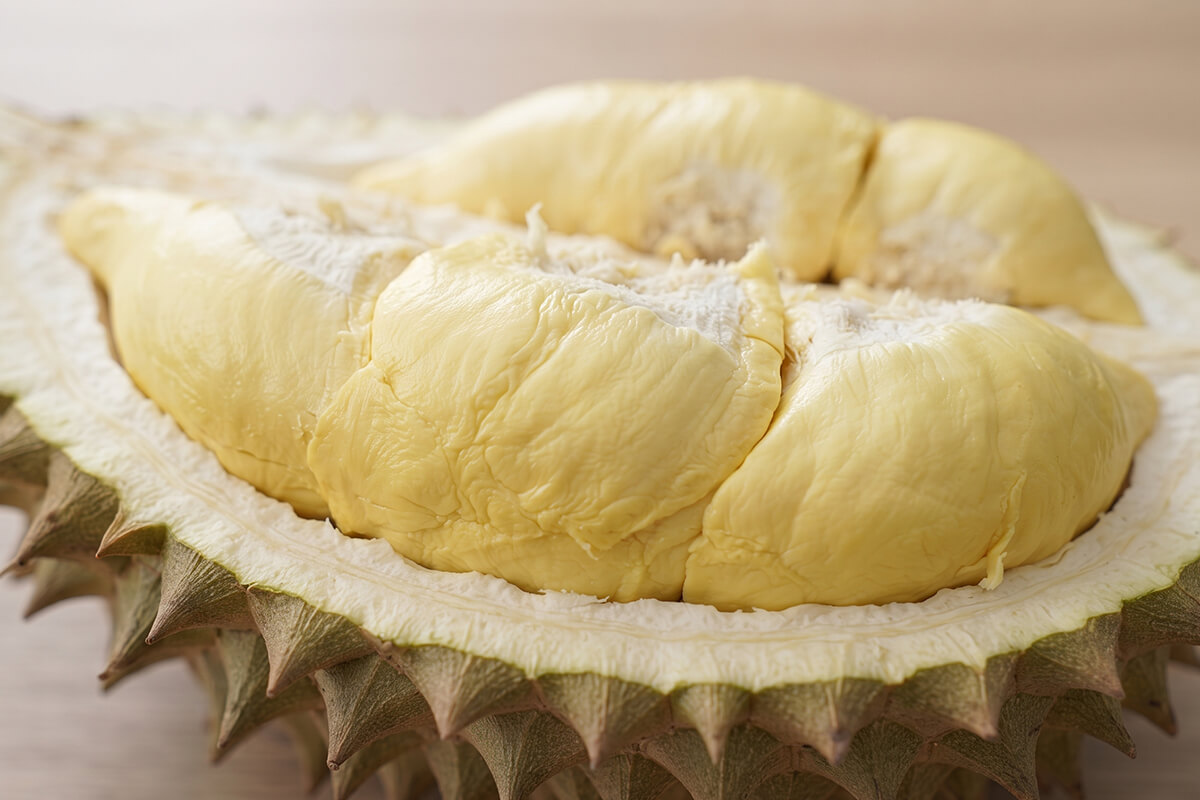
The D30 durian is distinguished by its classic ovate, egg-shaped frame clad in a dense coat of sharp, green-to-brownish thorns. Cracking open the tough exterior reveals pale yellow flesh with a smooth, glossy sheen wrapping around unusually large seeds. Because it features a thinner layer of aril compared to modern high-yield cultivars, the fruit yields smaller individual bites, but its hue gives it an undeniably inviting look.

香气
True to its traditional durian kampung roots, the D30 emits a warm, vintage fragrance that leans heavily into a moderately sweet and comforting note rather than aggressive sulfurous undertones. Opening the husk unleashes a pleasant bouquet reminiscent of caramelized sugar, honey, and subtle floral hints, balanced by a deep, earthy baseline. It carries a classic, nostalgic scent profile, inviting and distinctly aromatic without being harshly pungent or overwhelming to the senses.

口感与质地:
D30 delivers a wonderfully complex flavor profile, wrapping a buttery, indulgence-rich sweetness in a balanced coat of moderate bitterness that lingers pleasantly on the palate. Its flesh is soft, silky, and delightfully smooth, offering a classic, melt-in-your-mouth feel with every bite. Though the flesh layer is naturally thinner over its larger seeds, what it lacks in sheer volume it fully makes up for in depth, giving lovers of traditional cultivars a deeply satisfying, full-bodied tasting experience.
Interesting Facts About D30 Durian
Health Benefits of D30
Beyond its vintage charm and rich flavor, D30 packs an impressive nutritional profile loaded with essential vitamins and dietary fiber. Like most traditional cultivars, this heritage fruit is rich in potassium, which helps regulate blood pressure, as well as heart-healthy monounsaturated fats that support healthy cholesterol levels. Packed with B-complex vitamins and natural carbohydrates, a few pods provide a clean, steady energy boost, while its high vitamin C and antioxidant content work to combat oxidative stress. Additionally, D30 contains tryptophan, which is an essential amino acid that aids in serotonin production, making this classic treat just as good for boosting your mood as it is for satisfying your palate.
What's The Best Time for D30 Durian?
As a classic Pahang native clone, the optimal time to enjoy D30 falls right in the heart of Peninsular Malaysia’s primary durian harvest season, spanning from June through August. The fruit reaches its absolute peak of quality and natural drop volume during July, when warm, dry weather allows the older trees to mature the pods fully. During this peak window, D30 develops its quintessential rich, buttery texture and ideal balance of rich sweetness with a mild bit of bitterness. While a smaller secondary drop can occasionally occur between November and January, catching D30 during the mid-year main harvest guarantees the freshest, most naturally drop-ripened fruit straight from vintage Pahang orchards.
种植与收割
生长条件
The D30 durian thrives in Malaysia’s tropical climate, performing exceptionally well in Pahang’s warm, humid environments with steady annual rainfall and temperatures averaging around 24–32°C. It prefers deep, fertile, and well-drained loamy soils with a slightly acidic to neutral pH, alongside full sunlight exposure to foster robust flowering and fruit development. Proper orchard management requires generous tree spacing of about 10–12 meters to promote adequate canopy airflow and limit humidity-driven fungal risks. Consistent irrigation through dry spells, paired with tailored fertilization and canopy pruning, ensures these vintage trees maintain steady yields of high-quality fruit with their signature rich, buttery texture.
种植过程
Cultivating D30 centers on grafting proven mother wood onto hardy rootstocks to preserve its distinct 1939 genetics. Young trees require careful monitoring for common pests like stem borers and leaf-eating beetles, alongside regular weeding and root-zone mulching to maintain soil moisture. As the trees reach maturity, targeted potassium-rich fertilization during the flower-budding phase enhances fruit set and aril flavor. D30 durians follow the traditional Malaysian harvest method: rather than being hand-picked from the canopy, mature fruits are allowed to naturally drop from the branches at full ripeness, ensuring the pods achieve their peak sweetness and optimal moderately bitter profile.
收割方法
D101 榴莲在果实自然脱落时采摘,这表明它们已经成熟,可以食用了。为了保持新鲜度,确保消费者品尝到风味和口感最佳的榴莲,我们会在清晨采摘。
烹饪用途

传统吃法
In classic Malaysian cooking, vintage cultivars like D30 hold a cherished place in heritage recipes where authentic, bold flavors shine. Its balanced sweetness and moderate bitterness make its flesh ideal for crafting tempoyak—a traditional fermented durian paste used as a savory, tangy base for Pahang specialties like Gulai Tempoyak Ikan Patin (silver catfish curry) or spicy sambal tempoyak. Beyond savory dishes, D30’s rich, buttery aril easily incorporates into time-honored desserts like Pengat Durian (a warm coconut milk and palm sugar soup) and slow-cooked Dodol Durian, where its distinct profile infuses deep nostalgia into every bite.

创新烹饪方法
In contemporary fusion cuisine, D30's distinct buttery sweetness and lingering bitter notes offer pastry chefs and dessert artisans a sophisticated flavor profile to work with. Its smooth, custard-like aril integrates seamlessly into cold and baked creations, such as artisanal durian gelato, delicate French crepes, and rich burnt cheesecakes, where its natural richness cuts through heavy dairy without becoming overly cloying. Modern bakeries also utilize D30 pulp as a luxury filling for soft mochi, light puff pastries, and seasonal snowy mooncakes. For adventurous palates, its complex taste profile even makes its way into avant-garde savory experiments, adding an intriguing depth to gourmet durian pizzas, battered deep-fried durian fritters, and rich craft sauces.
总结
More than just a fruit, D30 (Ho Keun No. 1) is a living piece of Malaysia’s rich agricultural legacy. From its historic registration in 1939 to its distinctively rich, buttery sweetness and moderate bitterness, this vintage Pahang clone offers a nostalgic tasting experience that modern hybrids simply cannot replicate. Whether enjoyed fresh off the drop or elevated in traditional and modern culinary creations, D30 remains a prized gem for durian connoisseurs who appreciate true heritage, complex flavor, and timeless quality.
常见问题
What makes D30 durian stand out from its counterparts?
D30 stands out primarily as a registered 1939 heritage clone (Ho Keun No. 1) with a classic, vintage flavor profile. Unlike modern hybrids bred for maximum flesh volume, D30 features vibrant golden arils that balance a rich, buttery sweetness with a distinct moderate bitterness, delivering an authentic old-school durian kampung tasting experience.
When is the best time to find D30 durians?
The prime season to find fresh D30 durians is during Peninsular Malaysia’s main harvest window from June through August, with peak drop volumes and optimal flavor occurring in July.
What are the health benefits of consuming D30 durians?
D30 is rich in essential nutrients, including potassium for heart health, dietary fiber for digestion, and B-complex vitamins for energy. It also contains high levels of antioxidants and vitamin C, alongside tryptophan, an amino acid that helps boost mood and promote relaxation.
How do I use D30 durians in culinary dishes?
Its buttery, complex taste works remarkably well in both traditional and modern recipes. Traditionally, it is fermented into tempoyak for savory curries or simmered into desserts like Pengat Durian. In modern kitchens, its pulp elevates artisanal ice creams, burnt cheesecakes, mochi, and pastry fillings.
Where does the D30 durian originate from?
D30 originated in the state of Pahang, Malaysia, where it was cultivated and selected before officially being registered with the Department of Agriculture in November 1939.
其他榴莲品种

D200 黑刺

D197 猫山王

D175 红虾

D24 XO

D28 奶油王

D198 金凤

D163 葫芦

D13 金包

太原

D160 竹脚

D101 红肉

D158 昌平

老太婆

D2 Dato Nina

D10 Durian Hijau

D165 Green Skin

D18 Sunset

D3 Second Son

D164 Red Flesh

D1 Durian

D4 (Repok B2)

D5 Ibrahim

D6 Samsu

D7 Durian

D8 Durian

D11 Durian

D29 Durian