D11
D11 Durian
Pure Traditional Goodness In Every Creamy Segment
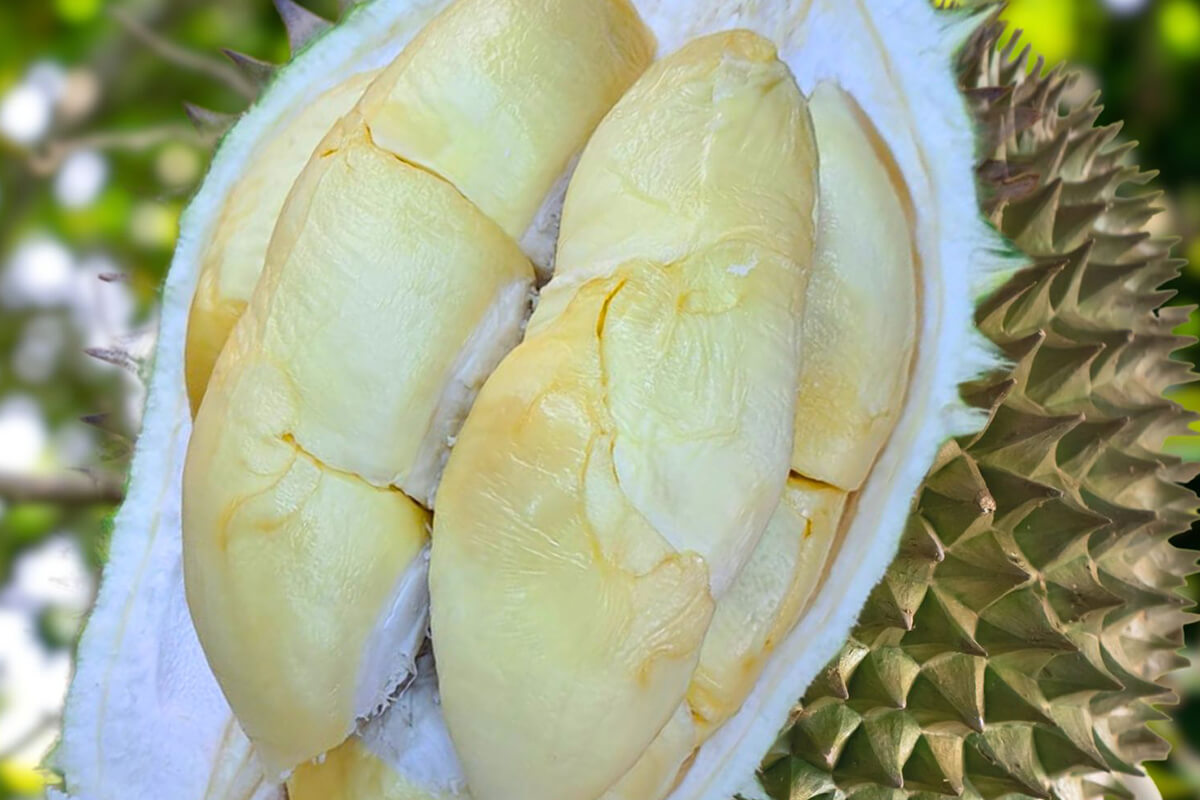
Meet the D11, an heirloom Malaysian cultivar that proves old-school flavors never go out of style. Renowned for its buttery, light-yellow segments and remarkably smooth, dry-cream texture, D11 serves up a gentle, aromatic sweetness with every bite. Whether you are a seasoned connoisseur seeking a nostalgic bite or a newcomer looking for a mild introduction, D11 delivers pure, effortless satisfaction.
The Origin of D11 Durian
Selected during the early foundation of Malaysia’s national clone cataloging system, D11 is one of the country’s oldest heritage varieties. Originating from traditional Penang and Northern Peninsular orchards, it was preserved by pioneer growers who valued its reliable early-season drop, easy-splitting nature, and remarkably gentle, floral sweetness over heavy bitterness.
Characteristics of D11 Durian

外觀
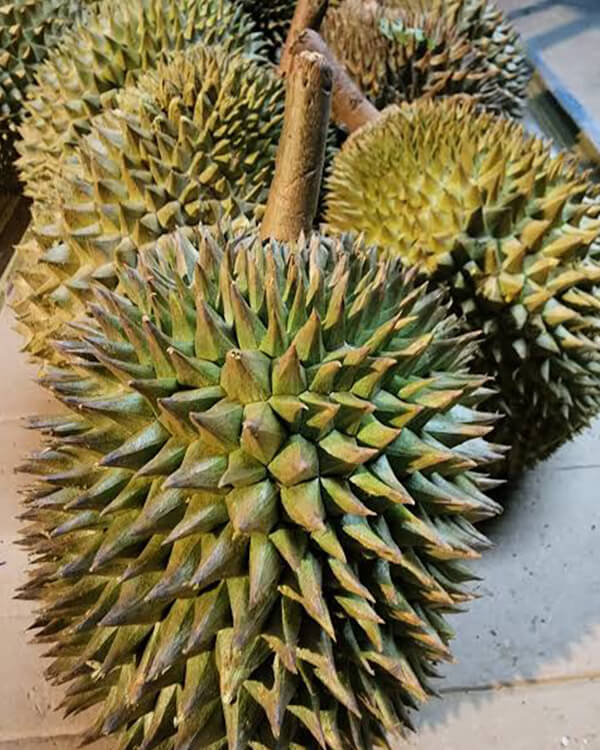
At first glance, the D11 sports a classic, pale husk that subtly transitions into a soft brownish-green as it matures. Typically small-to-medium in size with a distinctive round to slightly oval shape, its shell is lined with straight, sharp conical spikes. One of its most defining visual traits is its tendency to naturally crack open along its bottom seams, which is the telltale sign of a mature D11 revealing the pale yellow, silky segments nestled within.

香氣
Unlike the pungent, sulfurous punch of modern heavyweights, the aroma of D11 is remarkably subtle and inviting. It carries a soft, pleasant scent marked by delicate floral undertones and a gentle hint of sweet butter. This restrained olfactory profile makes D11 particularly approachable, offering a fragrant introduction that hints at its smooth, cookie-dough sweetness without overwhelming the senses.

口感與味道
On the palate, D11 delivers a delightful blast of classic, old-school sweetness. Its flesh is notably dry, thick, and creamy, clinging pleasantly to the palate without ever feeling overly watery or wet. Free from the sharp, alcoholic bitterness found in modern hybrids, D11 charms with a rich, milky profile highlighted by subtle notes of vanilla, sweet butter, and subtle floral.
Interesting Facts About D11 Durian
Health Benefits of D11
Indulging in D11 offers more than just exceptional flavor; it provides a clean, nutrient-dense boost for your body. Naturally cholesterol-free, its rich, creamy flesh is loaded with B-complex vitamins that assist in energy metabolism, as well as tryptophan an amino acid known to help regulate mood and support restful sleep. Its healthy fats and dietary fiber also ensure a steady, satisfying release of energy.
What's The Best Time for D11 Durian?
D11 is widely celebrated as an early-season harbinger, typically making its grand entrance at the very start of the harvest. While the general Malaysian durian peak runs from June through August, D11 begins dropping as early as May through July. Enjoying it early in the season yields the best flavor, as the trees drop their initial batch of fresh, fragrant fruit before mid-season heavyweights hit the market. Because it is a traditional variety that easily cracks open at maturity, purchasing D11 fresh during these months guarantees you get its signature silky, non-watery texture at its absolute prime.
栽培與收割
生長環境
The D11 durian grows best in Malaysia’s tropical climate, thriving in warm, humid conditions with consistent rainfall and temperatures around 24–32°C. It prefers deep, well-drained, fertile soils that are slightly acidic to neutral, along with full sun exposure to support healthy flowering and fruit development. Trees should be spaced about 10–12 meters apart to ensure good airflow and reduce disease risk. Regular watering during dry periods, combined with proper fertilization, pruning, and pest management, helps D11 durians produce high-quality fruits with their signature smooth, dry-creamy texture and gentle, floral sweetness.
栽種過程
The cultivation process for D11 begins with vegetative propagation, such as budding or grafting, onto sturdy rootstocks to ensure true-to-type fruit quality and tree vigor. Young trees require attentive care, including shade protection during early establishment, balanced organic and inorganic fertilization, and weed control in order to build a strong branch structure. As the trees reach maturity, proper canopy pruning promotes sunlight penetration and air circulation, which helps manage fungal risks like Phytophthora. When the flowering stage begins, monitored irrigation encourages solid fruit set, leading to a healthy yield of D11”s iconic, naturally parting fruits when they drop naturally at maturity.
收割方法
紅肉榴槤喺自然成熟墜地後即進行收割,確保果實達到最佳風味與質感。榴槤通常喺清晨收集,以保留新鮮度,並盡快送達市場或顧客手中。
烹飪用途

傳統菜式
In traditional Malaysian kitchens, the D11 durian is cherished for its clean, non-bitter profile, making it a versatile staple for classic desserts. Its mild sweetness and smooth, pale-yellow flesh make it an ideal base for Pengat Durian (a rich coconut milk gravy) or traditional Serawa Durian, served alongside sticky rice or steamed pulut. Because D11 lacks heavy alcoholic or sulfurous notes, it folds seamlessly into Pengat, yielding a comforting, fragrant dessert where its subtle vanilla and floral notes naturally shine without overpowering the coconut cream.

現代創新料理
In contemporary pastry and dessert design, D11 has become a prized asset for pastry chefs seeking elegance over overpowering intensity. Its naturally smooth, dry-creamy texture and light cookie-dough flavor integrate effortlessly into delicate creations like French-style durian crepes, artisanal gelato, soft-skin mooncakes, and whipped choux puffs. Unlike modern cultivars whose sharp bitterness can clash with dairy, D11's mild, milky sweetness complements cream cheese, fresh whipping cream, and delicate pastry batters, delivering a refined, luxurious treat that appeals even to timid durian newcomers.
結論
The D11 durian stands as a magnificent tribute to Malaysia’s rich agricultural legacy. In a market often dominated by intensely bitter, high-potency hybrids, D11 offers a refreshing, nostalgic return to simple, elegant flavor, bringing together a dry-creamy texture, gentle floral notes, and a comforting cookie-dough sweetness. Whether enjoyed fresh off the tree during the early season or crafted into delicate culinary creations, this cherished heirloom variety proves that classic, time-tested goodness never goes out of style.
常见问题
What makes D11 durian stand out from its counterparts?
Unlike modern, high-intensity commercial hybrids that lean heavily into sharp, alcoholic bitterness, D11 stands out for its nostalgic, old-school sweetness and user-friendly profile. It is distinguished by a dense, dry-creamy mouthfeel reminiscent of sweet butter-cookie dough or vanilla custard, paired with an unusually mild, non-sulfurous aroma. Additionally, D11 is famously easy to identify by its natural tendency to part open along its bottom seams when mature, all while holding its smooth texture remarkably well without becoming watery.
When is the best time to find D11 durians?
What are the health benefits of consuming D11 durians?
D11 offers a clean, nutrient-dense boost for the body:
- Digestive Health: It provides dietary fiber to support gut function and smooth digestion.
- Sustained Energy: High in healthy carbohydrates and B-complex vitamins that assist in natural energy metabolism.
- Heart & Immune Support: Packed with essential minerals like potassium to help regulate blood pressure, alongside antioxidants and vitamin C for immune system strength.
- Mood Regulation: Contains tryptophan, an amino acid known to support serotonin production, promoting relaxation and restful sleep.
How do I use D11 durians in culinary dishes?
Because D11 lacks harsh bitterness or overwhelming pungent notes, it is exceptionally versatile in both sweet and savory preparations:
- Traditional Sweets: Its pale-yellow, milky flesh blends smoothly into traditional coconut gravies like Pengat Durian or Serawa, as well as sticky rice toppings and dodol.
- Fermented Condiments: Its balanced natural sugars make it a great candidate for Tempoyak (fermented durian paste), which can be cooked into Sambal Tempoyak or Malay curries.
- Modern Desserts: Pastry chefs often use D11’s vanilla-like profile in delicate pastries such as durian crepe fillings, gelato, choux puffs, and cheesecakes where its subtle flavor complements dairy without clashing.
Where does the D11 durian originate from?
D11 is an early registered heirloom variety originating from traditional local selections in Malaysia, with a particularly strong historical presence in Penang and Northern Peninsular orchards. Registered during the foundational mapping era of the Department of Agriculture (DOA), it represents nearly a century of Malaysian durian heritage preserved by growers who valued its reliable early drops and comforting sweet profile.
其他榴槤品種

D200 黑刺

D197 貓山王

D175 紅蝦

D24 XO

D28 奶油王

D198 金鳳

D163 葫蘆

D13 金包

太原

D160 竹腳

D101 红肉

D158 張鵬

老太婆

D2 Dato Nina

D10 Durian Hijau

D165 Green Skin

D18 Sunset

D3 Second Son

D164 Red Flesh

D1 Durian

D4 (Repok B2)

D5 Ibrahim

D6 Samsu

D7 Durian

D8 Durian

D29 Durian