Skip to content Skip to footer

D29

D29 Durian

A Vintage Cultivar From The Heart Of Perak

Registered in 1938 as one of Perak’s earliest official clones, D29 is a true relic of Malaysia’s durian heritage. Predating modern commercial icons by several decades, this vintage variety is distinguished by its golden-yellow, noticeably juicy flesh wrapped inside a characteristically brownish husk. Though rarely cultivated on a commercial scale today, D29 remains a prized find in legacy orchards, offering a nostalgia-filled taste of authentic kampung tradition.

The Origin of D29 Durian

Originating from the historic orchards of Perak, D29 was officially registered with the Malaysian Department of Agriculture in 1938, placing it among the country’s earliest recognized durian cultivars. Selected and documented during the pre-war era long before the advent of modern high-density hybrid planting, the clone represents a foundational piece of Malaysia’s early pomological history. Rooted in traditional kampung culture, D29 showcases the regional biodiversity and distinct natural profiles that laid the groundwork for the nation’s rich durian heritage.

Characteristics of D29 Durian

外观特征

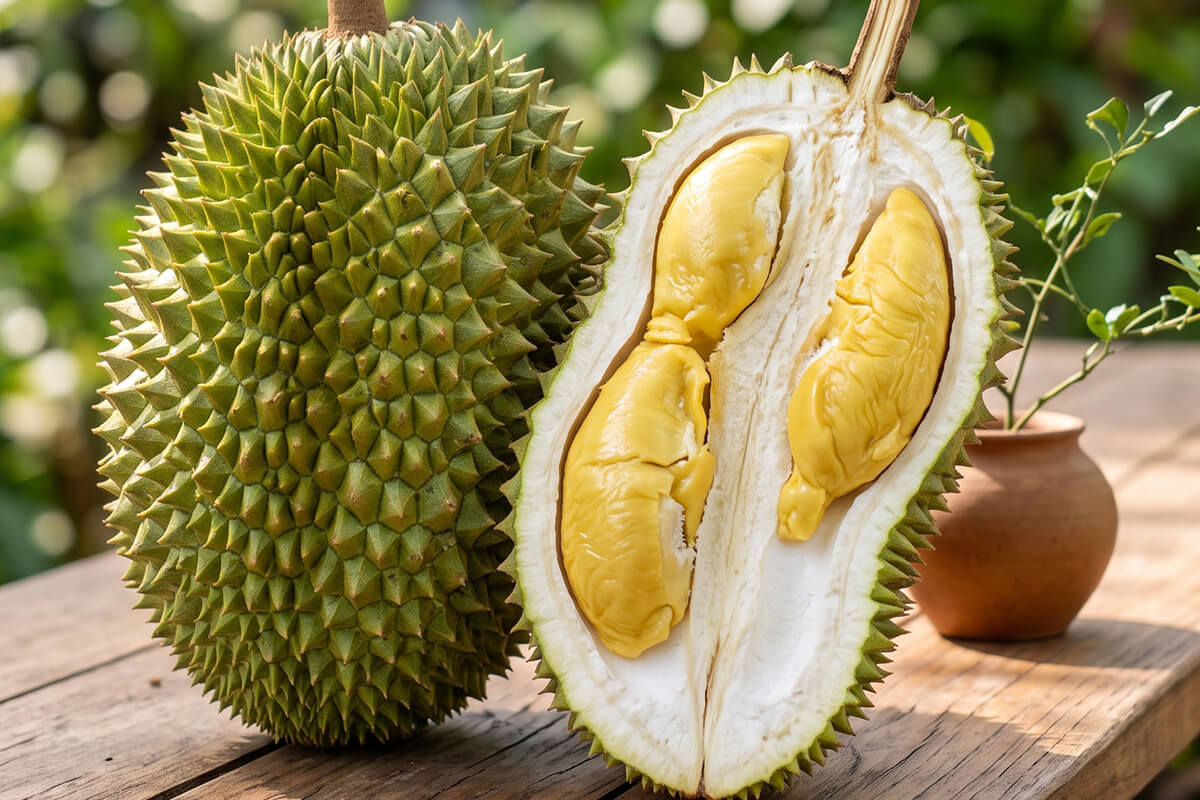
Encased in a distinctly brownish rind, D29 stands out with its modest, elliptical shape and classic pre-war husk structure. Upon splitting open the fruit, it reveals vibrant, golden-yellow flesh wrapped around noticeably large seeds. Unlike modern commercial cultivars bred for dense, uniform arils, D29 retains the untamed, traditional look of an old-generation kampung durian, boasting a bright and rustic visually captivating profile.

香气

Carrying a distinct, old-school aromatic profile, D29 emits a sweet and warm herbal fragrance when ripe. Unlike sharp, highly pungent modern varieties that instantly overpower a room, its scent is gentler and more grounded, thus offering a subtle, traditional kampung aroma with soft earthy undertones that invite you in without being overwhelmingly intense.

口感与质地:

On the palate, D29 presents a nicely balanced flavor profile that blends a moderate sweetness with a delicate, grounded bitterness. Its texture is distinctly lighter and more fluid than modern cultivars, featuring a noticeably juicy, smooth flesh that dissolves easily rather than clinging with heavy, dense creaminess. Paired with its larger seeds, each bite delivers a refreshing, nuanced mouthfeel that perfectly captures the nostalgic, authentic charm of an old-generation kampung durian.

Interesting Facts About D29 Durian

Health Benefits of D29

Beyond its nostalgic flavor, D29 offers a rich nutritional profile packed with essential vitamins and vital minerals. Like many traditional durian varieties, it is naturally high in potassium, which supports healthy blood pressure regulation, and rich in dietary fiber to aid digestion. Additionally, its vibrant golden flesh provides a good dose of Vitamin C and antioxidant compounds that bolster immune health and combat cellular stress, making this vintage clone a rewarding treat for both the palate and overall well-being.

What's The Best Time for D29 Durian?

The ideal window to experience D29 durian at its peak is during Peninsular Malaysia's main mid-year harvest, which runs from May through July, peaking in June. Because D29 is primarily rooted in old, traditional orchards across Perak, its fruiting strictly aligns with the northern region's main monsoon-driven harvest cycle. A smaller, minor harvest window can also occur between November and December following secondary dry spells. Visiting legacy orchards or local kampung stalls in Perak during these peak harvest weeks ensures you get the freshest fruit dropped naturally from old trees, and delivers its signature juicy texture and optimal balance of sweetness and subtle bitterness at its finest.

种植与收割

生长条件

The D29 durian thrives in Malaysia’s tropical climate, growing best in warm, humid conditions with consistent rainfall and temperatures between 24–32°C. Rooted historically in the fertile terrain of Perak, it prefers deep, well-drained, organic-rich soils that are slightly acidic to neutral, along with full sun exposure to support healthy flowering and fruit development. Mature trees require generous spacing of roughly 10–12 meters apart to promote optimal canopy airflow and lower disease susceptibility. Consistent watering during dry spells, paired with balanced fertilization, light canopy management, and regular pest monitoring, ensures the trees produce high-quality fruit with D29’s signature juicy texture and distinct sweet-bitter profile.

种植过程

Cultivating the D29 clone begins with propagating high-quality rootstock through grafting or budding techniques to preserve its true-to-type 1938 genetic lineage. Young saplings are planted in well-prepared, nutrient-rich soil and given careful shade protection during their early establishment phase. As the trees mature over 4 to 6 years, seasonal dry spells act as a natural trigger for flowering, followed by fruit set, where strategic thinning is applied to maintain healthy fruit size and weight. Unlike commercial varieties harvested directly from the branch, D29 follows traditional Malaysian harvesting practices, allowing the fruit to naturally ripen and drop from mature, old-growth trees to ensure peak flavor complexity and optimal flesh hydration.

收割方法

D101 榴莲在果实自然脱落时采摘,这表明它们已经成熟,可以食用了。为了保持新鲜度,确保消费者品尝到风味和口感最佳的榴莲,我们会在清晨采摘。

烹饪用途

传统吃法

In traditional Malaysian culinary practices, D29's naturally juicy flesh and balanced sweet-bitter profile make it a standout ingredient for classic, unheated heritage preparations. Its lighter, more fluid texture allows it to blend effortlessly into Pengat Durian (a rich coconut milk dessert soup) or Serawa Durian, where the fruit dissolves smoothly into warm palm sugar (gula melaka) without leaving heavy, gummy clumps. Additionally, because older kampung varieties like D29 possess an authentic depth of flavor, its pulp is historically favored for natural fermentation to make Tempoyak (fermented durian paste). The resulting paste serves as a foundational, umami-rich base for iconic regional dishes like Gulai Tempoyak Ikan Patin and spicy Sambal Tempoyak.

创新烹饪方法

Bridging vintage heritage with contemporary gastronomy, D29 inspires creative innovations in modern dessert and fusion kitchens. Chefs and pastry artisans utilize its uniquely fluid, juicy texture and bittersweet profile to craft artisanal items like durian-infused choux pastries, gelato, and artisanal cheesecakes, where its lighter pulp prevents the heavy, cloying mouthfeel sometimes left by ultra-dense commercial hybrids. Additionally, modern mixologists have begun experimenting with D29 reductions and purees to craft artisanal craft cocktails and artisanal dessert foams, showcasing the versatility of an old-generation 1938 clone in today's avant-garde culinary landscape.
Dury Dury Half Durian

总结

Whether you are a seasoned durian connoisseur seeking rare vintage clones or an adventurous foodie eager to taste a piece of history, D29 offers an unforgettably authentic experience. With its deep-rooted 1938 Perak heritage, distinct brownish husk, and a wonderfully refreshing blend of juicy sweetness and subtle bitterness, this old-generation cultivar stands as a vibrant tribute to Malaysia’s rich orchard legacy. Seeking out D29 is more than just enjoying a fruit, but also a journey back in time to the pure, untamed flavors of classic kampung culture.

Dury Dury Half Durian

常见问题

D29 stands out as a rare, pre-war heritage clone registered back in 1938. Unlike modern commercial varieties that are bred for heavy, dense, and sticky arils, D29 is known for its distinct brownish husk, vibrant golden-yellow flesh, and a noticeably juicy, fluid texture that delivers a balanced mix of moderate sweetness and subtle bitterness.

The primary window to enjoy peak D29 durians is during Peninsular Malaysia’s main mid-year harvest from May through July, with supply peaking in June. A smaller secondary harvest may also occur between November and December.

D29 is packed with essential nutrients, including potassium to support healthy blood pressure regulation and dietary fiber for optimal digestion. Its bright golden pulp is also a rich source of Vitamin C and natural antioxidants that boost immunity and fight cellular oxidative stress.

Due to its juicy consistency, D29 dissolves smoothly into traditional coconut desserts like Pengat Durian and Serawa Durian, or fermented into Tempoyak for savory dishes like Gulai Tempoyak Ikan Patin. In modern kitchens, its lighter profile makes it ideal for gelato, choux pastries, artisanal cheesecakes, and dessert foams without feeling overly cloying.

D29 originates from the historic orchards of Perak, Malaysia. It was officially registered with the Malaysian Department of Agriculture (DOA) in 1938, making it one of the state’s earliest recognized durian cultivars.

其他榴莲品种

Dury Dury one over four Durian