D1
D1 Durian
The Legendary First That Started It All
The D1 durian holds a unique and historic place in Malaysia’s agricultural heritage as the very first variety officially registered by the Department of Agriculture in 1934. Originating from Hulu Langat in Selangor, this pioneer clone is celebrated as an early-season treat, ripening and dropping early in the harvest to offer one of the very first tastes of the season. Featuring a mildly sweet profile with smooth and creamy flesh, D1 provides a delightful starting point for those beginning to get into durian, offering a gentle introduction to the King of Fruits without the intense bitterness or heavy pungency of stronger varieties.
The Origin Of D1 Durian
The D1 durian traces its historic roots back to Hulu Langat in the state of Selangor, Malaysia. Its origins mark a monumental milestone in the country’s fruit cultivation history, as it was officially designated as the very first entry when Malaysia’s Department of Agriculture launched its official durian registration system in 1934. This rich heritage establishes D1 not just as a traditional fruit, but as the foundational benchmark that paved the way for all subsequent Malaysian durian varieties.
Characteristics Of D1 Durian

外观特征
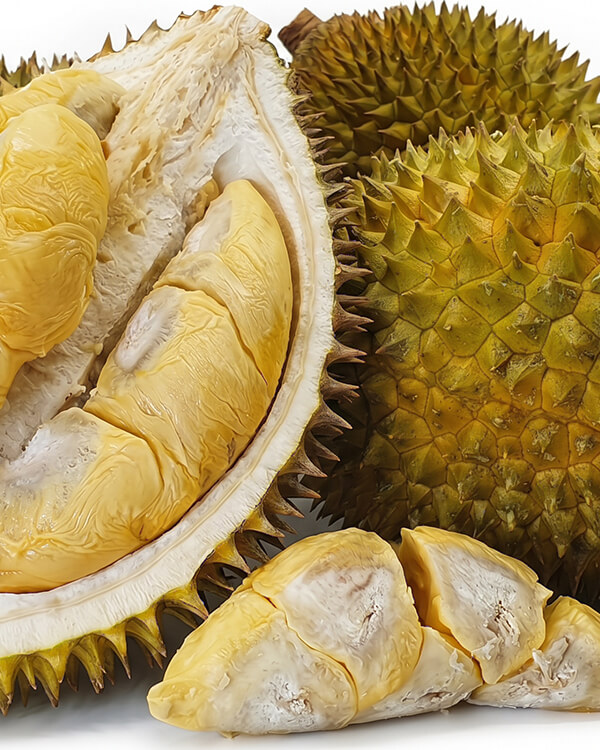
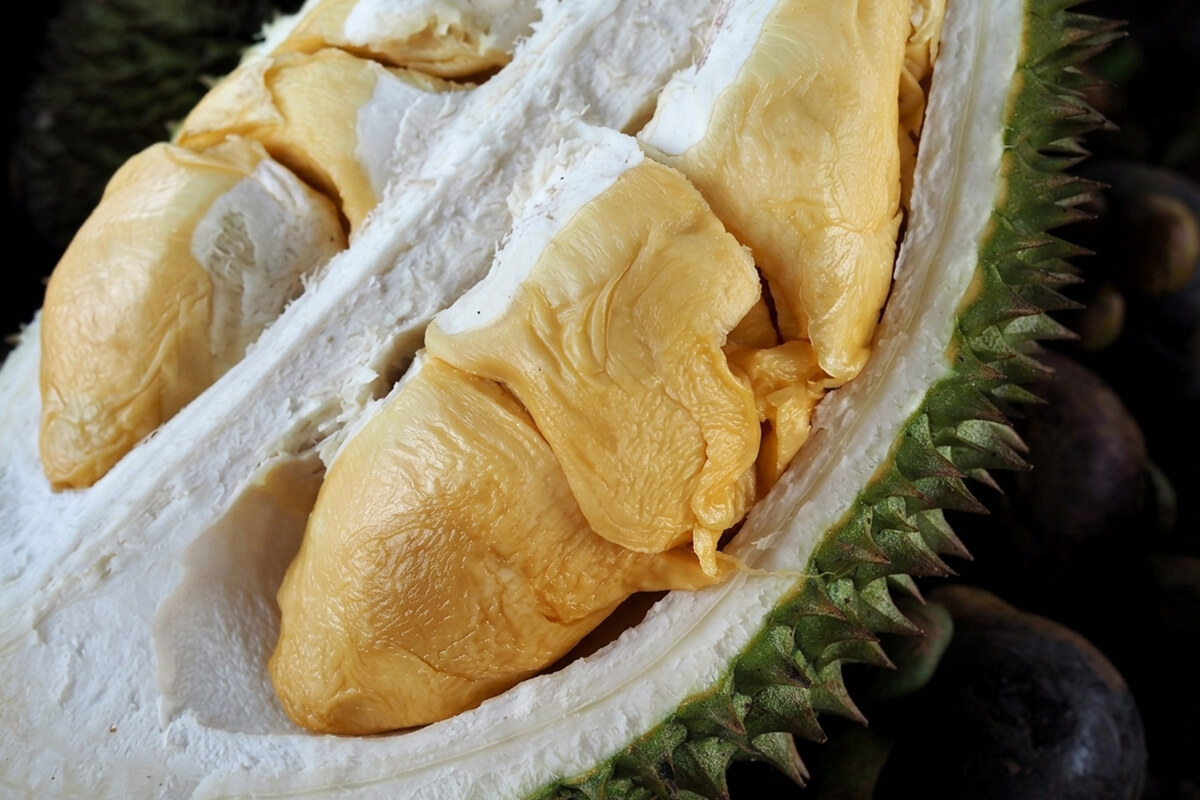
The D1 durian features a distinct physical presentation that reflects its classic heritage. Its husk typically exhibits a rounded to slightly oval shape with a muted brownish-green hue. The thorns are closely packed, relatively sharp, and medium in length, and once cracked open, it reveals a pale, white flesh inside that gives it a traditional and understated look compared to more intensely colored modern hybrids. Despite the large seeds within, the weight of the durian typically sits between 800-900g, making the fruit relatively lightweight compared to its other variants.

香气
The aroma of the D1 durian is notably subtle and restrained compared to its more pungent counterparts. It releases a gentle, mild fragrance with faint earthy and sweet undertones rather than an overpowering scent, making it an accessible choice for those who are sensitive to the strong, heavy aromas typically associated with traditional durians.

口感与质地:
The taste of D1 durian is described as being on the more mellow side, a distinct contrast compared to its other variants. It has a mildly sweet flavour, making it approachable to newcomers and freeing them from the heavy bitterness and overpowering pungency that its more reputable variants have. On the other end, the texture of the flesh is milky and creamy, making it rather light on the tongue.
Interesting Facts About D1 Durian
Health Benefits of D1
Like other traditional varieties, the D1 durian serves as a natural powerhouse of vital nutrients, offering an impressive array of health properties. It is rich in essential vitamins such as Vitamin C and B-complex vitamins, as well as key minerals like potassium, magnesium, iron, and phosphorus, which collectively support immune defense, metabolic processes, and overall cellular function. The fruit is also a valuable source of dietary fiber, featuring both soluble and insoluble types that promote healthy digestion and maintain regular bowel movements. Additionally, it provides healthy monounsaturated fats that assist in maintaining balanced cholesterol levels, alongside naturally occurring antioxidants and amino acids like tryptophan to support physical well-being.
What's The Best Time For D3 Durian?
Like most traditional Malaysian durians, the best time to experience the D1 durian falls during Malaysia's primary durian season, which typically runs from June through August, with July marking the peak harvest month. During this mid-year window, optimal weather conditions allow the fruit to ripen naturally on the trees, yielding the highest quality, best flavor concentration, and maximum availability. While a secondary, shorter harvesting season occurs around October through January, catching D1 during the main summer peak ensures the freshest drop and the most authentic taste of this historic pioneer clone.
种植与收割
生长条件
The D1 durian grows best in Malaysia’s tropical climate, thriving in warm, humid conditions with consistent rainfall and temperatures around 24–32°C. It prefers deep, well-drained, fertile soils that are slightly acidic to neutral, along with full sun exposure to support healthy flowering and fruit development. Trees should be spaced about 10–12 meters apart to ensure good airflow and reduce disease risk. Regular watering during dry periods, combined with proper fertilization, pruning, and pest management, helps D1 durians produce high-quality fruits with their signature creamy texture and historic pioneer profile.
种植过程
The cultivation of D1 involves carefully selecting healthy rootstocks and implementing proven agricultural methods from planting to harvest. Farmers manage soil health through organic mulching and targeted fertilization, while regular pruning shapes the canopy to maximize sunlight penetration and air circulation across the orchard. Pest and disease monitoring especially for common fungal issues like root rot is maintained year-round. As the season peaks, strict orchard hygiene and watchful harvesting ensure that the historically significant D1 fruits are gathered at the exact moment of optimal ripeness.
收割方法
D101 榴莲在果实自然脱落时采摘,这表明它们已经成熟,可以食用了。为了保持新鲜度,确保消费者品尝到风味和口感最佳的榴莲,我们会在清晨采摘。
烹饪用途

传统吃法
The gentle sweetness and smooth, creamy profile of the D1 durian make it a wonderful ingredient for traditional local delicacies, where its mild character blends harmoniously without overpowering other components. In Malaysian households and traditional bakeries, D1 is frequently incorporated into rich, comforting treats such as sweet durian sticky rice (pulut durian), traditional Malay cakes (kuih), and local dessert soups (pengat durian) infused with coconut milk and palm sugar. Its smooth flesh also lends itself well to making traditional durian jams (serawa durian), which are traditionally enjoyed spread over freshly steamed bread or paired with traditional pastries, allowing the heritage flavor of Malaysia's very first registered clone to shine in comforting, time-honored recipes.

创新烹饪方法
The approachable, mild profile and smooth texture of the D1 durian lend themselves exceptionally well to contemporary culinary creations, where modern chefs and bakers seek a balanced durian flavor that appeals to a broader audience. In modern bakeries and cafes, D1 is frequently incorporated into fusion pastries, such as creamy durian cheesecakes, artisanal croissants, silky smooth ice creams, and modern choux pastries or mochi fillings. Because its flavor profile lacks the heavy pungency or intense bitterness of more aggressive varieties, it provides a subtle, milky sweetness that elevates modern desserts without overwhelming the palate, making it a versatile choice for innovative artisanal treats.
总结
As the pioneer variety that officially established Malaysia’s durian registration system, the D1 durian remains a beloved symbol of the country’s rich agricultural history. Its approachable, mild sweetness and silky-smooth, milky texture offer a uniquely gentle tasting experience that continues to charm both long-time enthusiasts and curious newcomers alike. Whether enjoyed fresh off the husk, crafted into traditional desserts, or reimagined in modern culinary creations, the historic D1 stands as a timeless legacy — a true taste of Malaysian heritage that paved the way for all the remarkable clones to follow.
常见问题
What makes D1 durian stand out from its counterparts?
The D1 durian holds a special place in agricultural history as Malaysia’s very first officially registered clone (registered in 1934). Unlike modern hybrids known for intense bitterness or heavy pungency, D1 stands out for its remarkably approachable profile, offering a mild, smooth sweetness with a distinctively milky, creamy flavor that makes it a timeless classic.
When is the best time to find D1 durians?
The peak season for D1 durians coincides with Malaysia’s primary mid-year durian harvest, running from June through August, with July usually offering the highest yield and best quality fruit. A smaller secondary harvest can also occur between October and January.
What are the health benefits of consuming D1 durians?
D1 durians are rich in essential nutrients, including Vitamin C, B-complex vitamins, potassium, and dietary fiber. They offer healthy monounsaturated fats that support heart health, natural carbohydrates for sustained energy, and essential minerals that aid immune function and digestion when enjoyed in moderation as part of a balanced diet.
How do I use D1 durians in traditional culinary dishes?
Thanks to its mild sweetness and creamy texture, D1 excels in traditional desserts where an overly pungent durian might overpower the dish. It is ideal for making classic treats like serawa durian (durian dessert sauce), pulut durian (durian with glutinous rice), traditional kuih, or stirred into warm coconut milk soup (pengat).
How do I use D1 durians in modern culinary creations?
In contemporary recipes, D1’s smooth flesh and balanced flavor make it perfect for fusion pastries and frozen treats. It blends seamlessly into artisanal ice creams, durian cheesecakes, cream puffs (choux), mochi, or modern pastry fillings, providing a gentle, rich durian taste that appeals to both seasoned fans and modern palates.
其他榴莲品种

D200 黑刺

D197 猫山王

D175 红虾

D24 XO

D28 奶油王

D198 金凤

D163 葫芦

D13 金包

太原

D160 竹脚

D101 红肉

D158 昌平

老太婆

D2 Dato Nina

D10 Durian Hijau

D165 Green Skin

D18 Sunset

D3 Second Son

D164 Red Flesh

D4 (Repok B2)

D5 Ibrahim

D6 Samsu

D7 Durian

D8 Durian

D11 Durian

D29 Durian