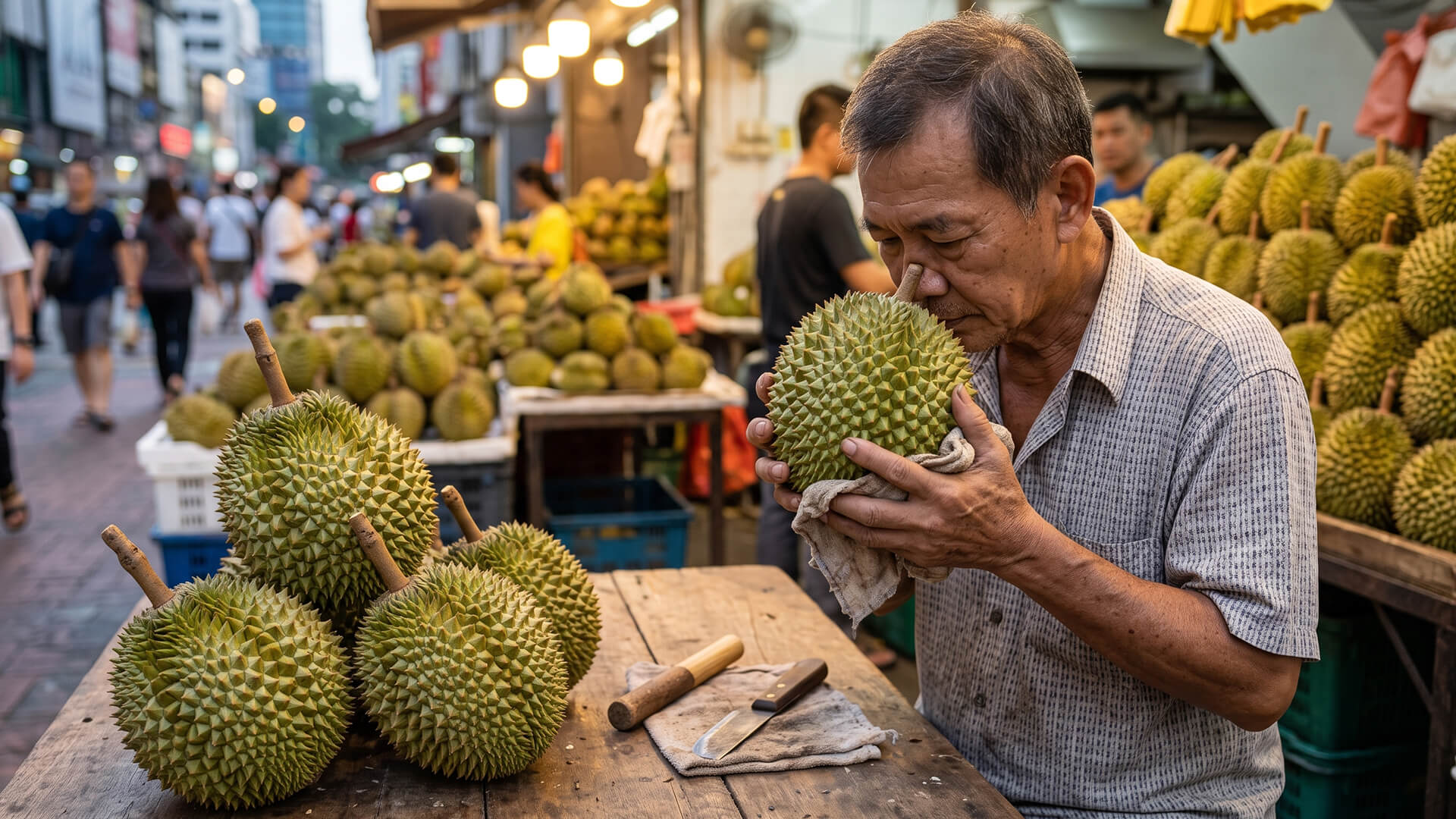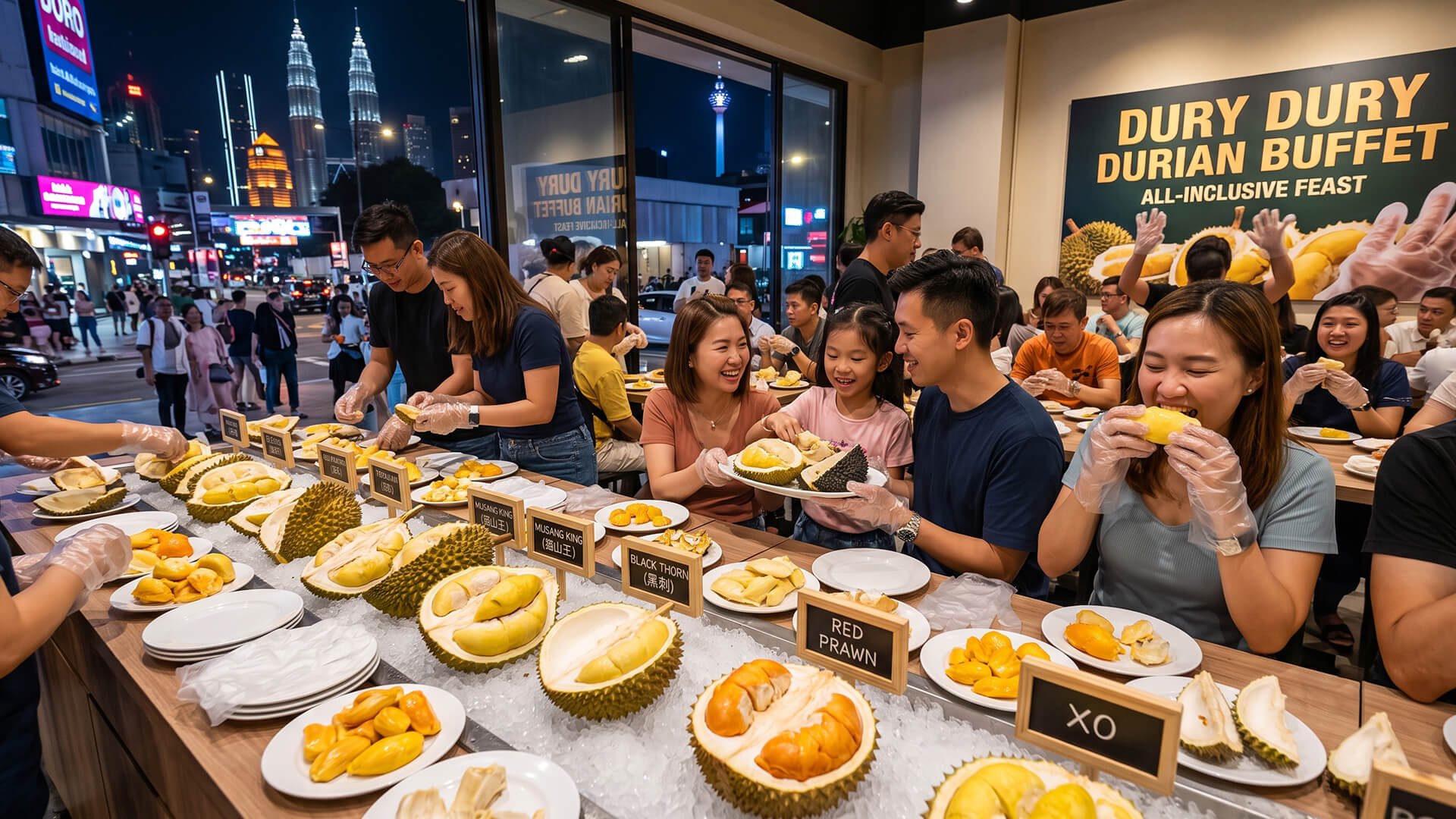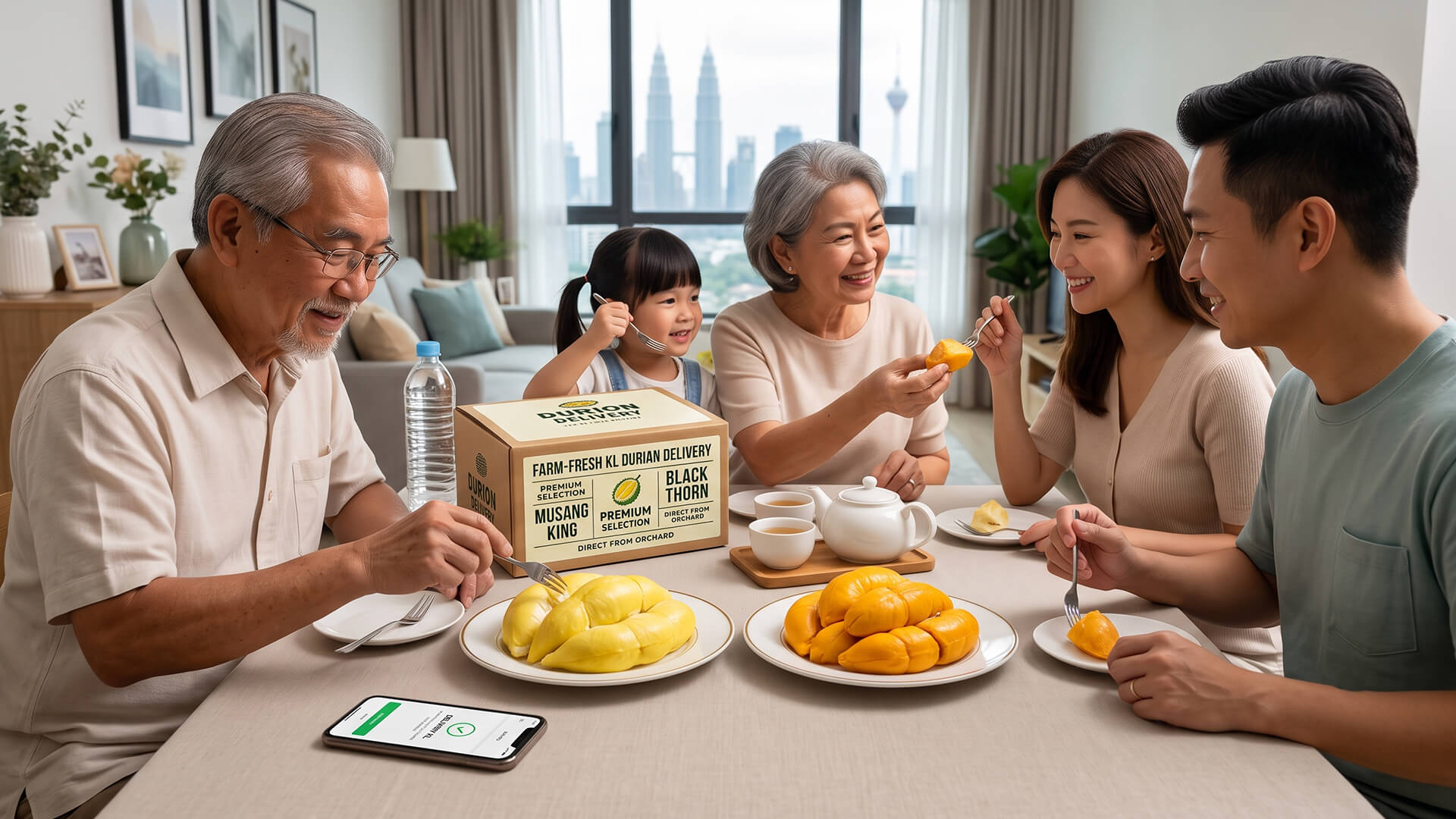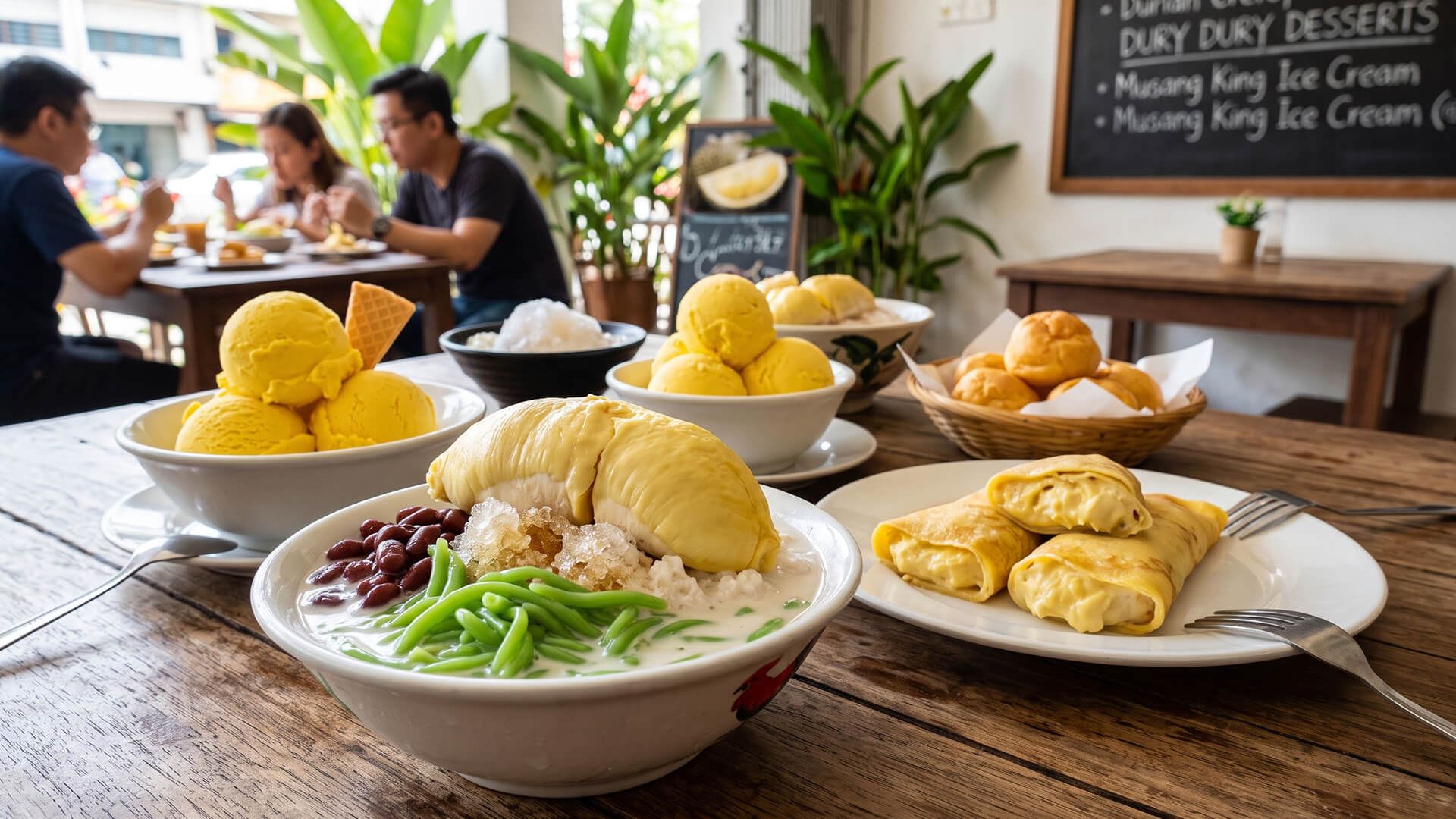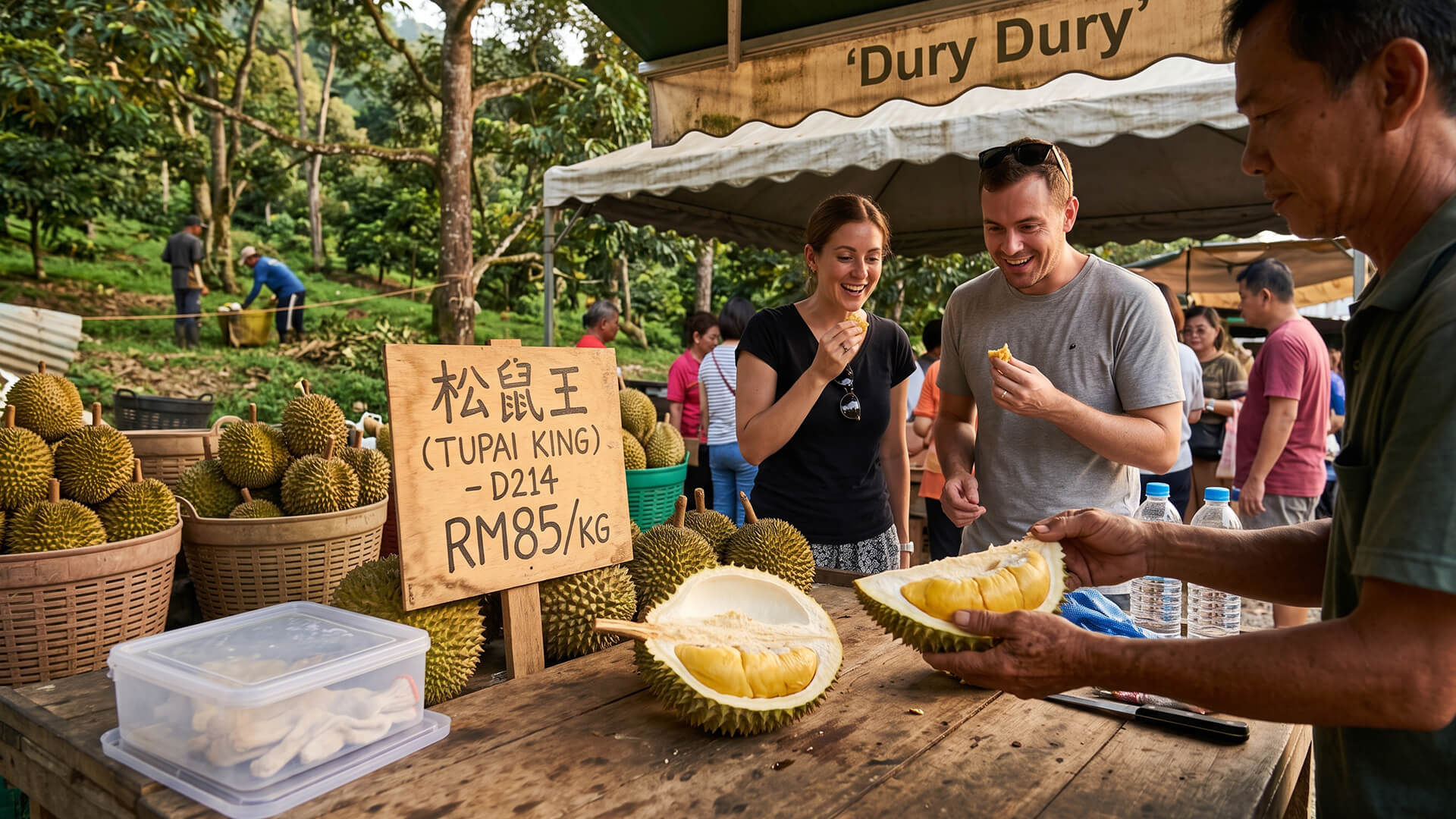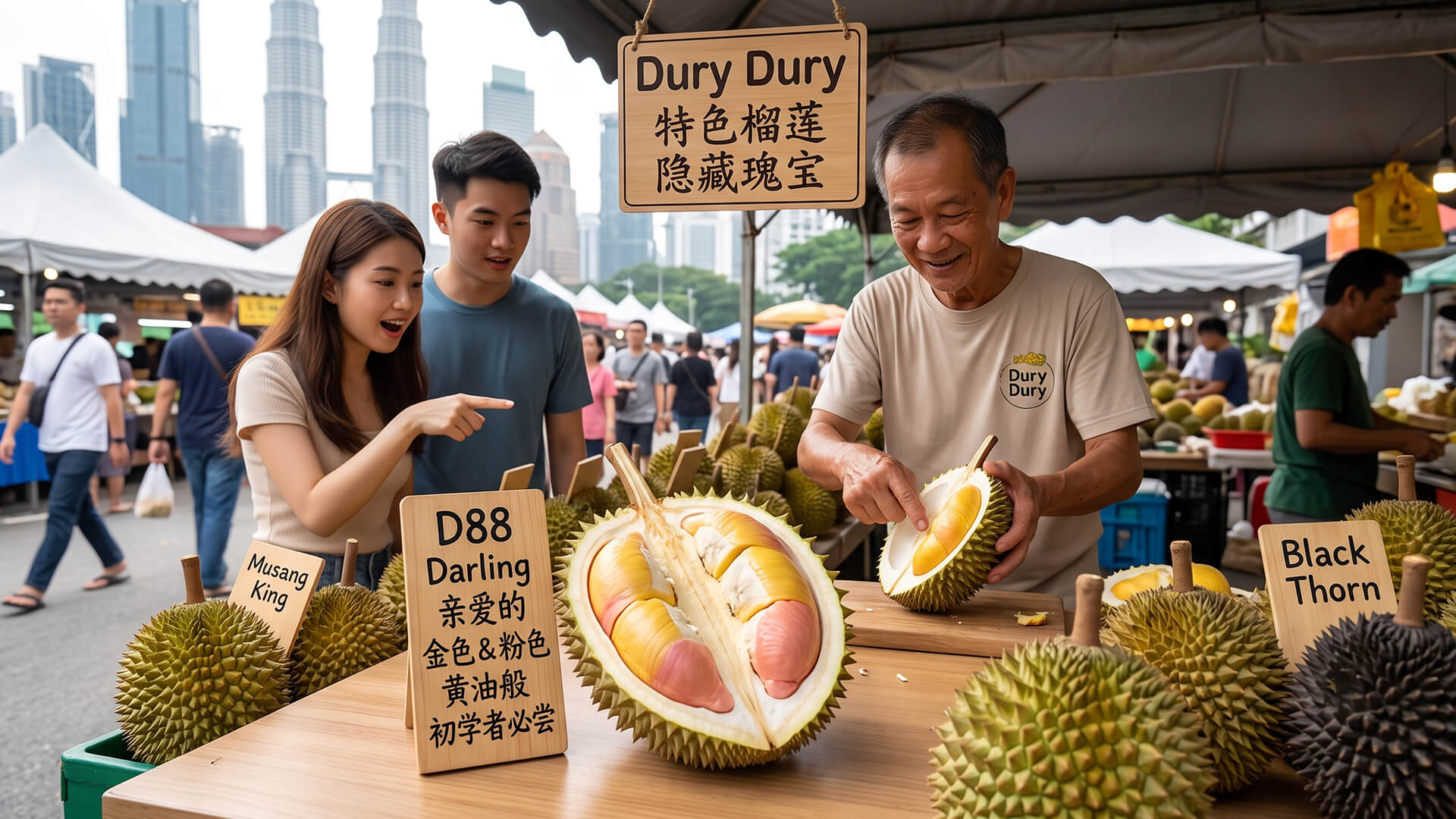
At Dury Dury, we take immense pride in the quality of the durians served at our Kuala Lumpur establishment. However, as the global demand for Malaysian legends like Musang King (D197) and Black Thorn (D200) continues to skyrocket, the challenge shifts from the orchard to the logistics chain.
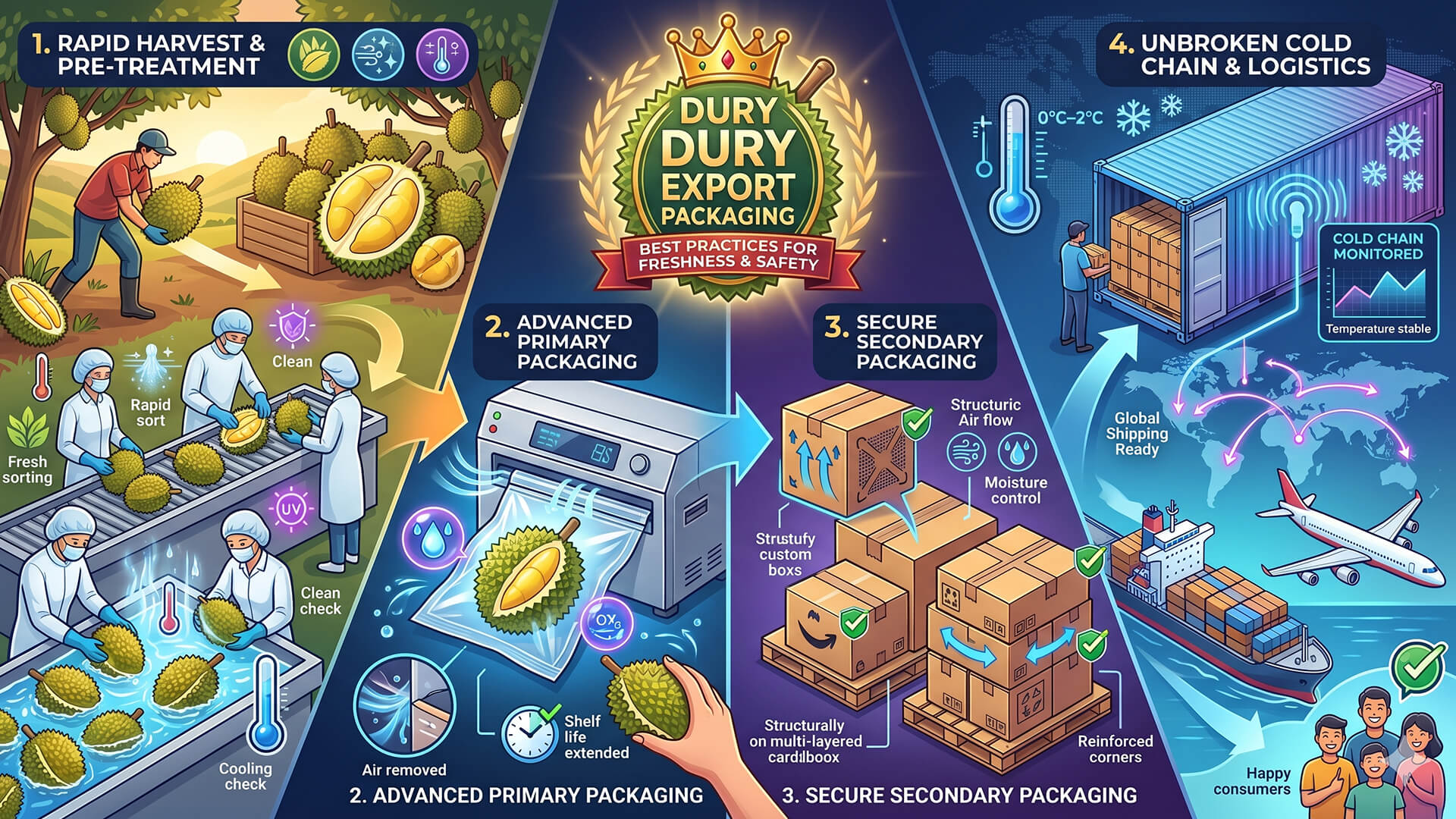
Exporting durian is a race against time. Because the best-tasting durians are those that are naturally ripened, they have a very short shelf life. To ensure that a consumer in Shanghai or San Francisco experiences the same creamy, bittersweet perfection as a customer in our store, specialized packaging and safety protocols are non-negotiable.
1. Temperature Control: The Cold Chain Standard
The most critical factor in durian export is temperature. Because durians are “heaty” and metabolically active, they continue to ripen and release heat even after being harvested.
Vacuum Sealing & Freezing
For long-distance air or sea freight, the flesh is often removed from the husk, vacuum-sealed, and blast-frozen at -80°C. This stops the ripening process and locks in the aroma.
Whole Fruit Cryogenic Freezing
To export the whole fruit with its iconic thorns, nitrogen freezing is used to drop the core temperature rapidly to -18°C. This prevents the husk from cracking and preserves the "fresh-drop" quality.
2. Aroma Management: Airtight Integrity
The signature scent of the durian, while loved by enthusiasts, is considered a “biohazard” for logistics providers and airlines.
Multi-Layered Barriers
Export-grade packaging requires high-barrier plastic films that prevent sulfurous odor molecules from escaping.
Activated Carbon Inserts
Some premium exporters include small sachets of activated carbon within the secondary packaging to absorb any trace odors that might leak, ensuring the shipment remains "stealthy" during transit.
3. Structural Protection: The Armor for the Spikes
The durian’s husk is its natural protection, but those same thorns can puncture standard cardboard boxes, leading to damaged goods or injury to handlers.
Corrugated Fiberboard
Heavy-duty, double-walled corrugated boxes are the industry standard.
Individual Netting
Each whole durian is typically encased in a thick plastic net. This prevents the thorns of one fruit from piercing another, which would otherwise lead to rapid oxidation and spoilage.
4. Compliance and Safety Certifications
Exporting the King of Fruits requires more than just a sturdy box; it requires rigorous documentation to meet international food safety standards.
Phytosanitary Certificates
These ensure the fruit is free from pests and diseases.
Traceability Labels
Modern export packaging often includes QR codes that allow international buyers to trace the fruit back to the specific Malaysian orchard and the date of harvest.
MyGAP Certification
Malaysian Good Agricultural Practices (MyGAP) ensures that the fruit was grown with minimal chemical intervention, which is a major requirement for the European and North American markets.
5. Timing the Export with the Peak Season
Just as we advise our local customers to visit us during the Major Durian Season (May to August), exporters prioritize these months for the highest-quality shipments.
During June and July, the fruits reach their peak aroma and sugar levels. Packing durians harvested during this window ensures that even after a long journey, the fruit retains its thick, smooth flesh and characteristic flavor profile.
Conclusion: Bringing Dury Dury Quality to the World
Exporting durian is an art form that combines traditional agricultural knowledge with cutting-edge packaging technology. By maintaining the cold chain and using high-barrier materials, we ensure that the “King of Fruits” retains its crown, no matter how far it travels.
Whether you are enjoying a fresh D24 in our store or opening a vacuum-sealed pack across the ocean, the goal remains the same: a rich, creamy, and unforgettable experience.