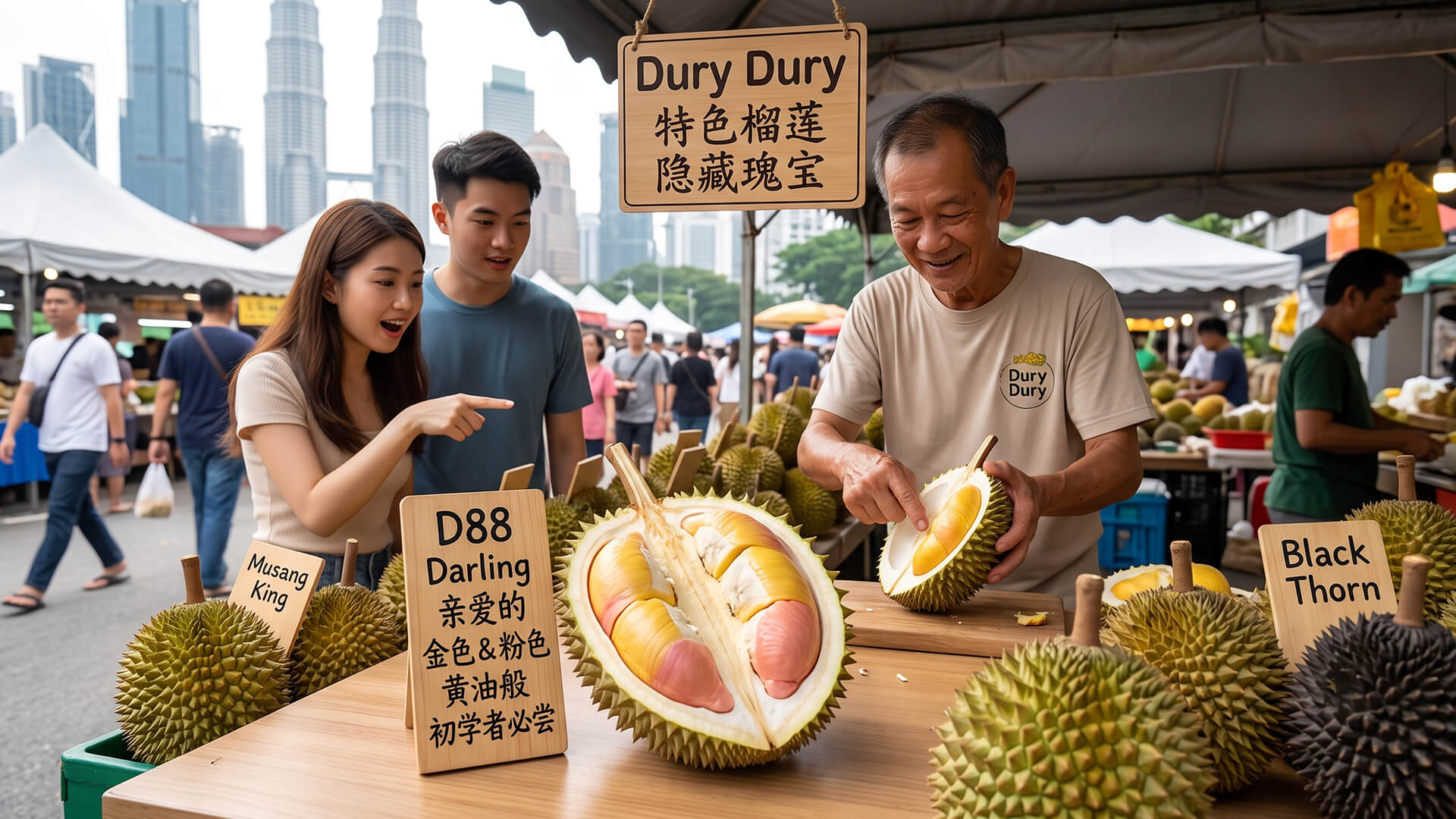
Walking into a durian stall during the peak season in Malaysia can be an overwhelming experience. With over 200 registered varieties and a sea of thorny husks, how do you decide which one belongs on your plate? At Dury Dury, we believe there is no “best” durian—only the right durian for your specific palate.
Choosing the right variant depends on understanding the balance of sweetness, bitterness, and texture. This guide will help you navigate the selections to find your perfect match.
1. Identify Your Flavor Preference: Sweet vs. Bitter
The first step in choosing a variant is knowing what kind of flavor profile you enjoy. In Malaysia, durian tastes are often categorized by their levels of sweetness and bitterness.
For the Sweet Tooth
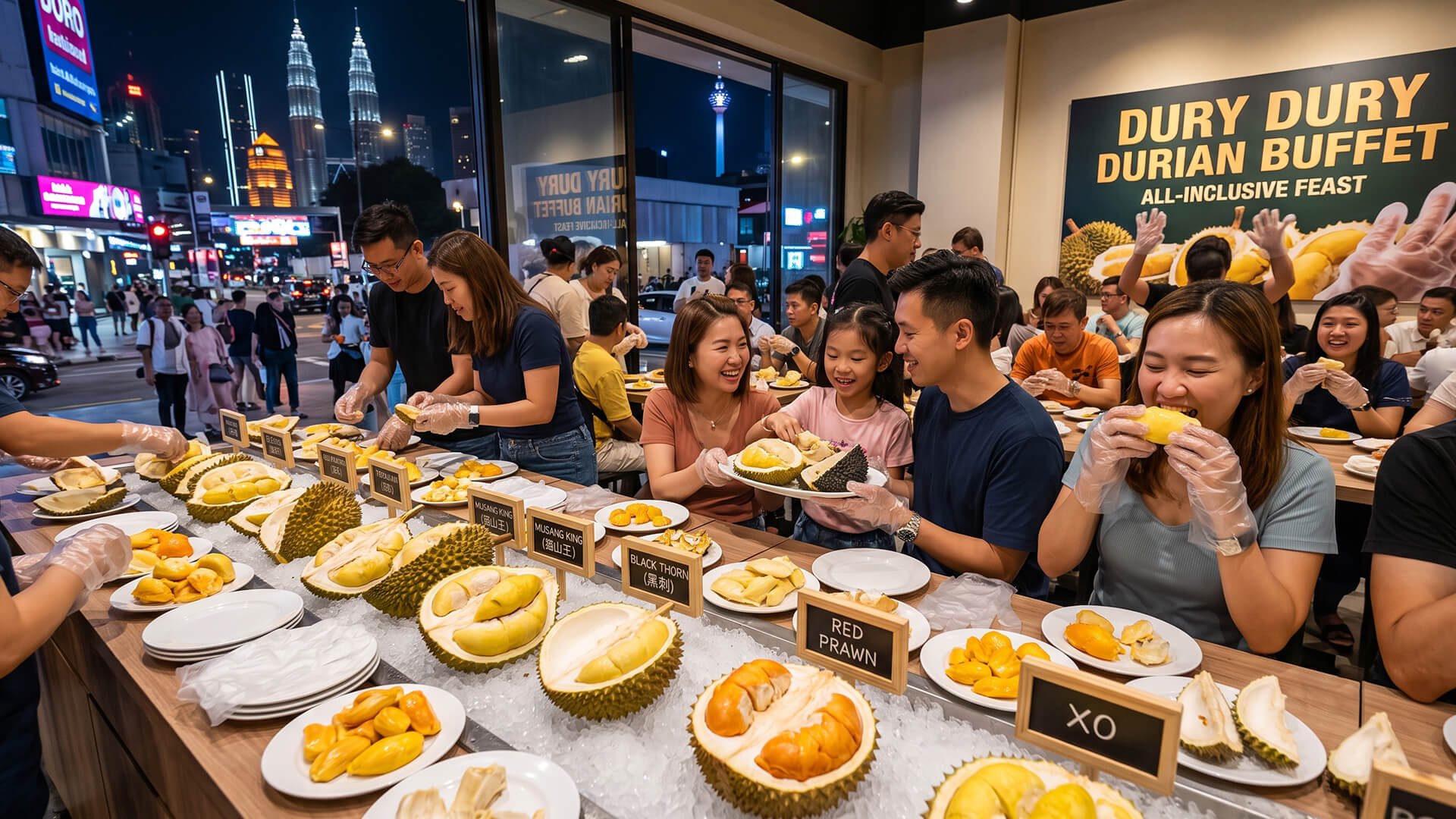
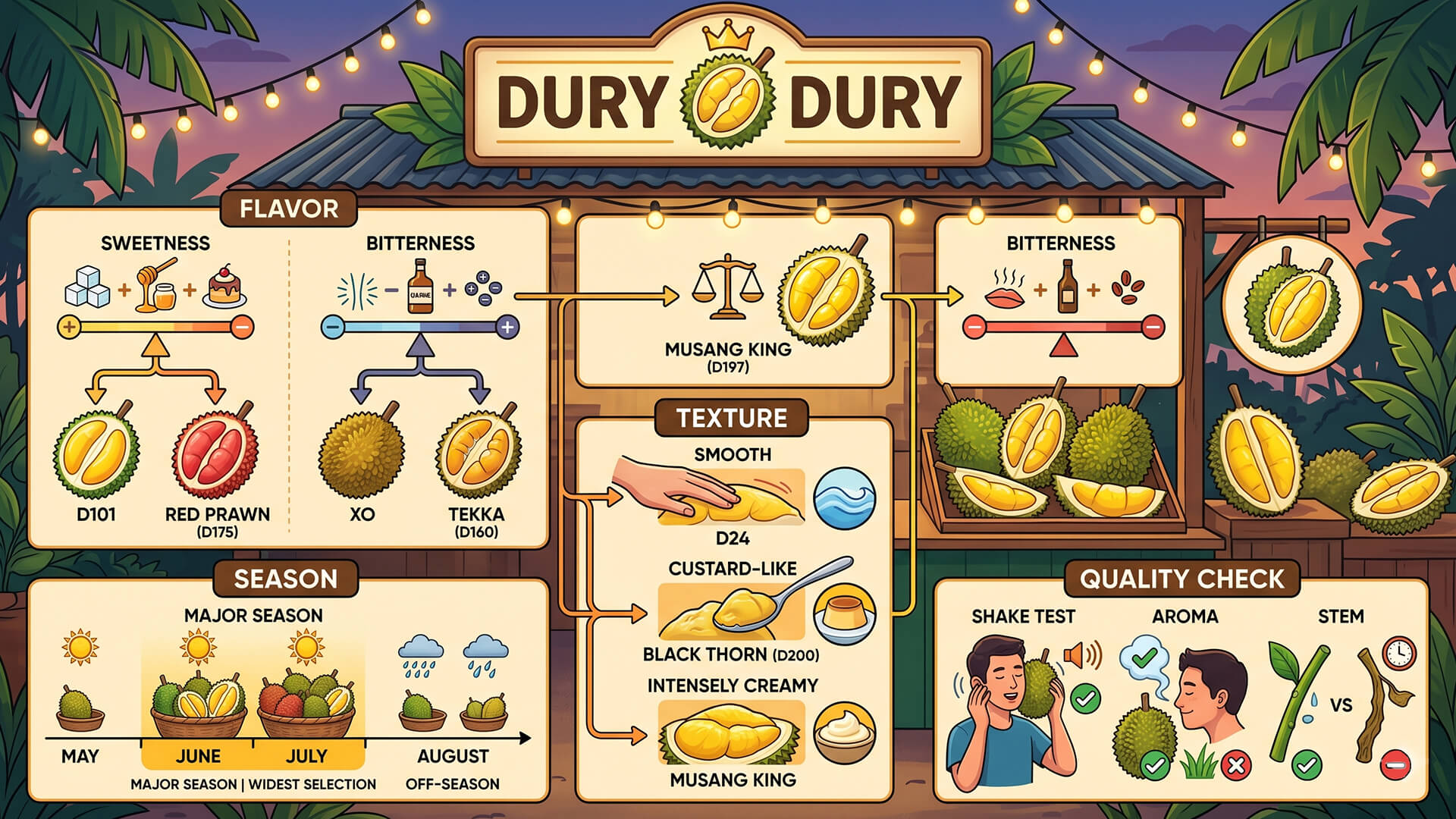
If you prefer a sugary, dessert-like experience, look for D101 or Red Prawn (D175). These varieties are famous for their high sugar content and milder bitter notes.
For the Connoisseur (Bittersweet)
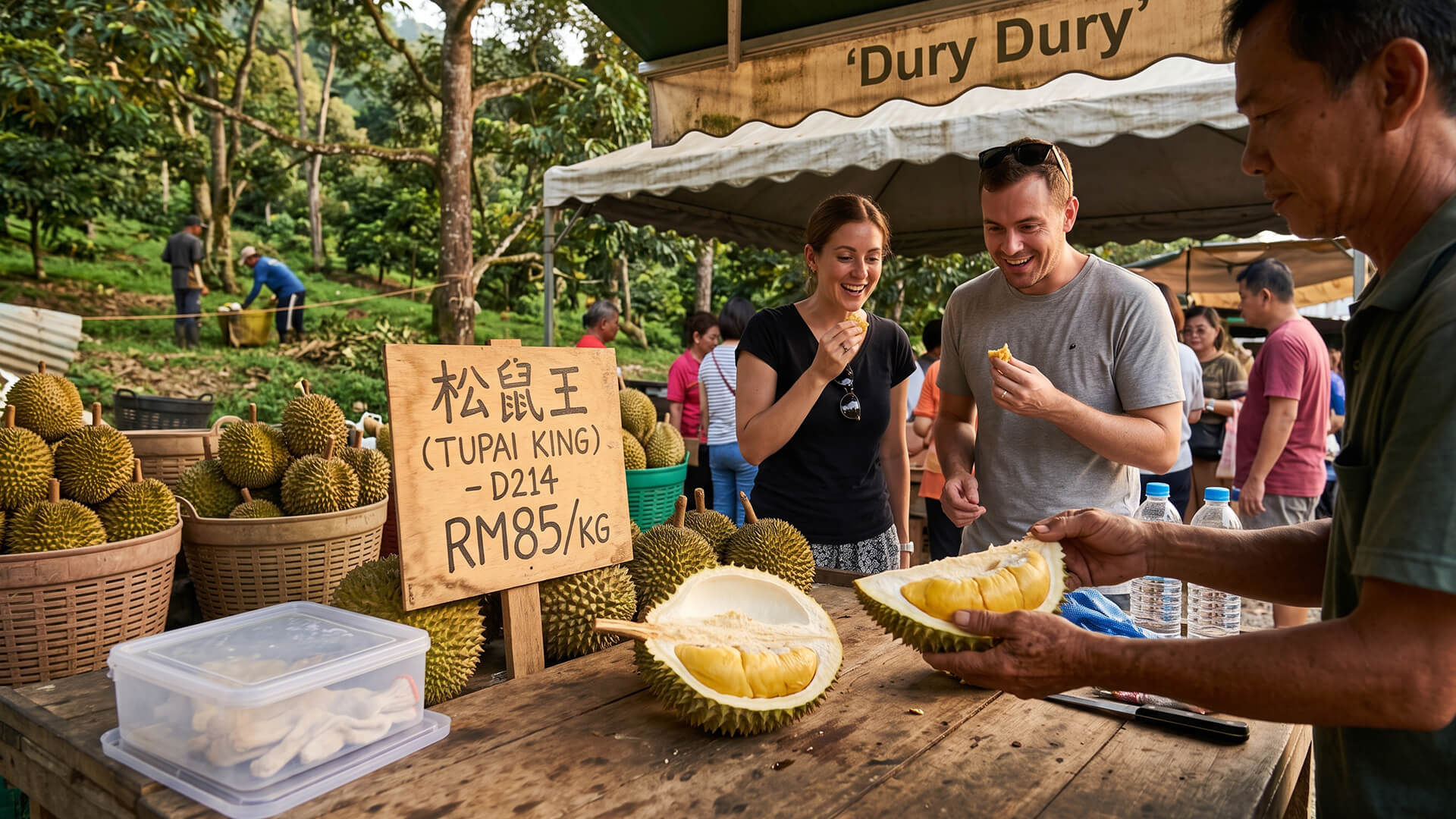
If you want the classic Malaysian experience, the Musang King (D197) is the gold standard. It offers an intense creamy texture with a complex bittersweet balance.
For the Bitter Lovers
If you enjoy a "numbing" bitterness with alcoholic undertones, variants like XO or Tekka (D160) are your best bet.
2. Consider the Texture
Texture is just as important as taste. Depending on the variety, the flesh can range from firm and pasty to soft and “runny.”
Smooth and Balanced
D24 durians are well-known for their remarkably smooth texture and balanced sweetness.
Deep and Custard-like
If you prefer a rich, thick, and almost custard-like mouthfeel, Black Thorn (D200) is the ultimate choice.
Intensely Creamy
For those who want the thickest, most "pasty" flesh, Musang King remains the top pick.
3. Pay Attention to the Season
The time of year you buy your durian significantly impacts the quality of the variants available. While durians are available year-round, consistency in taste and texture is much more reliable during the peak harvests.
The Major Season (May–August)
This is the best time to choose premium variants like Musang King or Black Thorn, as the fruit ripens naturally and delivers the richest flavor.
The Peak Months (June–July)
During these months, you will find the widest variety of both premium and "kampung" durians at the best prices.
Off-Season
If you are buying "off-season" durians (outside the main months), be aware that flavors are often less intense and the consistency can be hit-or-miss.
4. Physical Signs of Quality
Once you’ve narrowed down the variant, you need to pick the specific fruit. Here are a few quick tips used by the pros at Dury Dury:
The Shake Test
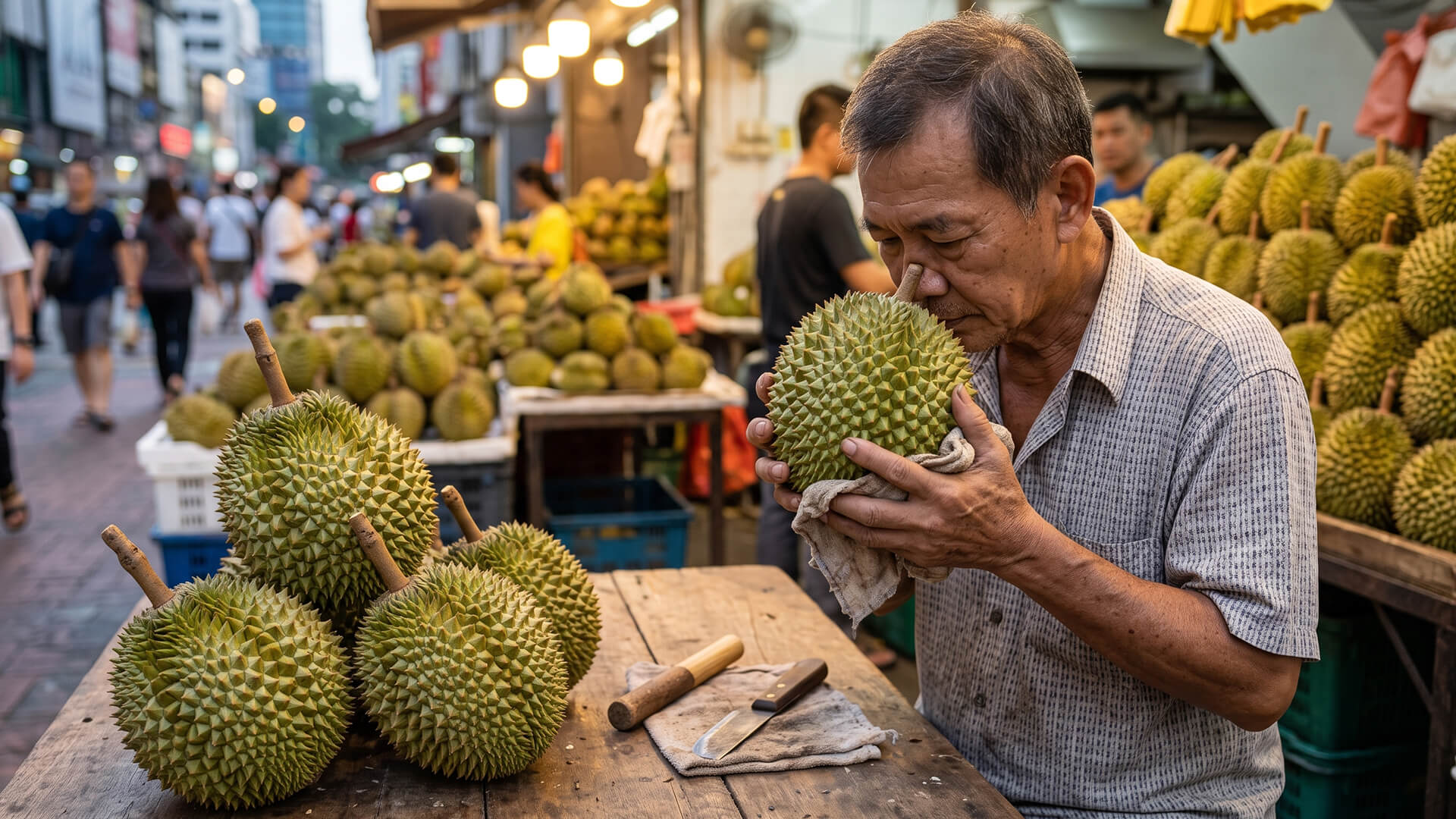
Gently shake the durian near your ear. If you hear a slight "thump" or movement, it means the flesh is ripe and has pulled away from the shell.
The Aroma
A ripe durian should have a strong, pleasant fragrance at the base. If it smells "green" or like grass, it isn't ready. If it smells overly sour, it may be overripe.
The Stem
Look for a moist, green stem. A dry, shriveled stem indicates the fruit was harvested a long time ago and may have lost its creaminess.
Conclusion: Start Your Tasting Journey
The beauty of Malaysian durians lies in their diversity. Whether you’re drawn to the balanced sweetness of the D24 or the deep, complex profile of the Black Thorn, the “right” choice is the one that makes your taste buds sing.
At Dury Dury, we recommend starting with a small platter of different variants to see which profile you prefer. Visit us during the peak durian season between June and July for the absolute best selection and quality!