Skip to content Skip to footer

D88 Bangkok 8

D88 Bangkok 8 Durian

A Timeless 1950 Classic with Perfectly Balanced Bitter-Sweetness

Step into a legendary chapter of Malaysian pomology with the D88 Bangkok 8. Renowned for its exceptionally thick, custard-like flesh, this vintage cultivar offers a deeply satisfying sensory experience. Beneath its pale, golden-hued arils lies a perfectly balanced flavor profile, which starts with smooth, aromatic sweet notes before yielding to a subtle, lingering bitterness. It is a dense, velvety treat crafted for those who appreciate classic depth and refined texture.

The Origin of D85 Durian

The story of D88, officially catalogued as Bangkok 8, begins in the early days of Malaysian pomology. Formally registered by the Malaysian Department of Agriculture on August 30, 1950, D88 holds a historic place as the very first entry in the pioneer “Bangkok” seedling collection evaluated at the landmark Serdang Agriculture Station. Selected long before the emergence of modern commercial hybrids, this vintage cultivar represents one of the foundational building blocks of Peninsular Malaysia’s rich durian heritage, surviving across generations primarily in traditional old-tree orchards throughout Johor and Penang.

Characteristics of D84 Durian

Penampilan

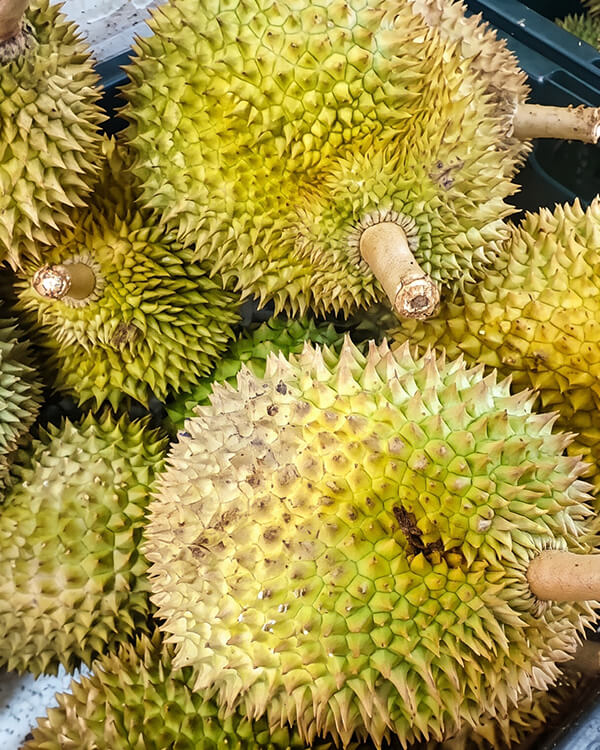
Visually, D88 is a substantial fruit that is very large with a distinctively oblong-to-oval shape and prominent, bulging pod chambers. Its husk features a muted, light brownish-green hue covered in broad, neatly arranged convex spines rather than sharp, slender thorns. Upon opening, D88 reveals generously packed pods filled with smooth, pale yellow arils, occasionally displaying a subtle, delicate pink blush running through the flesh of prime old-tree harvests.

Aroma

The aroma of D88 is medium-strong, inviting, and distinctively warm. Rather than an overpowering or harsh pungency, it releases a comforting, sweet fragrance dominated by notes of rich caramel, vanilla, and toasted sugar. As the fruit breathes, subtle undercurrents of wild flowers and a mild, earthy depth emerge, offering a pleasant and balanced scent profile that gently previews its creamy flavor.

Rasa & Tekstur:

On the palate, D88 offers an invitingly sweet flavor profile paired with a soft, creamy mouthfeel. The arils feature a light, delicate membrane that gives way to a smooth, custard-like flesh that tends to be quite juicy and watery at times. Delivering an easy-eating, refreshing bite, its pronounced sweetness and silky texture create a comforting, classic tasting experience.

Interesting Facts About D88 Bangkok 8 Durian

Health Benefits of D88

Beyond its classic taste and creamy texture, D88 packs a substantial nutritional profile typical of high-quality Malaysian cultivars. It is rich in dietary fiber, which aids digestion and promotes gut health, as well as essential minerals like potassium that help regulate blood pressure. Packed with antioxidants, vitamin C, and energy-boosting complex carbohydrates, enjoying D88 in moderation offers a natural immune boost and a wholesome, nutrient-dense treat.

What's The Best Time for D88 Durian?

To experience D88 at its absolute peak, look out for it during Peninsular Malaysia’s primary mid-year durian season. The optimal window for fresh D88 harvests typically runs tightly between May and July, peaking around June when old-tree orchards in Johor and Penang yield their best crop. Because it is a semi-rare heritage cultivar rather than a mass-commercialized variety, catching it during these peak summer months ensures you get the fruit at its freshest, most fragrant, and naturally sweet-creamy consistency.

Penanaman dan Penuaian

Keadaan Pertumbuhan

The D84 durian grows best in Malaysia’s tropical climate, thriving in warm, humid conditions with consistent rainfall and temperatures around 24–32°C. It prefers deep, well-drained, fertile soils that are slightly acidic to neutral, along with full sun exposure to support healthy flowering and fruit development. Trees should be spaced about 10–12 meters apart to ensure good airflow and reduce disease risk. Regular watering during dry periods, combined with proper fertilization, pruning, and pest management, helps D84 durians produce high-quality, large fruits with their signature creamy texture and balanced sweet-and-bitter flavor profile.

Proses Penanaman

Cultivating the D84 durian requires careful management throughout its growth cycle to ensure optimal yield and fruit quality. The process begins with selecting healthy grafted saplings planted in well-prepared, nutrient-rich soil. During the vegetative stage, young trees benefit from regular organic and balanced NPK fertilization to encourage strong branch structure and canopy growth. As trees mature and enter the flowering phase, water management becomes critical; a brief dry period triggers uniform floral budding, followed by controlled irrigation to support fruit set. Farmers routinely thin developing fruit clusters to prevent branch overload and allow selected pods to develop into fully shaped, oblong fruit. In Malaysia, harvesting traditionally relies on natural fruit drop at peak maturity, ensuring the pale yellow arils achieve their ideal creamy texture and rich, balanced sweet-and-bitter flavor profile.

Kaedah Penuaian

Durian D101 dituai apabila ia jatuh secara semula jadi dari pokok, menandakan bahawa ia telah masak dan sedia untuk dimakan. Buah-buahan ini dikumpulkan awal pagi untuk memastikan kesegarannya, memastikan bahawa ia sampai kepada pengguna dalam keadaan rasa dan tekstur yang terbaik.

Kegunaan Masakan

Hidangan Tradisional

In traditional Malaysian cuisine, D88 is highly valued for its rich sweetness and soft, fluid texture, making it a natural fit for classic durian-infused heritage recipes. Its creamy, watery flesh incorporates effortlessly into traditional desserts like pengat durian and serawa durian, where it dissolves into warm coconut milk and gula melaka to create a smooth, aromatic dessert soup. Beyond sweet treats, D88’s abundant aril yields make it an ideal candidate for natural fermentation, widely used by local cooks to prepare authentic tempoyak for rich, savory Malay sambals and freshwater fish curries.

Inovasi Masakan Moden

In modern patisseries and contemporary dessert labs, D88's soft, creamy consistency and rich caramel sweetness make it a favorite for artisanal pastries and frozen treats. Its tender, easily blended arils whip smoothly into light durian mousses, French choux puffs, and delicate crepe cakes without leaving fibrous clumps. Pastry chefs also leverage D88's natural sweetness and fluid texture to craft velvety gelato, durian soft-serve, and baked cheesecakes, giving classic Western-style desserts an authentic Malaysian twist.
Dury Dury Half Durian

Kesimpulan

Whether you are a dedicated durian connoisseur exploring historical heritage clones or simply seeking a deliciously sweet and creamy fruit, D88 (Bangkok 8) delivers a truly memorable tasting experience. With its rich mid-century roots, large fleshy pods, and distinctively succulent texture, this classic variety stands as a proud testament to Malaysia’s pomological legacy. Be sure to seek out fresh harvests during its peak mid-year season to savor a timeless piece of local durian history at its absolute best.

Dury Dury Half Durian

SOALAN LAZIM

D88 Bangkok 8 stands out for its rich mid-century heritage and distinctive physical profile. Officially registered in 1950 as the very first entry in the pioneer “Bangkok” seedling collection, it features large, oval fruits with prominent “pregnant belly” pod chambers. Unlike many dense or dry cultivars, D88 is prized for its soft, succulent arils that combine a smooth, custard-like creaminess with a delightfully juicy texture and a warm, caramel-sweet flavor.

The optimal time to enjoy D88 at peak quality is during Peninsular Malaysia’s primary mid-year durian season, which runs from May through July (peaking around June). A smaller, secondary harvest window can occasionally occur around December, but the summer months offer the best opportunity to catch fresh, tree-dropped fruits from mature orchards in Johor and Penang.

D88 is packed with essential nutrients, including dietary fiber for healthy digestion, complex carbohydrates for natural energy, and B-complex vitamins that support metabolism. It is also rich in antioxidants like vitamin C, as well as minerals such as potassium and magnesium, which aid in cardiovascular function and help regulate blood pressure when enjoyed in moderation as part of a balanced diet.

Thanks to its soft, easily blended flesh and natural caramel sweetness, D88 is exceptionally versatile in the kitchen. In traditional cuisine, its tender arils melt effortlessly into warm coconut desserts like pengat or serawa durian, served alongside glutinous rice (pulut durian), or fermented into authentic tempoyak. In modern patisseries, its smooth, fluid texture makes it an ideal ingredient for durian gelato, light mousses, choux pastries, and layered crepe cakes.

D88 originated in Peninsular Malaysia and was formally catalogued on August 30, 1950, by the Malaysian Department of Agriculture at the landmark Serdang Agriculture Station. It represents one of the earliest officially evaluated varieties in the country, with heritage trees historically preserved and cultivated across classic durian-growing regions in Johor and Penang.

Jenis Durian Lain

Dury Dury one over four Durian