D4 (Repok B2)
D4 (Repok B2) Durian
Silky Creaminess Meets Rich Bittersweet Heritage
Registered in 1934 as one of Malaysia’s earliest officially cataloged clones, D4 (Repok B2) is a true heirloom treasure originating from the historic orchards of Perak. Known for its delicate, paper-thin husk and soft, light yellow flesh, this classic cultivar delivers a luscious, velvety texture balanced by an authentically complex bittersweet finish. Because of its swift ripening cycle and rare availability outside local orchards, experiencing a freshly fallen D4 offers a nostalgic taste of pure, unadulterated Malaysian durian heritage that few modern commercial varieties can match.
The Origin Of D4 (Repok B2) Durian
Long before modern commercial hybrids dominated the market, the story of D4 (Repok B2) began in the lush, traditional orchards of Perak. Officially cataloged by the Malaysian Department of Agriculture in 1934, it stands as one of the country’s earliest recognized heritage clones. Originating from an era when durians were named after the villages and trees that birthed them, D4 represents almost a century of local agricultural history, a living testament to Malaysia’s rich, unadulterated durian legacy.
Characteristics Of D4 (Repok B2) Durian

Penampilan
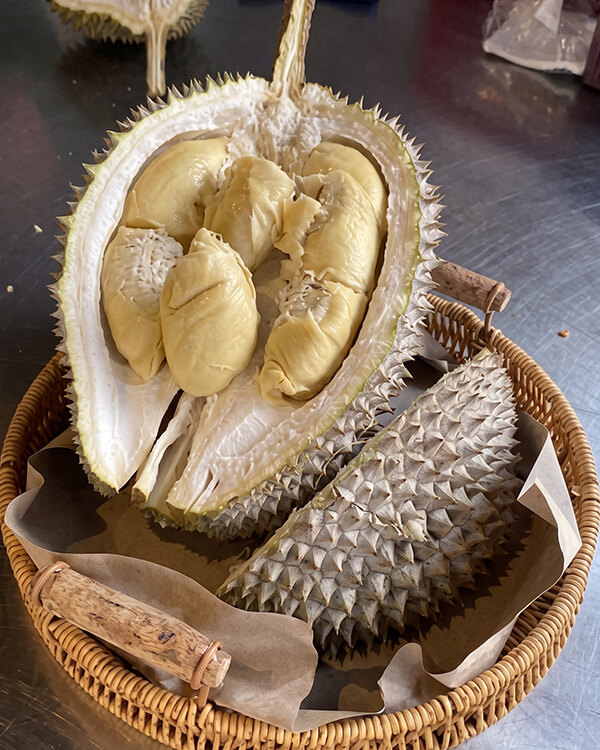
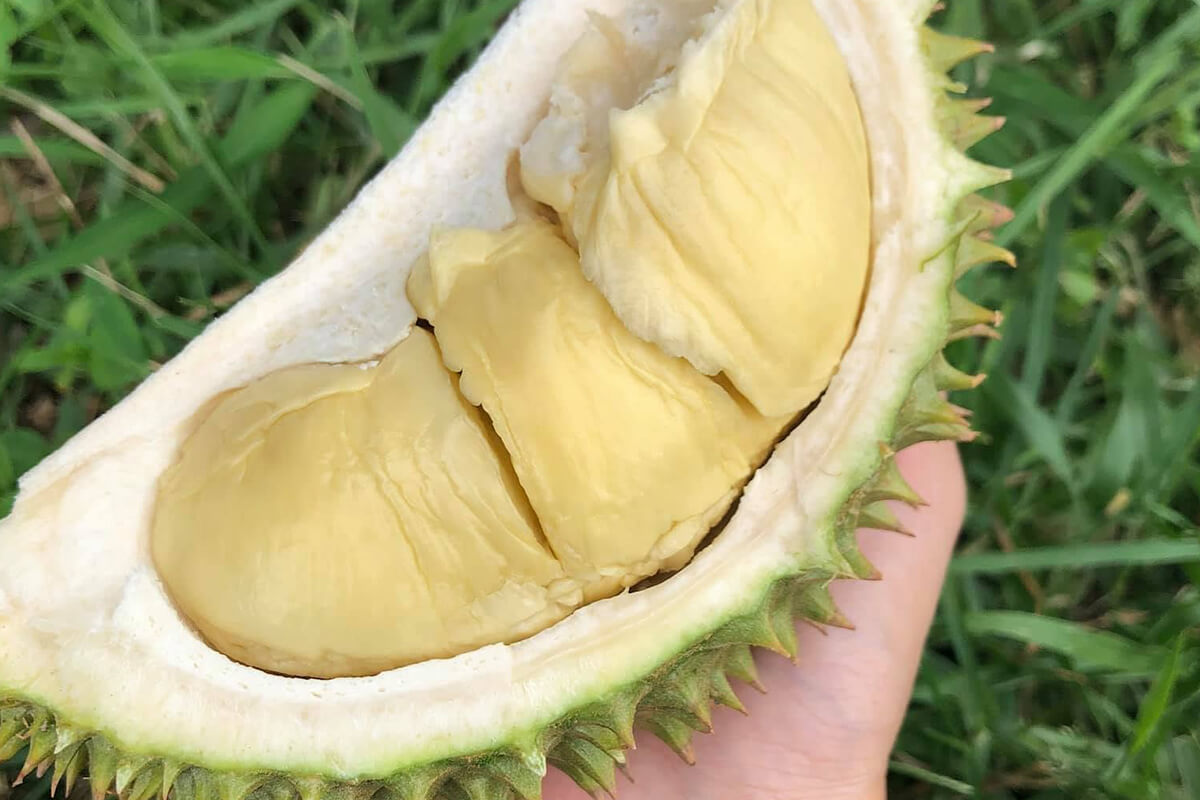
At first glance, the D4 (Repok B2) displays the classic charm of a traditional heirloom fruit. It typically yields a medium-sized, rounded to slightly oval frame encased in a thin, pale green husk lined with dense, sharp thorns. Upon opening the carpel seams, it reveals neatly tucked pods of soft, light yellow to pale golden flesh. The delicate, paper-thin aril skin gives the flesh a glistening, velvety finish that immediately promises a melt-in-your-mouth experience.

Aroma
True to its heritage status, D4 (Repok B2) carries a captivatingly rich and old-school olfactory profile. Upon opening, it releases a sweet, pungent bouquet layered with warm, caramelized notes and a subtle hint of wild floral musk. Because of its thin rind and rapid natural fermentation cycle, its fragrance intensifies quickly once ripe, filling the room with a deep, inviting perfume that signals classic, tree-ripened depth.

Rasa & Tekstur:
On the palate, D4 (Repok B2) offers a classic, uncompromised bittersweet flavor profile that true durian aficionados cherish. The initial bite yields a soft, silk-like creaminess that dissolves effortlessly, releasing a pronounced, lingering bitterness on the back of the tongue alongside a gentle honeyed sweetness. Because of its tender pulp and quick natural maturation, the texture strikes a balance between a light custard and a delicate, melting delicacy and delivering a deep, old-school flavor profile with every pod.
Interesting Facts About D4 (Repok B2) Durian
Health Benefits of D4
Beyond its prized heritage flavor, D4 (Repok B2) packages a wealth of natural nutrition within its soft arils. Like most traditional cultivars, D4 is naturally rich in dietary fiber that aids digestion, as well as essential minerals like potassium, which supports heart health and healthy blood pressure regulation. It also serves as a great source of Vitamin C and vital antioxidants to help boost immunity and combat cellular stress. Additionally, its complex carbohydrates deliver a fast, natural energy boost, while trace tryptophan supports serotonin production to elevate mood and promote relaxation, making this heirloom fruit as nourishing as it is satisfying.
What's The Best Time for D4 Durian?
The peak window to enjoy D4 (Repok B2) falls during the primary harvest months of June to August, with a smaller secondary yield occasionally appearing around December to January. Due to its short shelf life and quick-maturing pulp, D4 is a fruit best savored immediately. Visiting local Perak orchards or sourcing from specialized heritage vendors early in the day guarantees you catch this rare variety at peak freshness, fully intact, and rich with aroma.
Penanaman dan Penuaian
Keadaan Pertumbuhan
The D4 (Repok B2) durian thrives in Malaysia’s tropical climate, requiring warm, humid conditions with abundant rainfall and optimal temperatures around 24–32°C. It prefers deep, well-drained, nutrient-rich loamy soils that are slightly acidic to neutral, along with full sun exposure to fuel healthy flowering and fruit development. Trees should be spaced approximately 10–12 meters apart to promote air circulation and limit fungal humidity. Because D4 produces a thinner husk compared to modern hybrids, proper soil moisture management during dry spells and balanced fertilization are essential to prevent premature fruit drop and ensure maximum pulp quality.
Proses Penanaman
Cultivating D4 relies on vegetative propagation, which typically involves patch-budding or grafting to preserve its distinct heirloom characteristics. Grafted trees generally begin bearing fruit within 4 to 5 years. Care during the flowering and fruit-setting stages includes careful pruning to support tree structure, along with targeted pest and disease management. Because D4 has an exceptionally fast natural maturation cycle and a thin shell prone to splitting, harvesting requires prompt orchard collection immediately as the ripe fruit drops, ensuring its signature velvety, bittersweet flesh reaches consumers at peak perfection.
Kaedah Penuaian
Durian D101 dituai apabila ia jatuh secara semula jadi dari pokok, menandakan bahawa ia telah masak dan sedia untuk dimakan. Buah-buahan ini dikumpulkan awal pagi untuk memastikan kesegarannya, memastikan bahawa ia sampai kepada pengguna dalam keadaan rasa dan tekstur yang terbaik.
Kegunaan Masakan

Hidangan Tradisional
Due to its tender flesh and potent, classic flavor, D4 (Repok B2) shines in timeless Southeast Asian recipes. Its high pulp-to-husk yield makes it a natural choice for heritage recipes like tempoyak, enriching spicy freshwater fish curries with a velvety, savory-sweet depth. When simmered down with palm sugar (gula melaka) and coconut milk for classic serawa or pengat durian, D4 imparts an authentically rich, aromatic profile that embodies traditional kampong comfort food.

Inovasi Masakan Moden
In modern gastronomy, D4 (Repok B2) brings a sophisticated heirloom profile to contemporary Western pastries and artisanal desserts. Pastry chefs favor its silky, light-yellow pulp for whipping into delicate choux craquelin fillings, mousses, and French mille-feuille (layer crepes), where its natural bittersweetness provides a complex contrast to fresh cream without overpowering the palate. It has also found a home in modern cold treats like small-batch gelatos, Japanese snowskin mochi daifuku, and burnt cheesecakes, where the rich, custardy arils melt seamlessly into the base, giving classic desserts a distinctly aromatic, tropical twist.
Kesimpulan
As one of Malaysia’s most storied heirloom clones, D4 (Repok B2) offers far more than just a rich, bittersweet bite, and serves as a delicious connection to almost a century of local agricultural history. While modern commercial varieties may dominate the export market, D4 remains a celebrated insider’s secret, cherished by purists who appreciate its velvety texture, rapid maturation, and authentic kampong charm. Whether enjoyed fresh off the tree in a Perak orchard or crafted into an artisanal dessert, experiencing D4 is a rare, nostalgic journey into the very roots of Malaysian durian heritage.
SOALAN LAZIM
What makes D4 Repok B2 durian stand out from its counterparts?
Unlike modern, thick-shelled commercial hybrids engineered for long export transit, D4 (Repok B2) stands out as an authentic 1934 heirloom clone from Perak. It is distinguished by its remarkably thin green husk, rapid natural maturation, and a classic, uncompromised bittersweet flavor profile paired with soft, light yellow, velvety arils.
When is the best time to find D4 Repok B2 durians?
The optimal time to source fresh D4 durians is during Malaysia’s primary mid-year fruiting season, which runs from June through August. Because D4 has a delicate husk and ripens very quickly after dropping from the tree, it is best enjoyed on the exact day of harvest ideally within hours of falling in order to experience its signature creaminess at peak quality.
What are the health benefits of consuming D4 Repok B2 durians?
D4 durians are naturally rich in essential nutrients and dietary fiber that support healthy digestion. They contain significant amounts of potassium (which aids cardiovascular health and blood pressure regulation), Vitamin C for immune support, and natural antioxidants. Additionally, D4 provides a clean source of natural energy through healthy complex carbohydrates and contains tryptophan, an amino acid that helps promote relaxation and mood enhancement.
How do I use D4 Repok B2 durians in culinary dishes?
Thanks to its soft pulp and deep flavor, D4 is highly versatile in both traditional and modern cooking:
- Traditional Dishes: Its soft texture makes it ideal for mashing into authentic tempoyak (fermented durian paste) used in spicy freshwater fish curries, or simmering with coconut milk and gula melaka for rich serawa (durian porridge).
- Modern Innovations: Its smooth, custardy flesh easily incorporates into Western and fusion desserts like artisanal gelatos, durian burnt cheesecakes, French layer crepes (mille-feuille), and delicate snowskin mochi daifuku.
Where does the D4 Repok B2 durian originate from?
The D4 Repok B2 clone originated in the state of Perak, Malaysia. It was officially cataloged and registered by the Malaysian Department of Agriculture in 1934, making it one of the country’s earliest officially recognized heritage durians.
Jenis Durian Lain

D200 Black Thorn

D197 Musang King

D175 Udang Merah

D24 XO

D28 Raja Mentega

D198 Kim Hong

D163 Horloh

D13 Roti Emas

Tai Yuan

D160 Tekka

D101 Mas Muar

D158 Cheong Peng

Lao Tai Po

D2 Dato Nina

D10 Durian Hijau

D165 Green Skin

D18 Sunset

D3 Second Son

D164 Red Flesh

D1 Durian

D5 Ibrahim

D6 Samsu

D7 Durian

D8 Durian

D11 Durian

D29 Durian