D3 Second Son
D3 Second Son Durian
Pure Malaysian Heritage In Every Creamy Bite
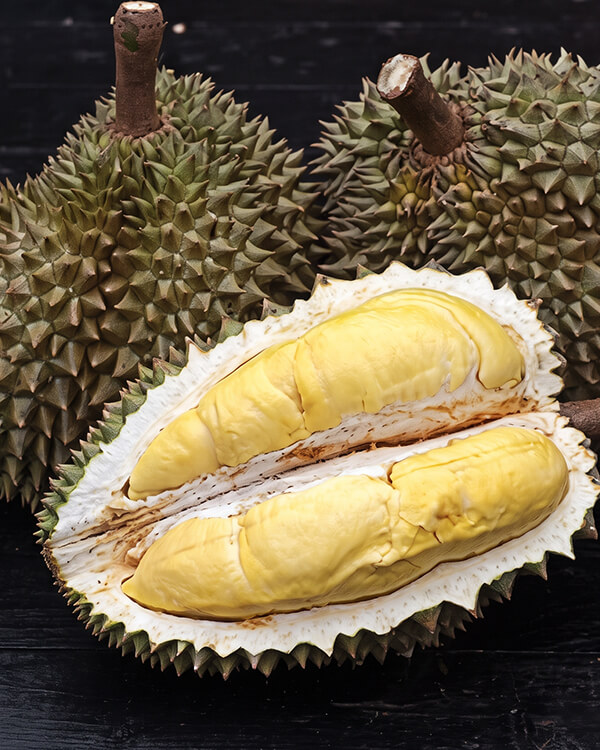
The D3 durian is one of Malaysia’s earliest cultivars, and as such, is cherished by locals for its nostalgic flavor. D3 Second Son is known for its balanced sweetness, gentle bitterness, and is easily recognized by its sharp, green spikes tipped with brown and its pale yellow to light golden flesh. With its vibrant flesh and fragrant aroma, the D3 Second Son stands as a proud representative of Malaysia’s rich durian legacy: simple, authentic, and timeless.
The Origin of D3 Durian
Being one of Malaysia’s earliest durians, the D3 Second Son was registered in 1939, soon after the foundation of the Malaysian Department of Agriculture. Though it’s no longer as popular now as it was nearly a century ago due to the modern premium varieties that have emerged such as Musang King, it still remains a favourite for those who enjoy the classic flavours.
Characteristics of D3 Second Son Durian

Penampilan
The D3 durian is easily recognized by its appearance. The shape of D3 Second Son can range between being oval shaped to being slightly elongated. The thorns of the durian are sharp, with brown colored tips, and are typically spaced slightly wider apart compared to spikier modern varieties. The color of its husk is also easily identifiable, as it is a shade of greenish-brown. Once opened, the flesh is a pale yellow to light golden color, contrasting with the deeper colors of more modern durian varieties.

Aroma
Although D3 Second Son still has that recognizable durian smell, it has been described as having a balanced aroma that is not as overwhelmingly pungent as some of its other counterparts. Durian lovers can detect a scent of sweetness and a prominent nutty character, which complements its subtle nutty flavor.

Rasa & Tekstur:
The D3 Second Son durian is cherished for its balanced, traditional Malaysian flavour and smooth, creamy texture. Its taste is mildly sweet with a gentle bitterness and subtle nutty undertones, offering a classic durian experience that is less intense than modern premium varieties. In terms of texture, the D3 is known for its thick, smooth, and creamy flesh, often likened to a rich, velvety custard, which dissolves pleasantly on the palate. This combination of a balanced sweet-nutty-bitter flavor and a desirable custard-like consistency makes the D3 a favourite among local Malaysian durian enthusiasts.
Interesting Facts About D3 Durian
Health Benefits of D3
The D3 Second Son durian is not only a delicious heritage fruit but also packed with nutrients that support overall health. It provides a quick energy boost from natural sugars and carbohydrates, while its dietary fiber aids digestion. Rich in vitamins like C and B-complex, as well as minerals such as potassium, magnesium, and iron, it helps support immunity, blood circulation, and muscle function. Additionally, its antioxidants combat oxidative stress, and naturally occurring tryptophan may promote better mood and sleep. When enjoyed in moderation, D3 durian offers a wholesome, nutrient-rich treat with both traditional flavor and health benefits.
What's The Best Time For D3 Durian?
The best time for D3 Second Son durian in Malaysia is typically during its main fruiting season from June to August, though some trees may also produce a smaller crop in December to January. This variety, being an older heritage cultivar, tends to have a shorter peak season compared to modern clones like Musang King, so timing is important for the best quality. During this period, the fruits are fully mature, with optimal sweetness, creamy texture, and balanced aroma, offering the classic nostalgic flavor that D3 is known for.
Penanaman dan Penuaian
Keadaan Pertumbuhan
The D3 Second Son durian grows best in Malaysia’s tropical climate, thriving in warm, humid conditions with consistent rainfall and temperatures around 24–32°C. It prefers deep, well-drained, fertile soils that are slightly acidic to neutral, along with full sun exposure to support healthy flowering and fruit development. Trees should be spaced about 10–12 meters apart to ensure good airflow and reduce disease risk. Regular watering during dry periods, combined with proper fertilization, pruning, and pest management, helps D3 durians produce high-quality fruits with their signature creamy texture and balanced, nostalgic flavor.
Proses Penanaman
The cultivation of the D3 Durian, or Second Son, begins with grafting to guarantee the desirable traits of the parent tree, ensuring the young saplings are genetically true-to-type before being planted in well-drained, deep loamy soil at wide spacings to allow for full canopy development. Throughout the maturation process, which sees grafted trees begin to fruit within 4 to 6 years, intensive orchard management is essential, requiring precise water management (including a crucial dry period to induce flowering), targeted fertilization to support vegetative and reproductive phases, and rigorous pruning and pest control to maintain tree health. Finally, to ensure the signature creamy texture and balanced flavor of the D3 is achieved, the fruit is traditionally allowed to fully ripen on the branch and drop naturally before collection.
Kaedah Penuaian
Durian D101 dituai apabila ia jatuh secara semula jadi dari pokok, menandakan bahawa ia telah masak dan sedia untuk dimakan. Buah-buahan ini dikumpulkan awal pagi untuk memastikan kesegarannya, memastikan bahawa ia sampai kepada pengguna dalam keadaan rasa dan tekstur yang terbaik.
Kegunaan Masakan

Hidangan Tradisional
The D3 Durian, possessing a desirable creamy texture and a balanced sweet-nutty flavor, would traditionally be utilized in the most classic Malaysian durian preparations rather than being singled out by its cultivar code. Historically, its excellent flesh quality makes it perfectly suited for producing Tempoyak, a pungent fermented durian paste that serves as the base for savory dishes like Sambal Tempoyak and Gulai Ikan Tempoyak. Furthermore, its creamy richness is ideal for sweet confections such as Dodol Durian, a dense, caramel-like sticky sweet made with coconut milk and palm sugar, and for preparing Serawa Durian (or Pengat), a warm durian sauce that is poured over plain glutinous rice (Pulut Durian) or pancakes for a traditional, indulgent dessert.

Inovasi Masakan Moden
The balanced flavor and superior creamy texture of the D3 Durian make it an excellent choice for a variety of modern culinary innovations that are popular in contemporary Southeast Asian food scenes. Its smooth, custard-like flesh translates perfectly into sophisticated frozen treats like premium Durian Ice Cream, Gelato, and Mochi, where the sweetness and nutty undertone are highly desirable. Beyond frozen desserts, the D3 is often incorporated into fusion pastries, serving as a high-quality filling for popular items such as Durian Cheesecakes, Mille Crêpe Cakes, and flaky Durian Puffs.
Kesimpulan
The D3 Second Son durian remains a cherished part of Malaysia’s rich durian heritage, offering a nostalgic taste that stands apart from today’s bold, premium varieties. With its gentle aroma, balanced sweet-bitterness, and smooth, creamy texture, it continues to delight those who appreciate classic, old-school flavours. Though not as commercially dominant as newer cultivars, D3 holds its place as a meaningful, time-honoured variety that reflects Malaysia’s deep-rooted durian culture. For enthusiasts seeking authenticity, tradition, and a comforting durian experience, D3 is a timeless choice worth rediscovering.
SOALAN LAZIM
What makes D3 Second Son durian stand out from its counterparts?
D3 Second Son is unique for its classic, old-school Malaysian flavour profile. It offers a balanced blend of mild sweetness, gentle bitterness, and subtle nuttiness, paired with a smooth, creamy texture. Its aroma is softer and less pungent than modern premium varieties, making it highly approachable and nostalgic for traditional durian lovers.
When is the best time to find D3 Second Son durians?
The D3 Second Son typically appears during Malaysia’s main durian seasons, which usually fall between June – August and December – January. Availability may vary by region and orchard, but it is generally more common during the mid-season harvest.
What are the health benefits of consuming D3 Second Son durians?
D3 durians provide a natural energy boost thanks to their healthy carbohydrates and sugars. They are rich in vitamins C and B, antioxidants, potassium, and dietary fiber, supporting digestion, immunity, and healthy blood pressure. The fruit also contains tryptophan, which can help promote relaxation and improve mood.
How do I use D3 Second Son durians in culinary dishes?
The creamy, subtly flavoured flesh of D3 makes it versatile for both fresh consumption and cooking. It can be used in pastries, ice cream, crepes, tempoyak (fermented durian), cakes, smoothies, and traditional Malaysian desserts like dodol or pengat. Its mild profile makes it ideal for dishes where you want durian flavour without overpowering richness.
Where does the D3 Second Son durian originate from?
D3 Second Son is one of Malaysia’s early heritage durian cultivars. It was among the earlier clones identified and cultivated in the country, making it a longstanding part of Malaysia’s rich durian-growing tradition. Its name reflects its classification among the initial clones developed during Malaysia’s early orchard development era.
Jenis Durian Lain

D200 Black Thorn

D197 Musang King

D175 Udang Merah

D24 XO

D28 Raja Mentega

D198 Kim Hong

D163 Horloh

D13 Roti Emas

Tai Yuan

D160 Tekka

D101 Mas Muar

D158 Cheong Peng

Lao Tai Po

D2 Dato Nina

D10 Durian Hijau

D165 Green Skin

D18 Sunset

D164 Red Flesh

D1 Durian

D4 (Repok B2)

D5 Ibrahim

D6 Samsu

D7 Durian

D8 Durian

D11 Durian

D29 Durian