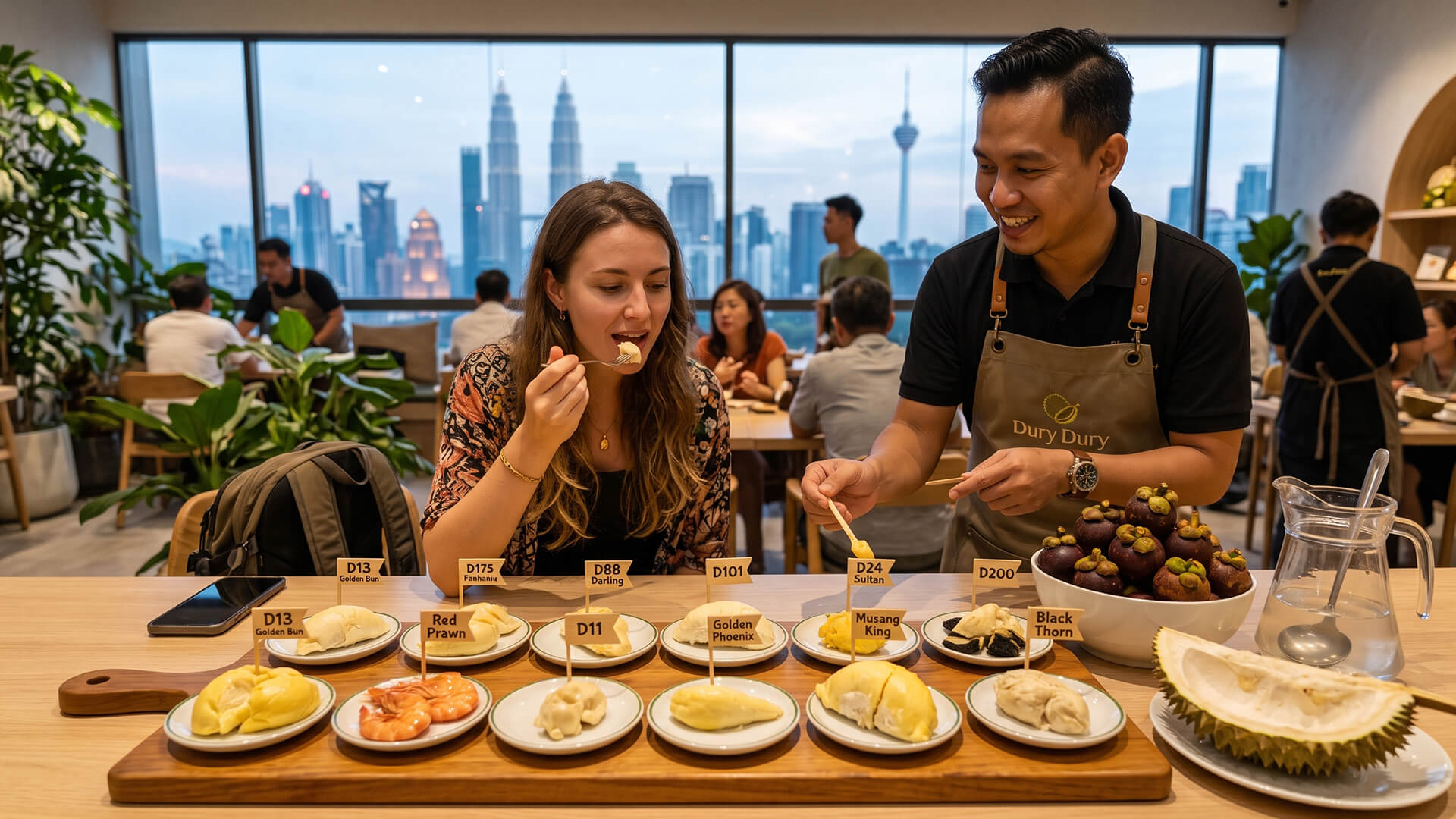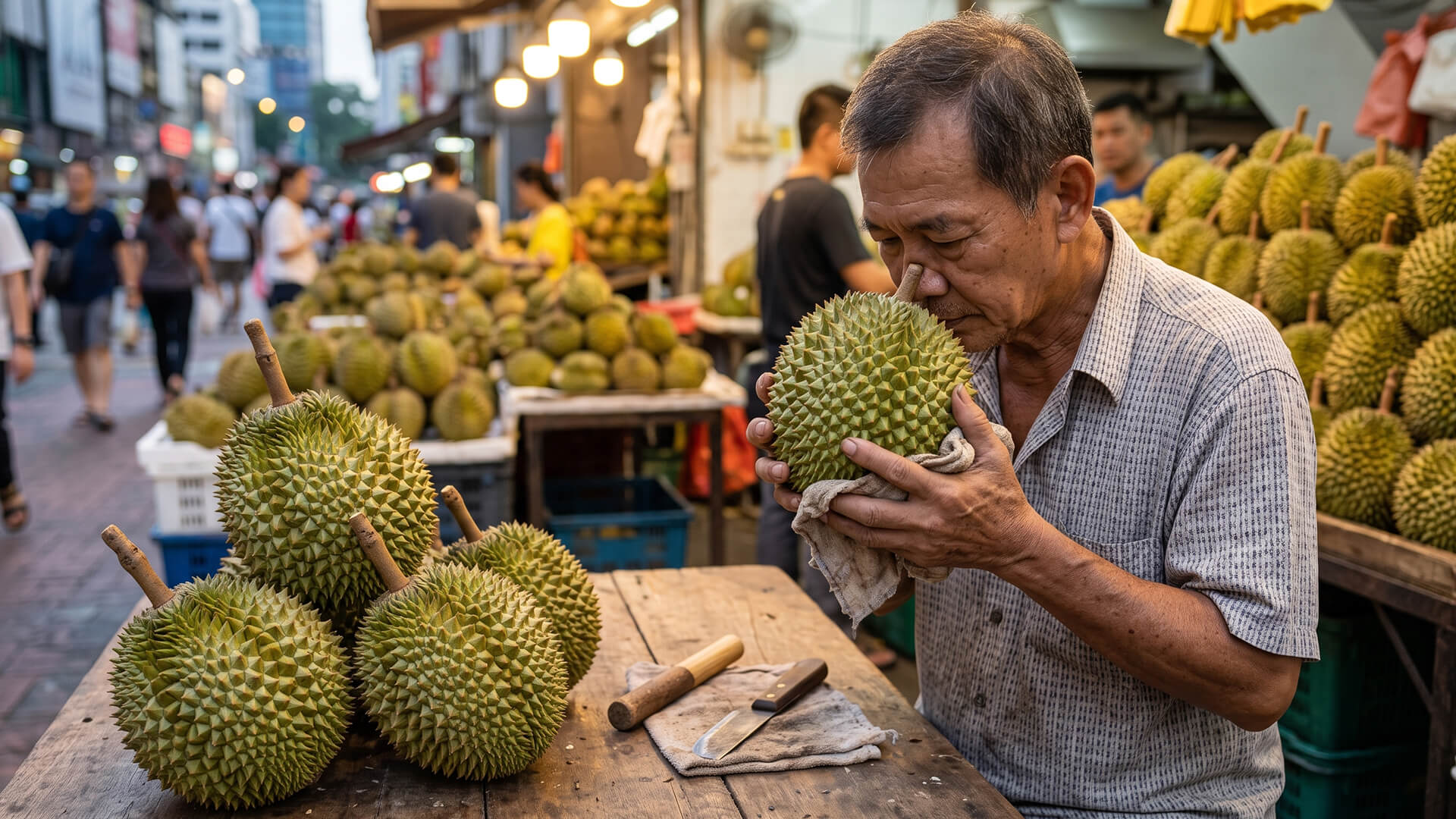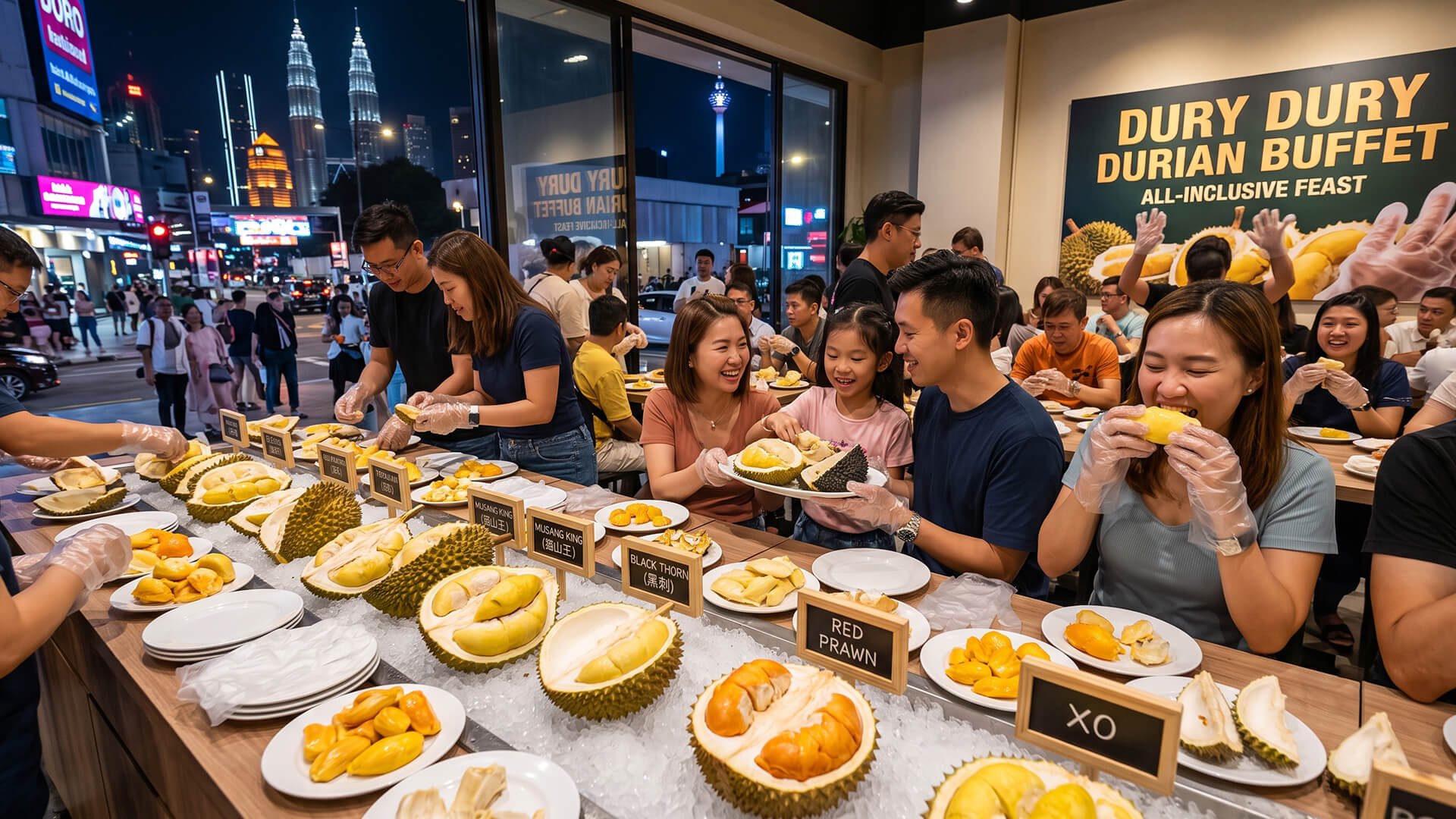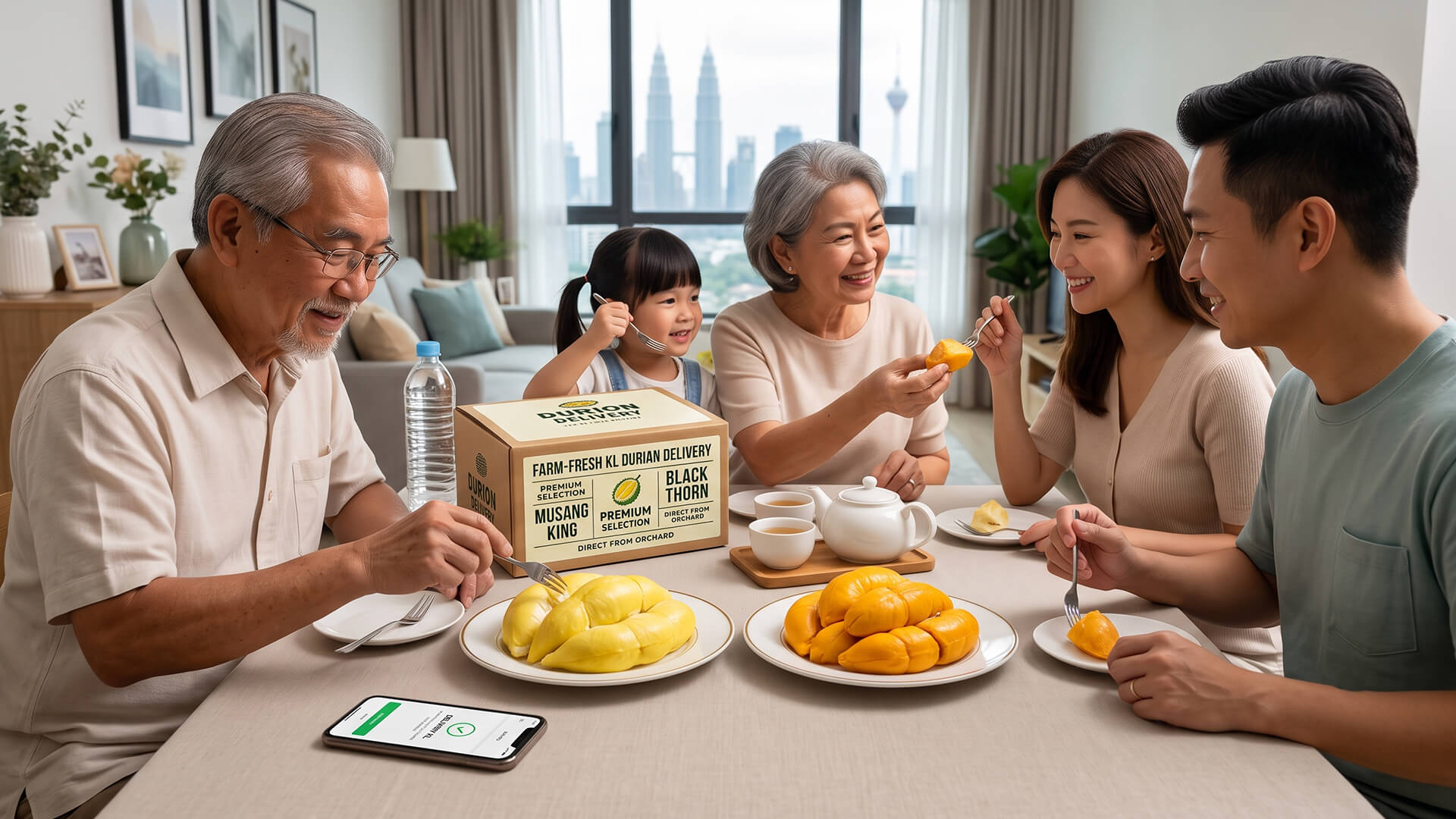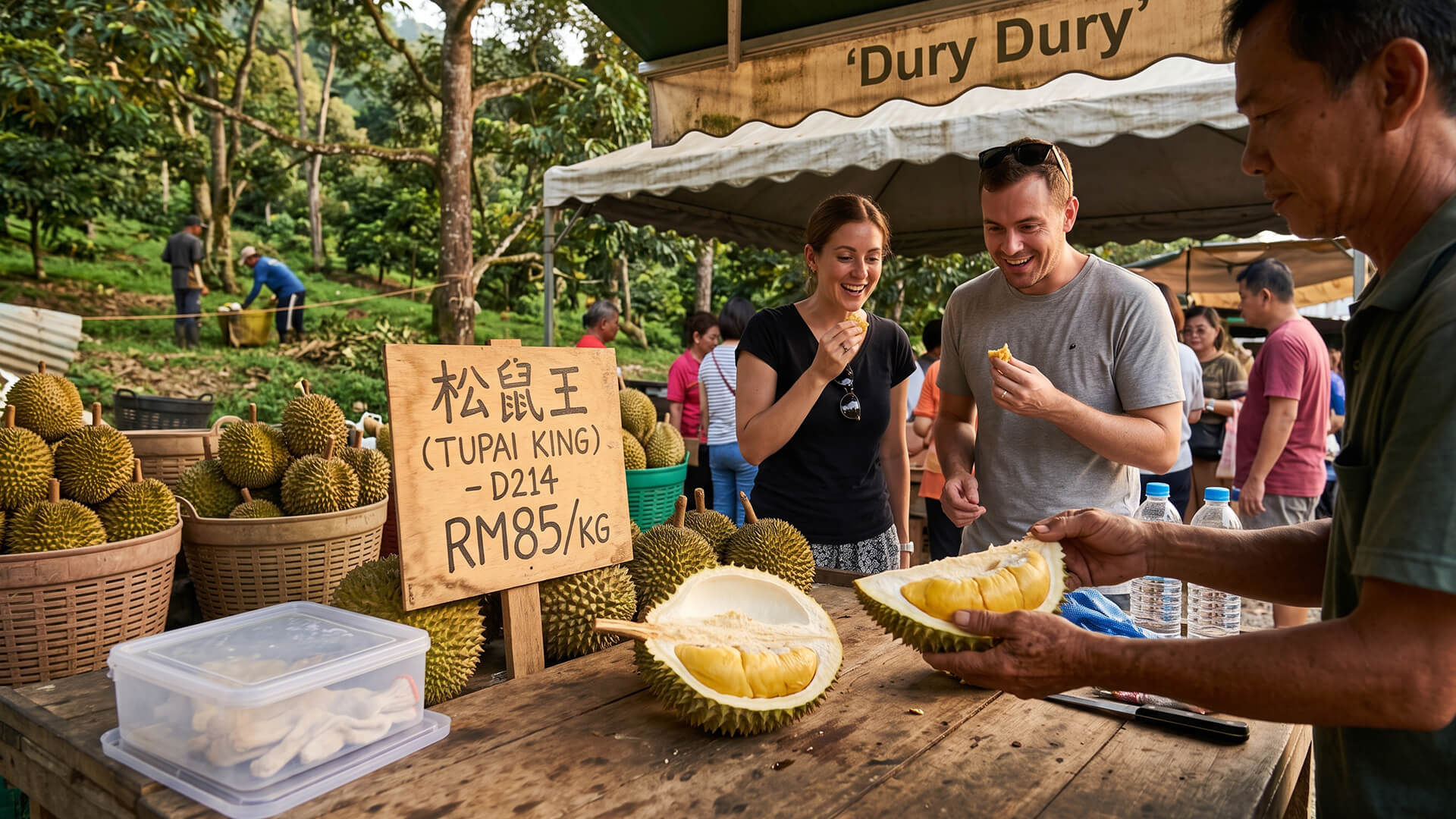
Walk up to any modern durian stall in Kuala Lumpur during peak season, and you will be met with a sea of glowing digital signs flashing the heavy hitters: Musang King (D197) and Black Thorn (D200). They are the pristine, predictable royalties of the commercial fruit world. They command premium prices, promise perfect yellow flesh every single time, and dominate international headlines.
Yet, if you pull up a plastic stool at Dury Dury and talk to the purists, which could include the seasoned uncles, the orchard hunters, and the hardcore enthusiasts who have been eating the fruit for half a century, you will notice a fascinating trend. Once they’ve had their fill of the rich commercial clones, they almost always look for the basket labeled Durian Kampung (Village Durian).
In a world obsessed with standardization, the humble, unregistered, wild-card village durian remains a deeply revered favorite. Here is exactly why true enthusiasts refuse to let Durian Kampung go.
1. The "Loot Box" Excitement: No Two Fruits Are Ever Alike
When you buy a Musang King, you know exactly what you are getting before the knife even pierces the husk: thick, custardy, bittersweet, bright yellow flesh. It is delicious, but it lacks a critical element of the old-school durian culture: the thrill of the hunt.
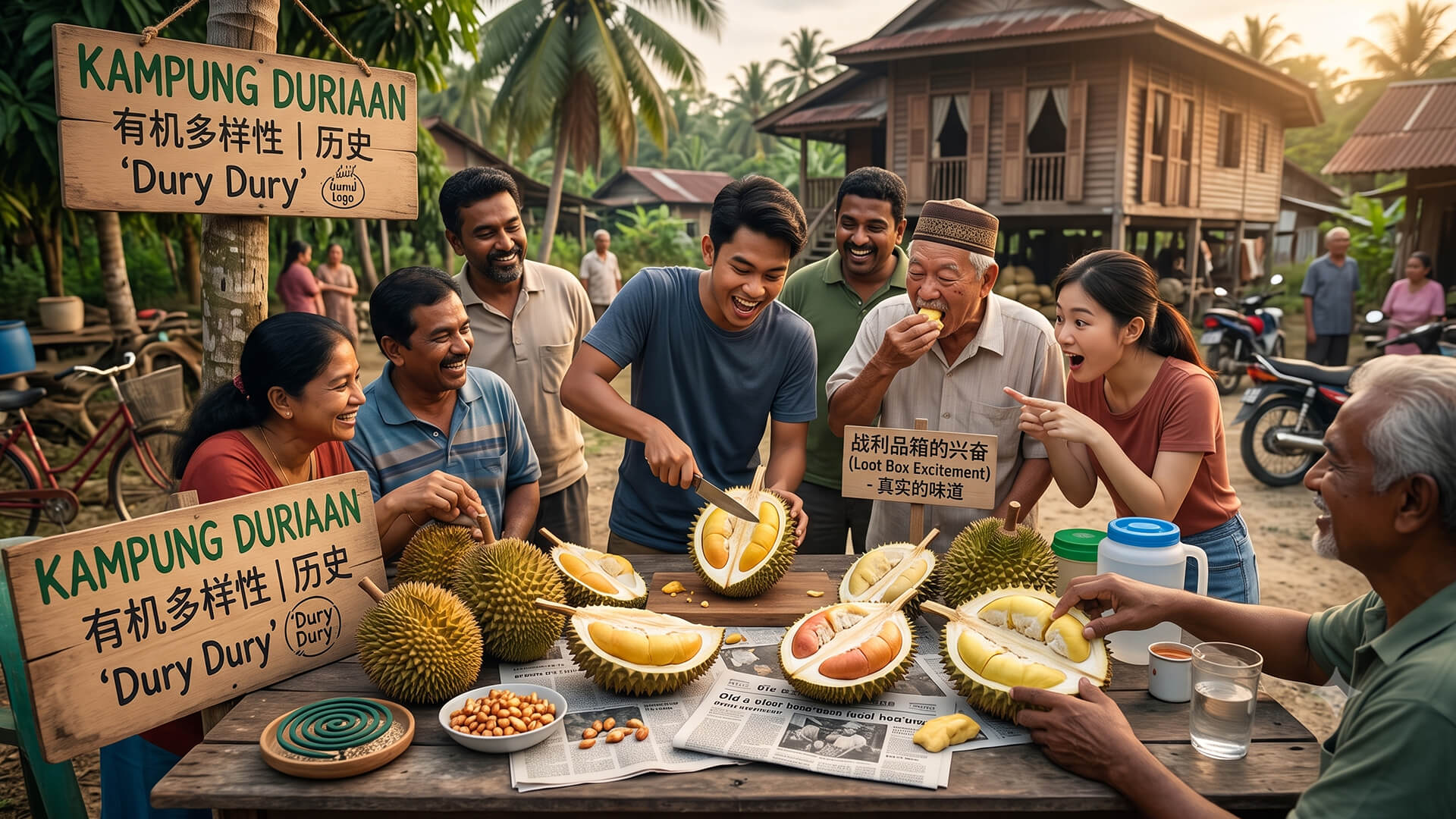
Durian Kampung trees are grown from untamed, open-pollinated seeds rather than standardized clones or grafts. Because of this genetic lottery, every single tree produces an entirely unique fruit. Opening a basket of Durian Kampung is the culinary equivalent of opening a gaming loot box or a mystery package:
- One fruit might reveal pale, milky-white flesh that tastes heavily of sweet vanilla and bananas.
- The very next fruit from the same pile might feature wrinkled, greyish-green flesh that delivers an intense, numbing, alcoholic punch that rivals an XO.
- Even different compartments (locules) inside the same exact fruit can vary in flavor depending on how much sunlight that side of the tree received.
For an enthusiast, this unpredictability is pure joy. It turns a simple meal into an interactive tasting adventure where you are constantly discovering entirely new flavor profiles that have never been codified or registered by the Department of Agriculture.
2. Unmatched Old-Tree Complexity
Many of the commercial Musang King and Black Thorn orchards feeding the market today are relatively young, planted over the last decade to meet surging global demand.
Durian Kampung trees, on the other hand, are often the giants of the Malaysian countryside. It is incredibly common to find village trees in states like Pahang, Perak, and Penang that are 40, 60, or even 100 years old, passed down through multiple generations of a single family. In the durian world, tree age dictates flavor complexity.
These massive, deep-rooted heritage trees draw nutrients from deep within the earth, translating into a depth of flavor that young trees simply cannot replicate. Old-tree Kampung durians possess a characteristic “gassiness,” a wild funk, and a lingering, complex bitterness that coats the back of your throat long after you’ve swallowed the flesh.
3. Lightness: Built for Serious Feast Sessions
Premium commercial clones are notoriously heavy. Cultivars like Musang King are dense, oily, and intensely rich in fats and sugars. While glorious for the first few seeds, they can quickly lead to what locals call jelak, which is that feeling of being completely overwhelmed and weighed down by richness. Durian Kampung generally features a much lighter, silkier, and more watery or fibrous texture.
Because it contains less dense fat, it is incredibly refreshing to eat in hot weather. It doesn’t instantly coat your palate in a thick paste. This lighter profile is exactly what makes it the ultimate choice for a true community feast. You can easily sit down with a group of friends at Dury Dury and polish off five or six Kampung durians, enjoying a massive spectrum of different flavors without feeling instantly sluggish.
4. The True Cultural Heart of Malaysia
Long before durian became a high-end luxury commodity or an export goldmine, it was a fruit that brought families together.
For baby boomers and Gen-X Malaysians, the memory of eating durian isn’t about air-conditioned boutiques or paying premium per-kilogram prices. It’s a memory of a father pulling up a rusted car trunk filled with unselected village fruits bought from a roadside dusun (orchard), and the family gathering on newspapers on the floor while he split them open one by one.
Eating Durian Kampung connects enthusiasts to that raw, authentic heritage. It is a reminder of the fruit’s humble roots—wild, affordable, communal, and deeply tied to the natural biodiversity of the Malaysian jungle.
Conclusion: Don't Skip the Village Basket
At Dury Dury, we appreciate the flawless perfection of a top-tier Black Thorn as much as anyone. But we also believe that to truly love durian is to appreciate its wild, unpredictable roots.
The next time you visit our tables, look past the bright golden celebrity clones for just a moment. Grab a couple of small, uniquely shaped Durian Kampung. Gather your friends, keep an open mind, and enjoy the beautiful, chaotic, and incredibly delicious mystery of Malaysia’s original King of Fruits.