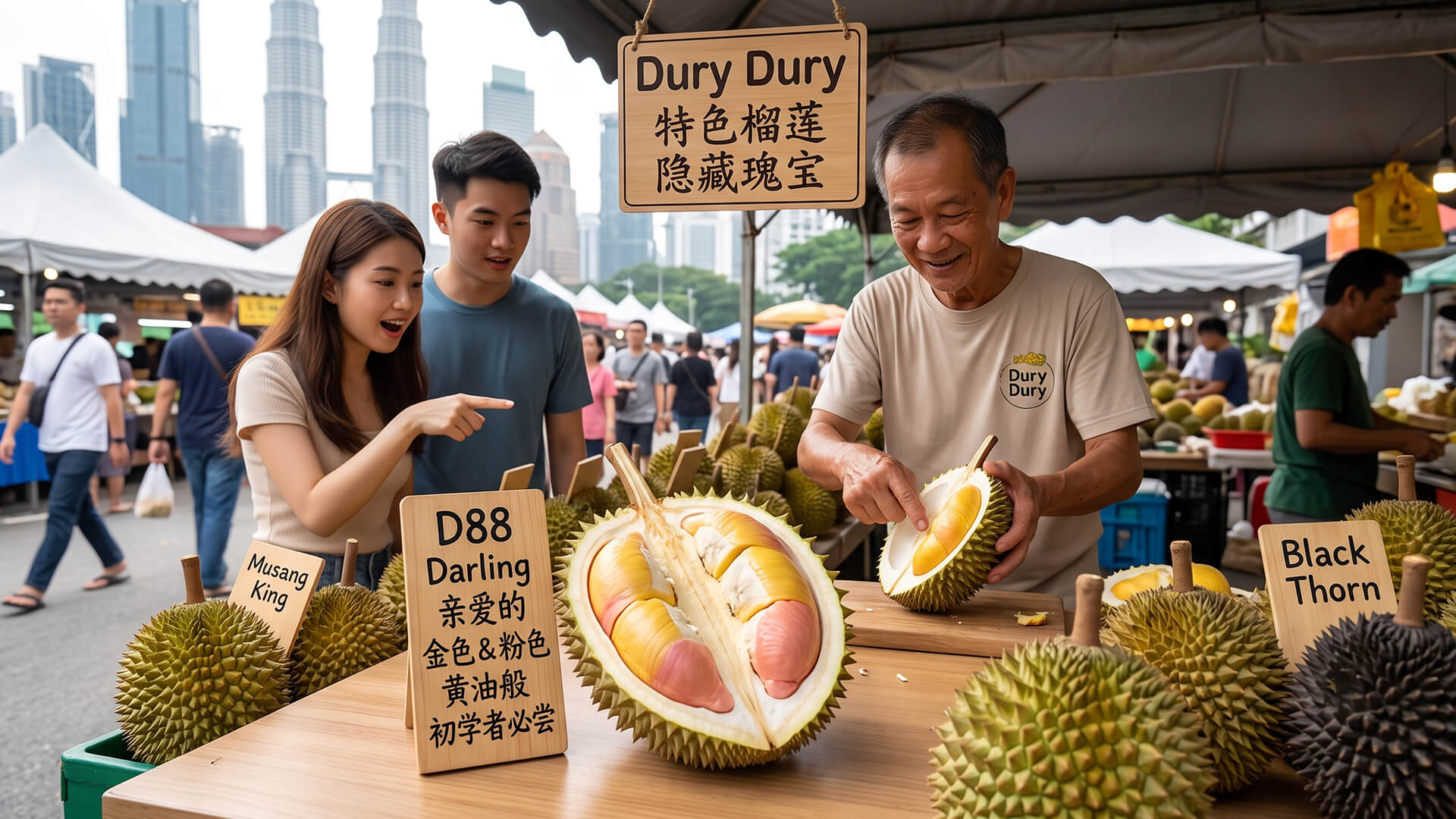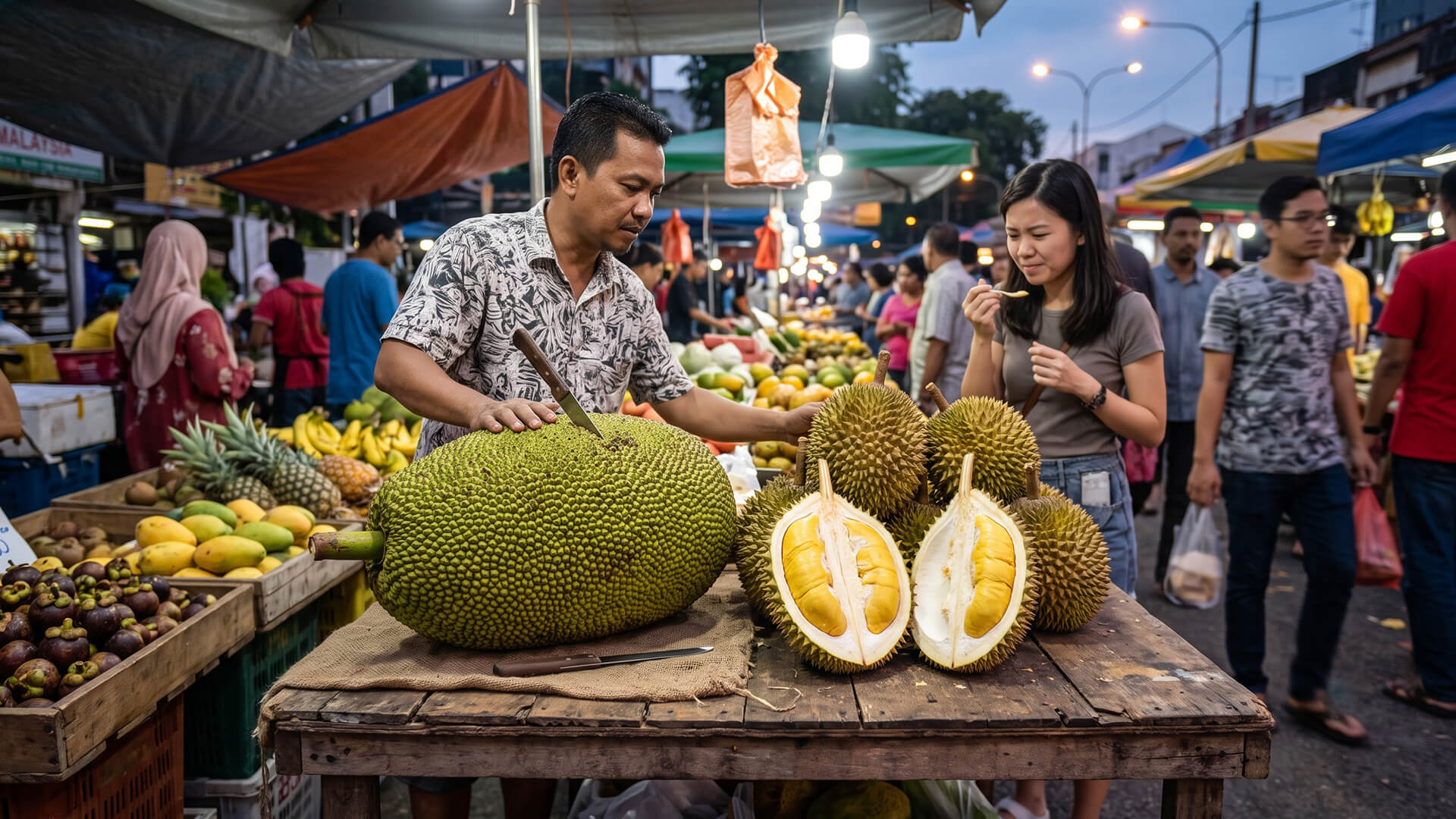
At Dury Dury, we often see tourists and newcomers to Kuala Lumpur pointing at large, green, bumpy fruits and asking if they are looking at a durian. More often than not, they are actually looking at a Jackfruit (locally known as Nangka).
To the untrained eye, both fruits look like prehistoric, heavy green pods covered in texture. Both are staples of the Malaysian landscape, and both thrive during our tropical summers. However, under the skin, they belong to completely different plant families and offer entirely distinct culinary experiences. Let’s break down the definitive differences between the King of Fruits and the world’s largest tree-borne giant.
1. The Visual Test: Spikes vs. Bumps
While both fruits look intimidating, telling them apart from a distance is quite simple once you know what to look for:
The Durian
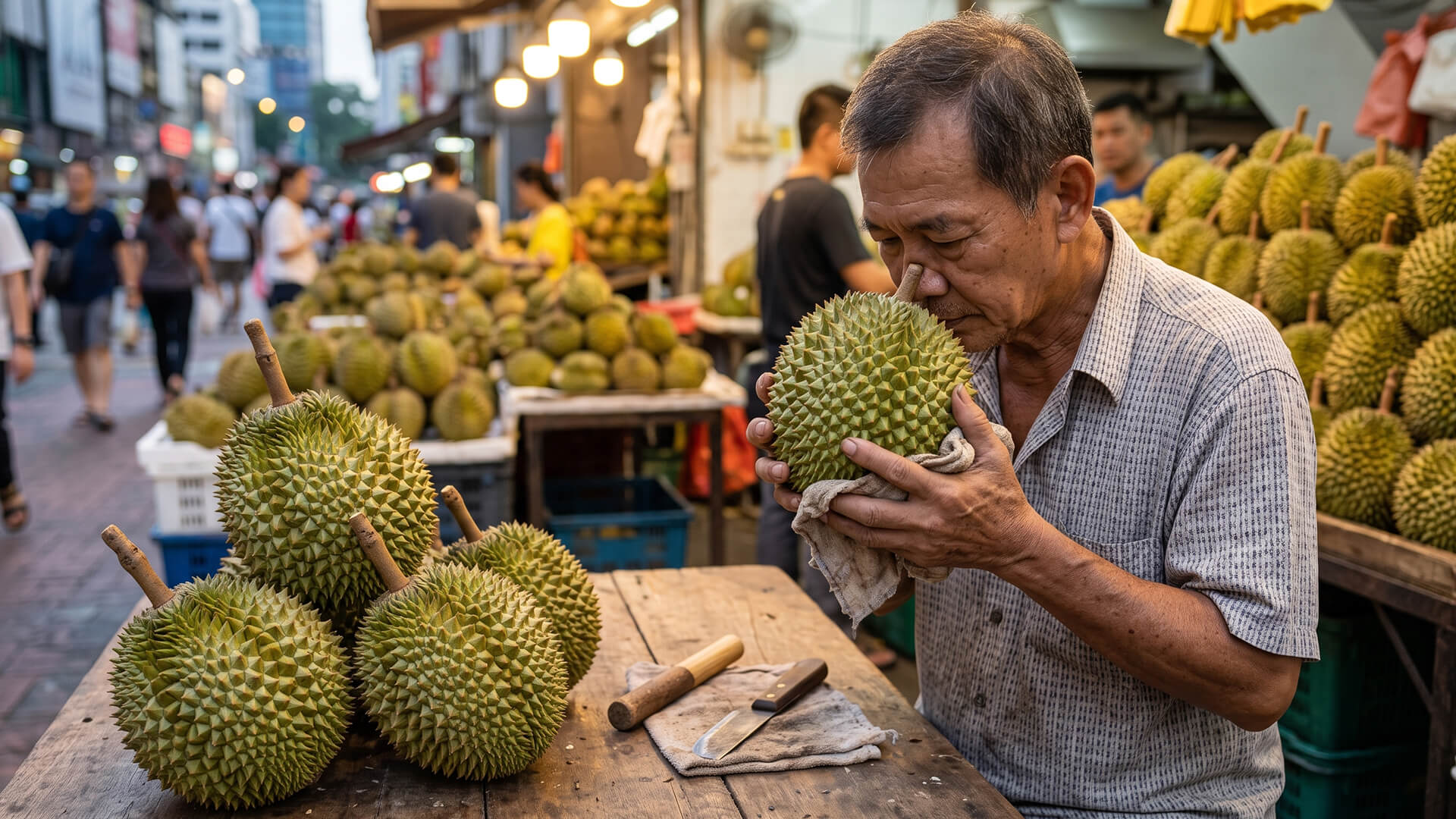
Smaller in size (typically 1kg to 4kg). It is covered in sharp, distinct, needle-like spikes. You cannot easily hold a whole Musang King or D24 with bare hands without getting scratched.
The Jackfruit
Massive in comparison (can easily reach 10kg to 30kg, making it the largest tree fruit in the world). Its rind is bumpy and pebble-like, rather than sharply spiked, making it much safer to handle.
2. Taste and Texture: Custard vs. Crunch
Durian (The Custard)
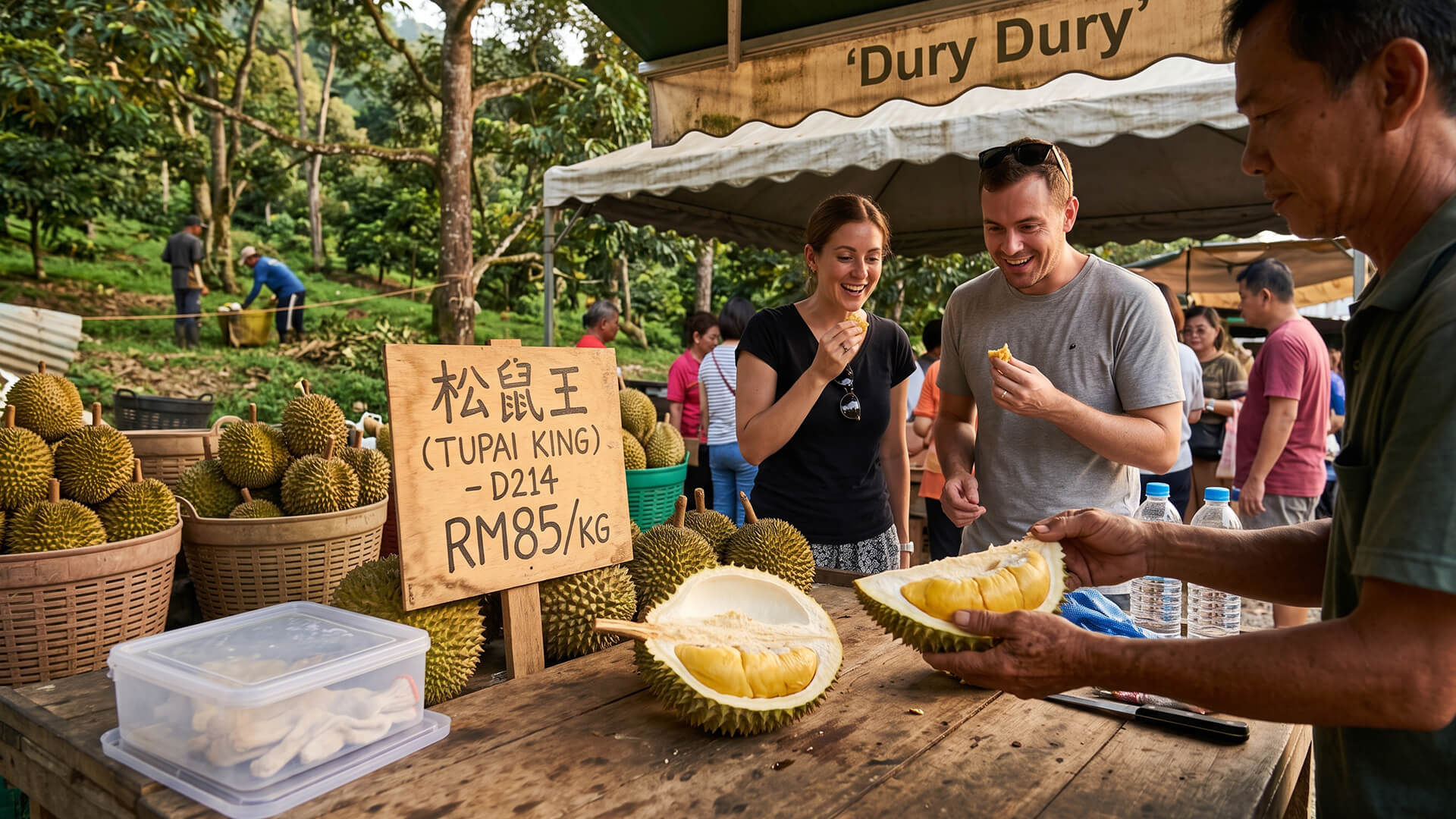
Inside a durian, you find soft, distinct pods of flesh. The texture is intensely creamy, buttery, and custard-like. The flavor profile is deeply complex—ranging from sugary sweet caramel (红虾) to intense, savory, and tongue-numbing bitterness (Tekka or XO).
Jackfruit (The Fibrous Crunch)
Inside a jackfruit, hundreds of bright yellow, rubbery bulbs are tightly packed together. The texture is chewy, fibrous, and slightly crunchy. It tastes purely sweet, mimicking a tropical cocktail of banana, mango, and pineapple.
3. The Aroma Showdown
榴莲
Legendary for its pungent, heavy, and piercing aroma caused by volatile sulfur compounds. It is a scent that lingers for days in enclosed spaces, which is why it faces so many public transport and hotel restrictions.
Jackfruit
Has a much milder, intensely sweet, and fruity scent that resembles sweet bubblegum or overripe bananas. It rarely triggers public bans.
4. Nutrition Face-Off: Energy vs. Lightness
Both fruits pack a massive nutritional punch, but they serve different dietary purposes. Here is a quick breakdown of how 100g of each stacks up:
| Nutrient (per 100g) | 榴莲 | Jackfruit |
| Calories | High (~147 kcal) | Moderate (~95 kcal) |
| Fats | Rich (5.33g – Healthy Monounsaturated) | Very Low (0.64g) |
| Fiber | Very High (3.8g) | Moderate (1.5g) |
| Protein | Low (1.47g) | Moderate (1.72g) |
| Vitamin C | Higher (66% DV) | Moderate (46% DV) |
| Key Benefit | B-Vitamins & Potassium boost | High Vitamin A & Antioxidants |
The Takeaway:
Choose Durian
If you want an energy-dense, highly filling snack rich in healthy fats and digestive fiber.
Choose Jackfruit
If you are looking for a lighter, low-fat refreshing snack, or a high-protein vegetarian meat substitute.
5. Culinary Identity
In Malaysia, both fruits are deeply celebrated but used differently. Ripe jackfruit is a favorite for roadside snacks (especially dipped in batter and deep-fried as Cempedak/Nangka Goreng), while unripe jackfruit is thrown into savory vegetable curries.
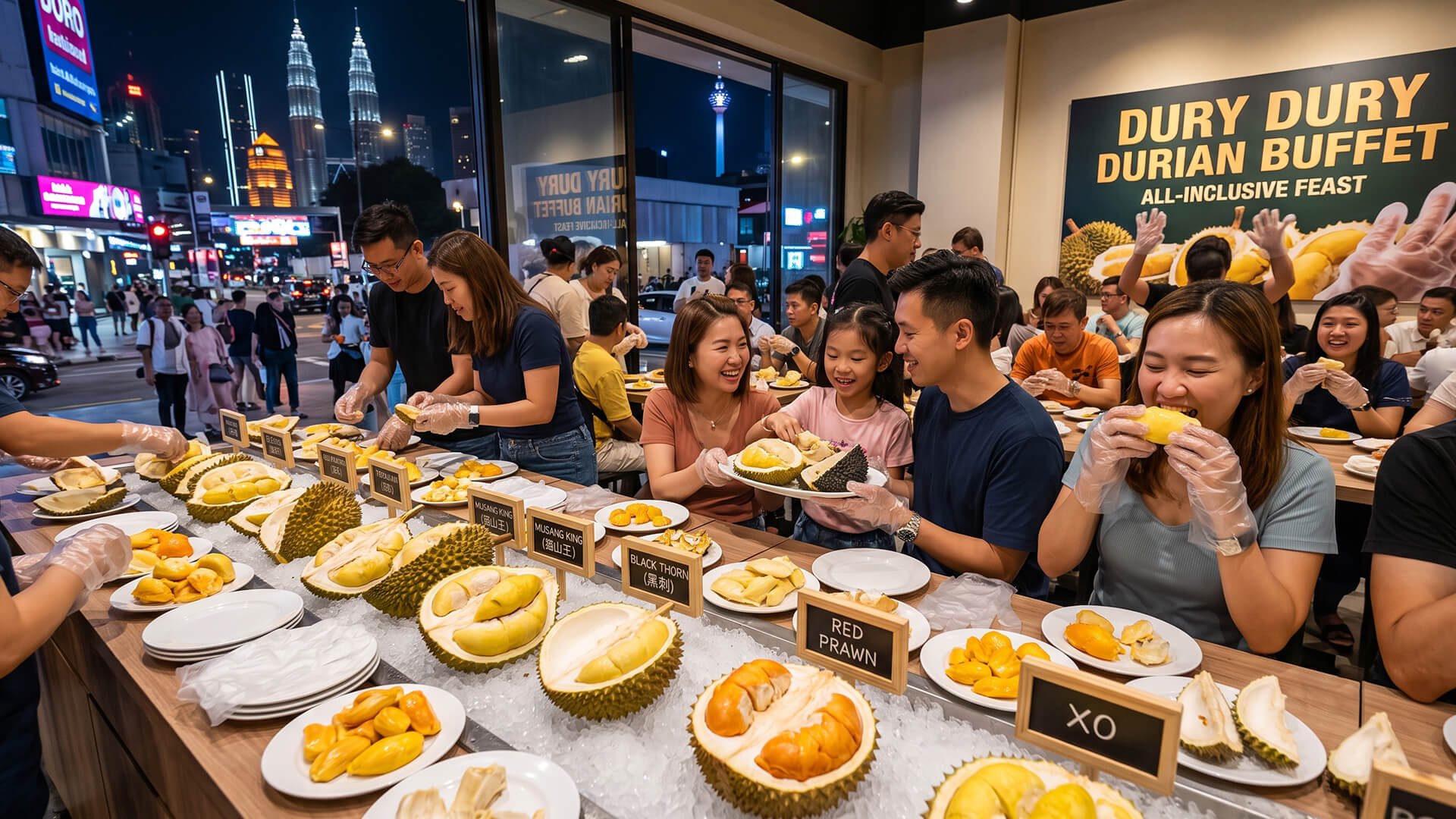
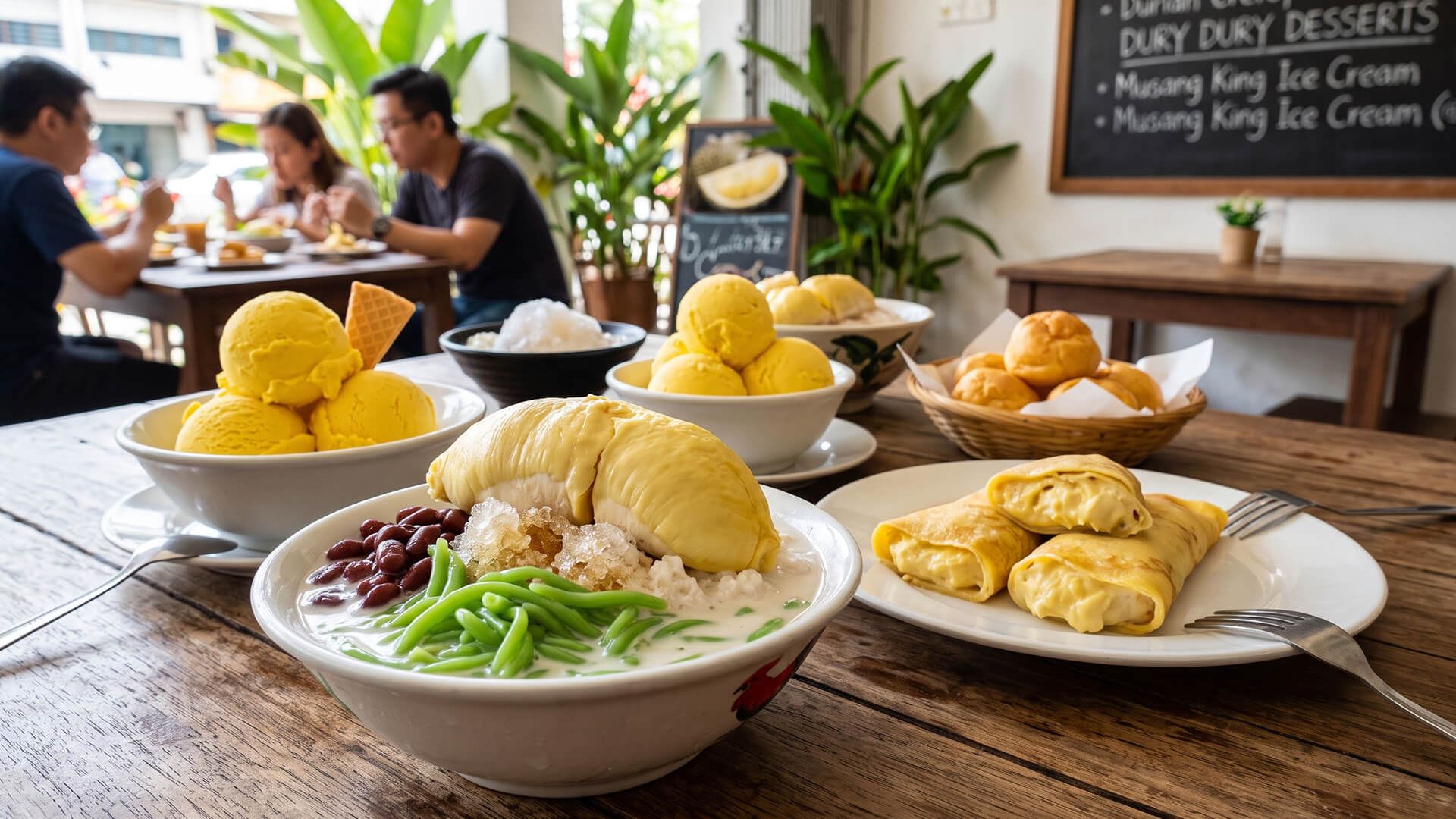
Durian, on the other hand, stands as an aristocratic delicacy. We eat it fresh off the shell at Dury Dury, or use its premium paste to elevate high-end pastries, ice creams, and traditional local condiments like tempoyak (fermented durian paste).
Conclusion: Two Kings in Their Own Right
While the jackfruit is a versatile, sweet, and practical giant, the durian remains the undisputed King of Fruits due to its majestic flavor complexity and rich, unmatched texture.
If you are currently in Kuala Lumpur for the durian season, skip the grocery store jackfruit for a day and come experience the absolute peak of premium Malaysian agriculture. Visit us at Dury Dury to try a freshly dropped 猫山王, and let your taste buds discover what true royalty tastes like!