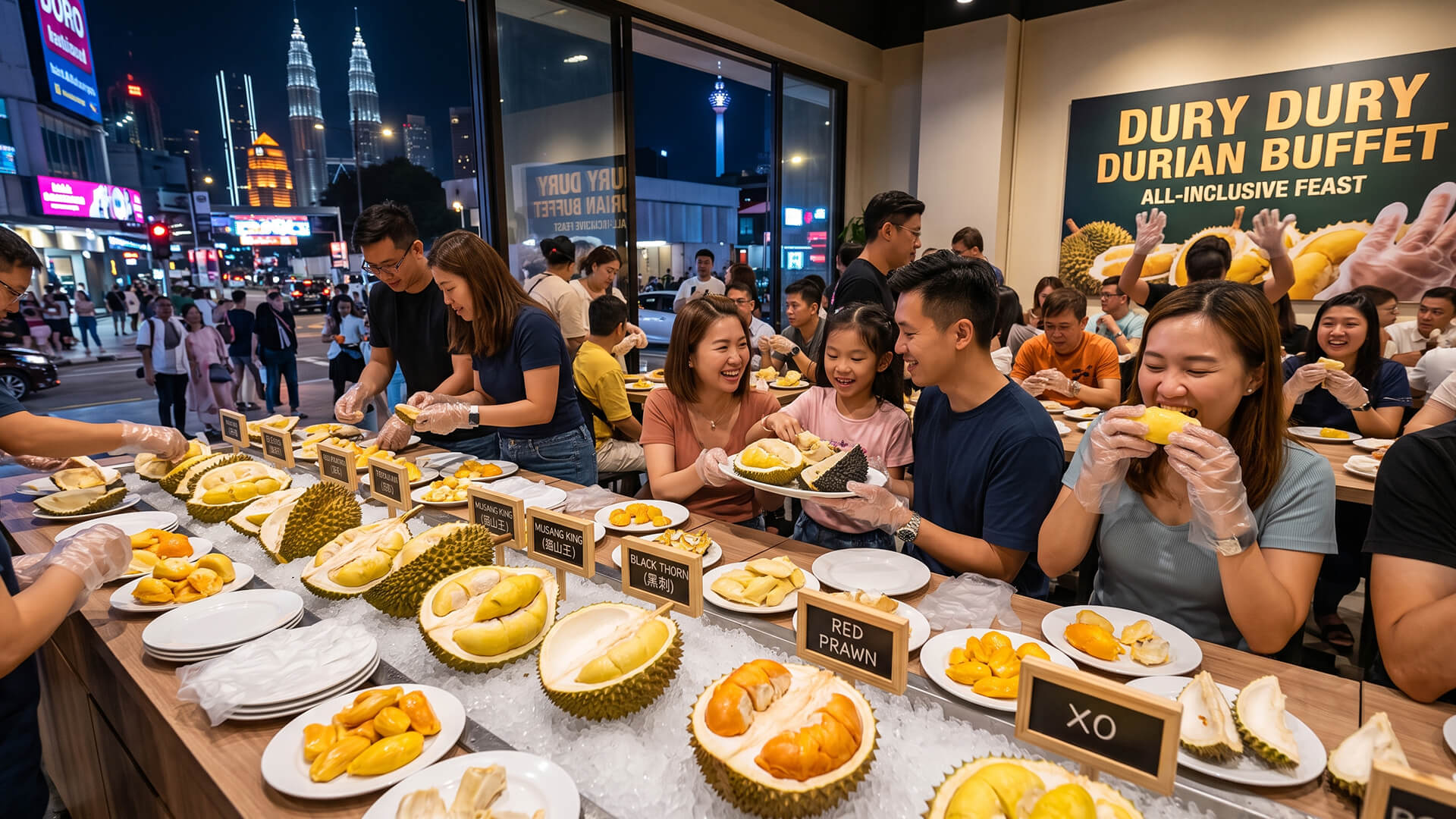
If you walk through the vibrant streets of Kuala Lumpur, especially around Jalan Alor, the unmistakable aroma of durian fills the air. To many, it is more than just a seasonal treat; it is a cultural icon. At Dury Dury, we celebrate this fruit every day, but have you ever wondered why, out of all the thousands of tropical fruits, the durian specifically earned the title “King of Fruits”?
It isn’t just about the size or the spikes. The title is a reflection of its majestic appearance, its complex flavor profile, and its unique place in Southeast Asian heritage.
1. A Formidable and Royal Appearance
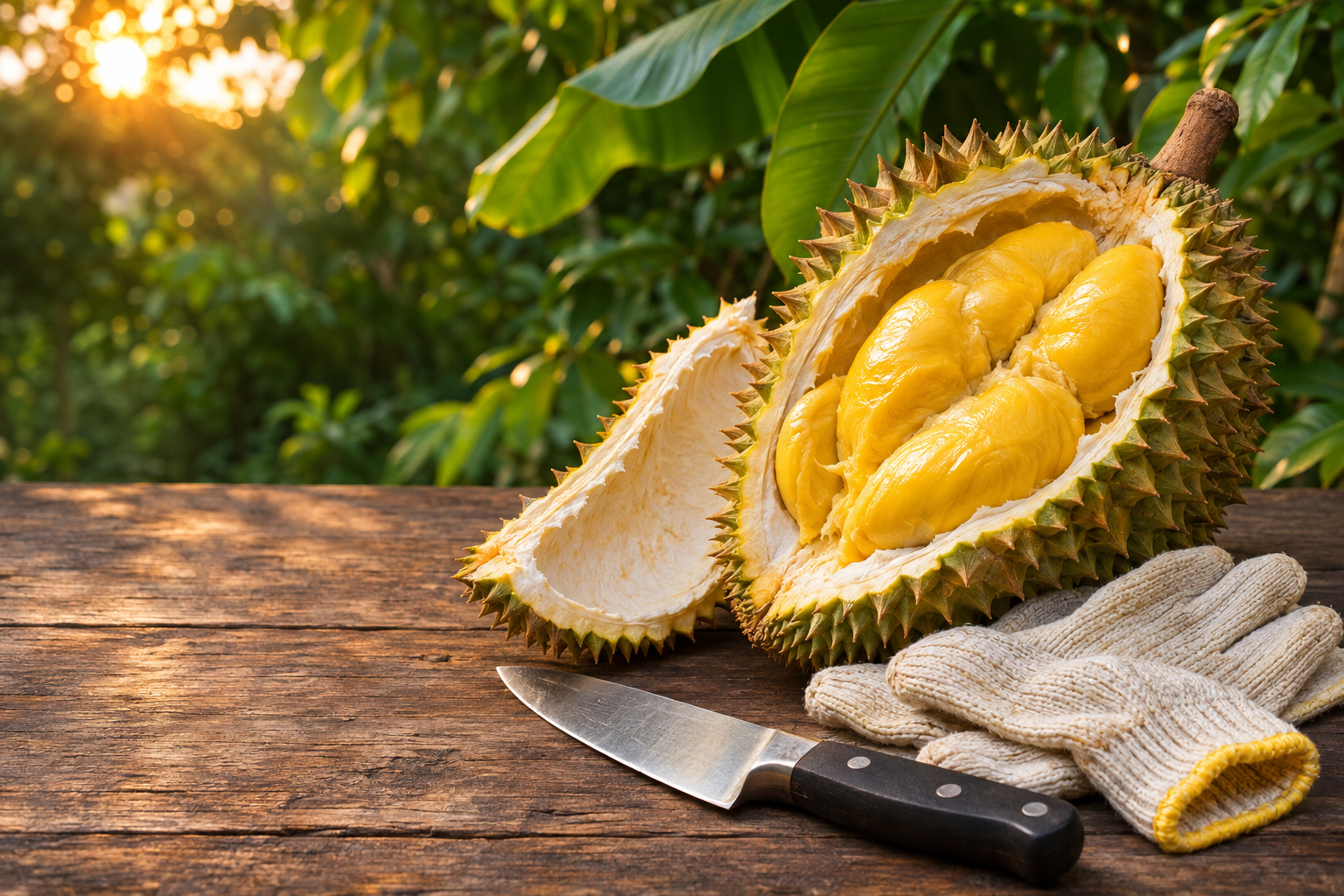
The most immediate reason for its “regal” status is its physical presence. The name “durian” comes from the Malay word duri, meaning thorn.
With its massive size—sometimes weighing up to 3kg—and a thick, green-to-brown husk covered in sharp, armor-like spikes, the durian looks like a fruit that belongs on a throne. It requires strength and skill to open, much like a treasure chest, revealing the “gold” (the creamy arils) hidden within.
2. Unmatched Flavor Complexity
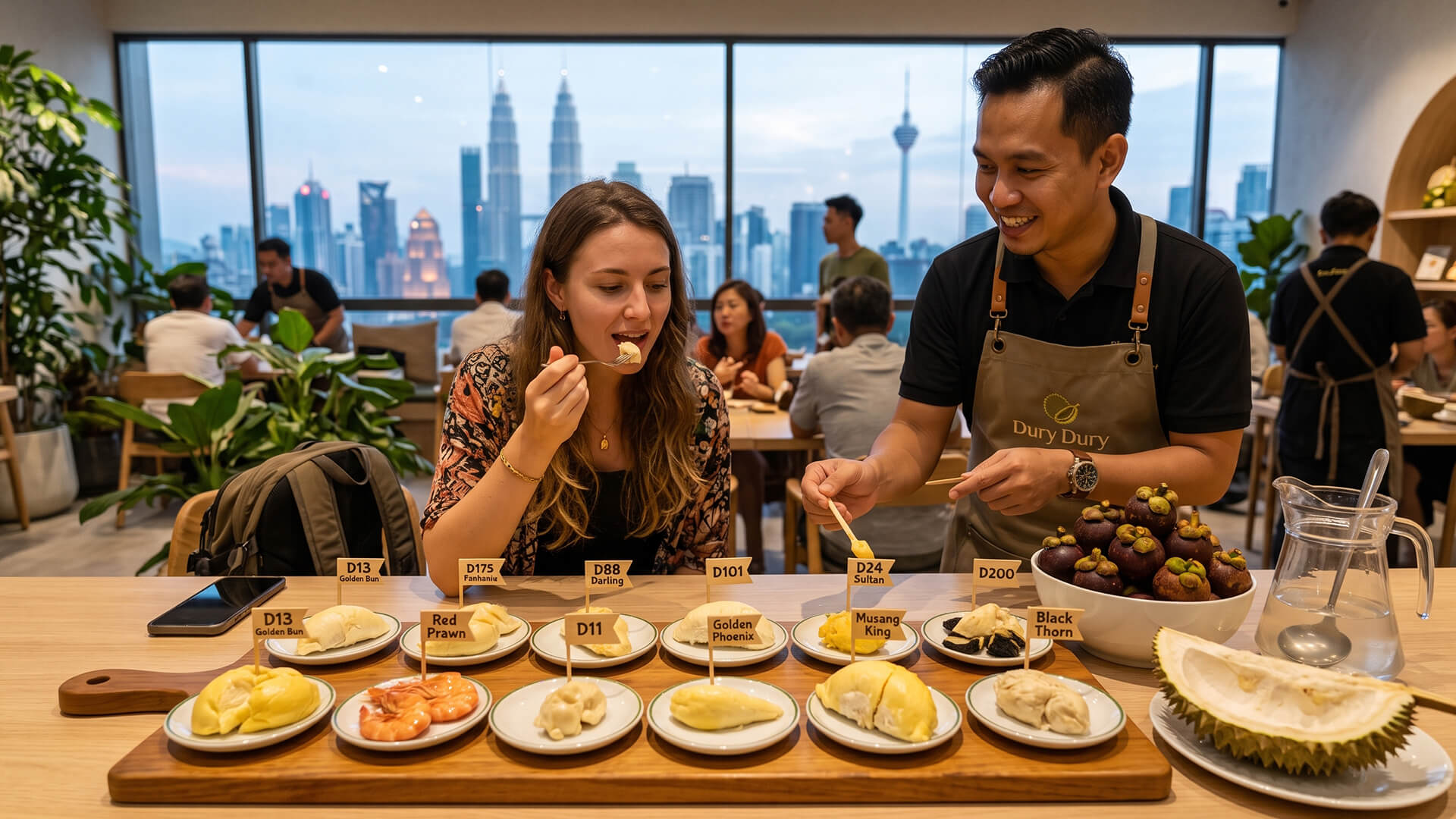
While most fruits are simply “sweet” or “sour”, the durian offers a spectrum of flavors that no other fruit can replicate. This is why enthusiasts at Dury Dury often spend time debating the nuances of different varieties.
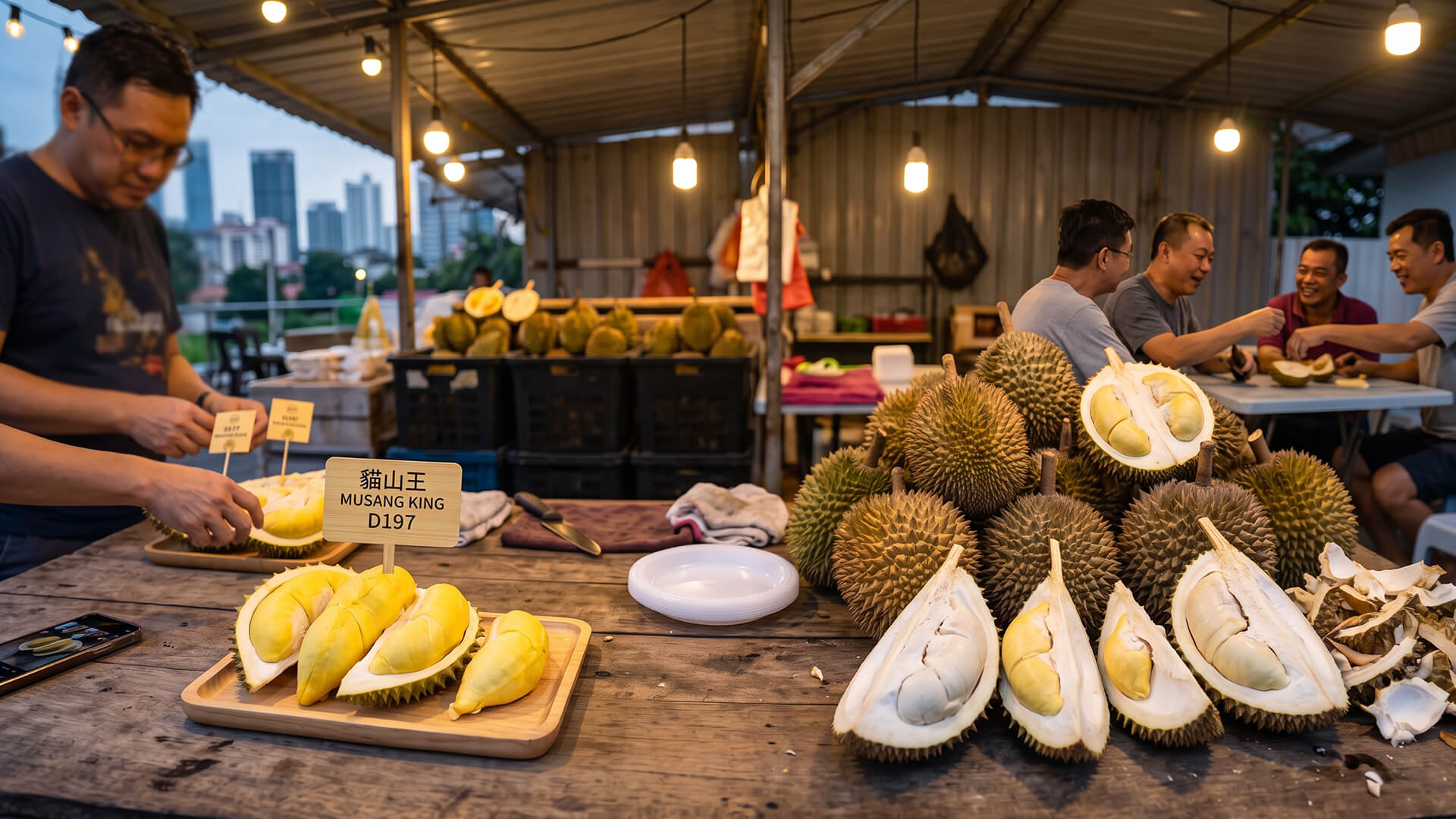
Musang King (D197)
Known for its thick, golden flesh and a perfect balance of sweetness and bitterness.
Black Thorn (D200)
Prized for its intense, creamy, and almost "alcoholic" aftertaste.
D24 XO
Celebrated for its smooth texture and fermented, bitter notes.
The “King” title is earned because its flavor is multi-dimensional—it’s custard-like, savory, sweet, and pungent all at once.
3. A Nutritional Powerhouse
If the title “King” refers to strength, then the durian certainly qualifies. It is one of the most nutrient-dense fruits in the world.
Unlike many other fruits that are mostly water and sugar, durian is rich in:
Healthy Fats
It contains monounsaturated fats that are good for the heart.
Potassium
Essential for maintaining healthy blood pressure levels.
Vitamin C and B-Complex
Great for the immune system and energy production.
Dietary Fiber
A single serving provides a significant portion of your daily fiber needs.
Because of its high calorie and nutrient count, it has historically been used as a substantial source of energy, further cementing its status as a “superior” fruit.
4. Cultural Heritage and "Heatiness"
In Malaysia, durian is deeply woven into our social fabric. It is a “social fruit”—something meant to be shared with family and friends at a table, much like the communal dining experience we offer at our jungle-themed store.
In Traditional Chinese Medicine (TCM), durian is regarded as a “heaty” fruit. This powerful internal effect on the body—giving you a sense of warmth and energy—contributes to its reputation as a fruit that demands respect. This is also why it is often paired with “cooling” companions like mangosteens or fresh coconut water.
5. The Rarity and the Seasons
Kings are not always available; they appear in grand cycles. As we mentioned in our previous guide on the best time for durian in Malaysia, the true peak season (June to July) is a nationwide event. The scarcity and the anticipation of the harvest add to its prestige. When the Major Durian Season hits, the entire country turns its attention to the orchards of Raub and Penang.
Conclusion: Long Live the King
The durian is the King of Fruits because it challenges the senses. It is bold, polarizing, incredibly rich, and deeply rooted in our history. Whether you are a seasoned lover of the bitter Tekka or a newcomer looking for the sweetness of Red Prawn, eating durian is an experience unlike any other.