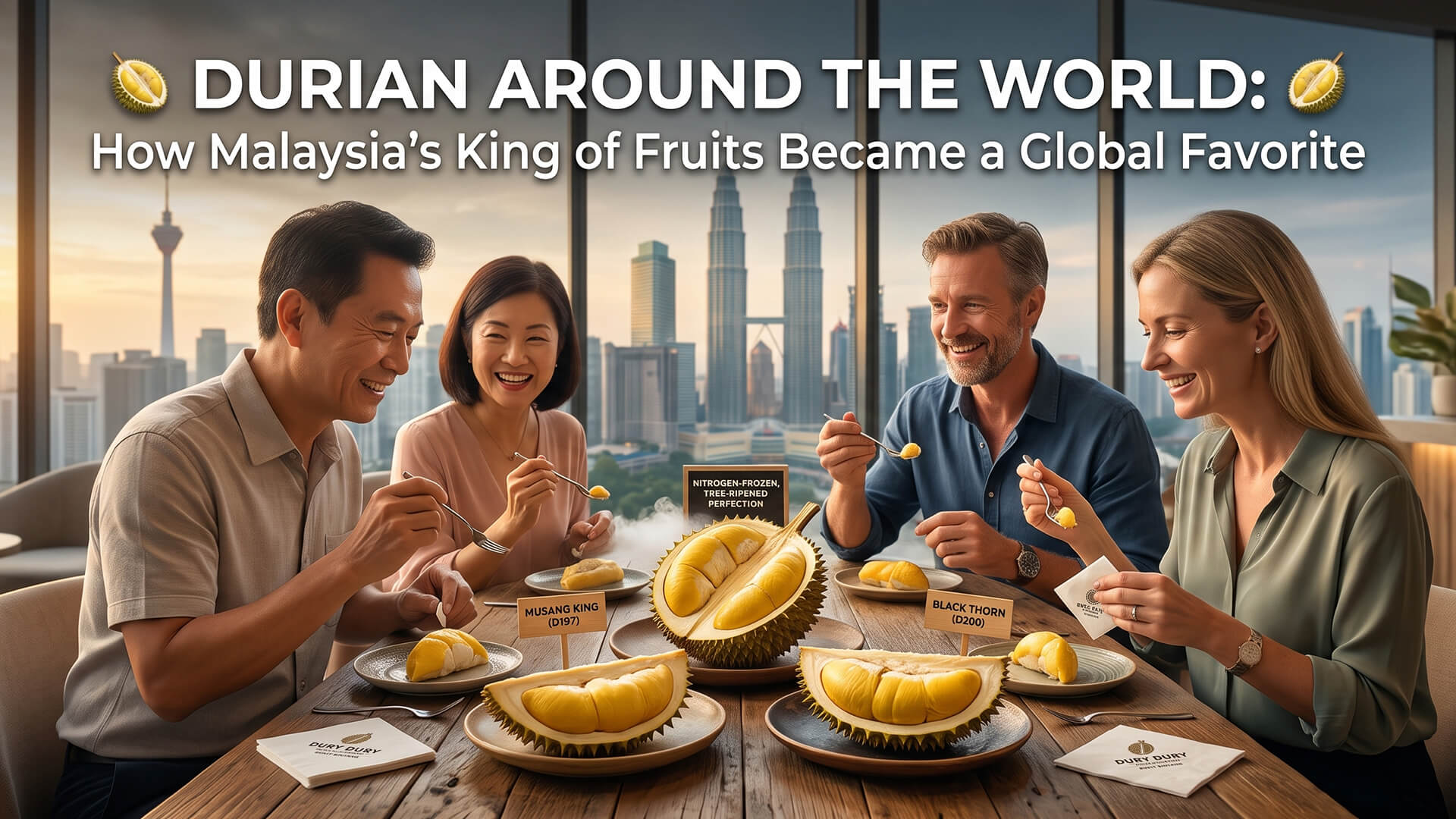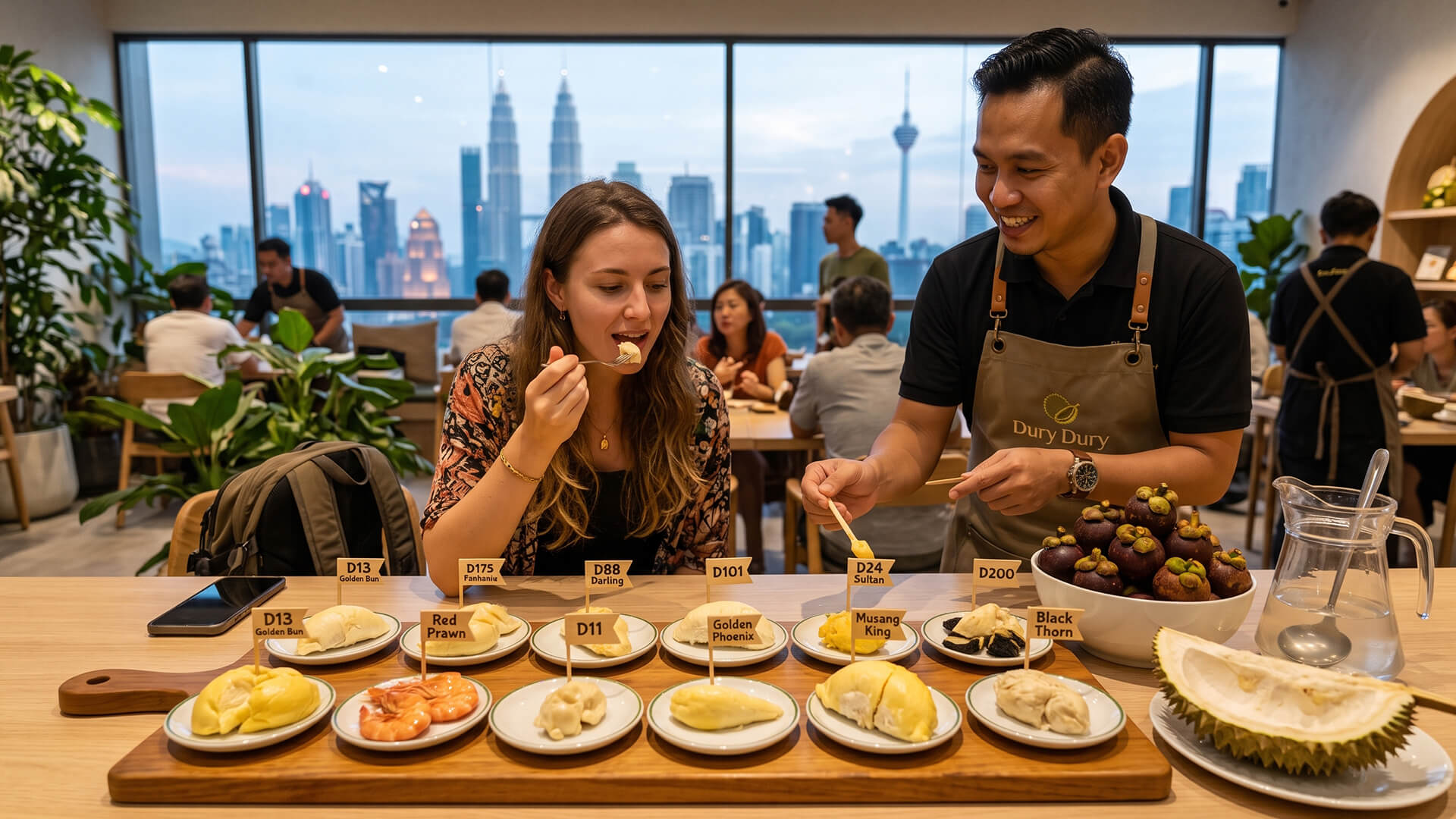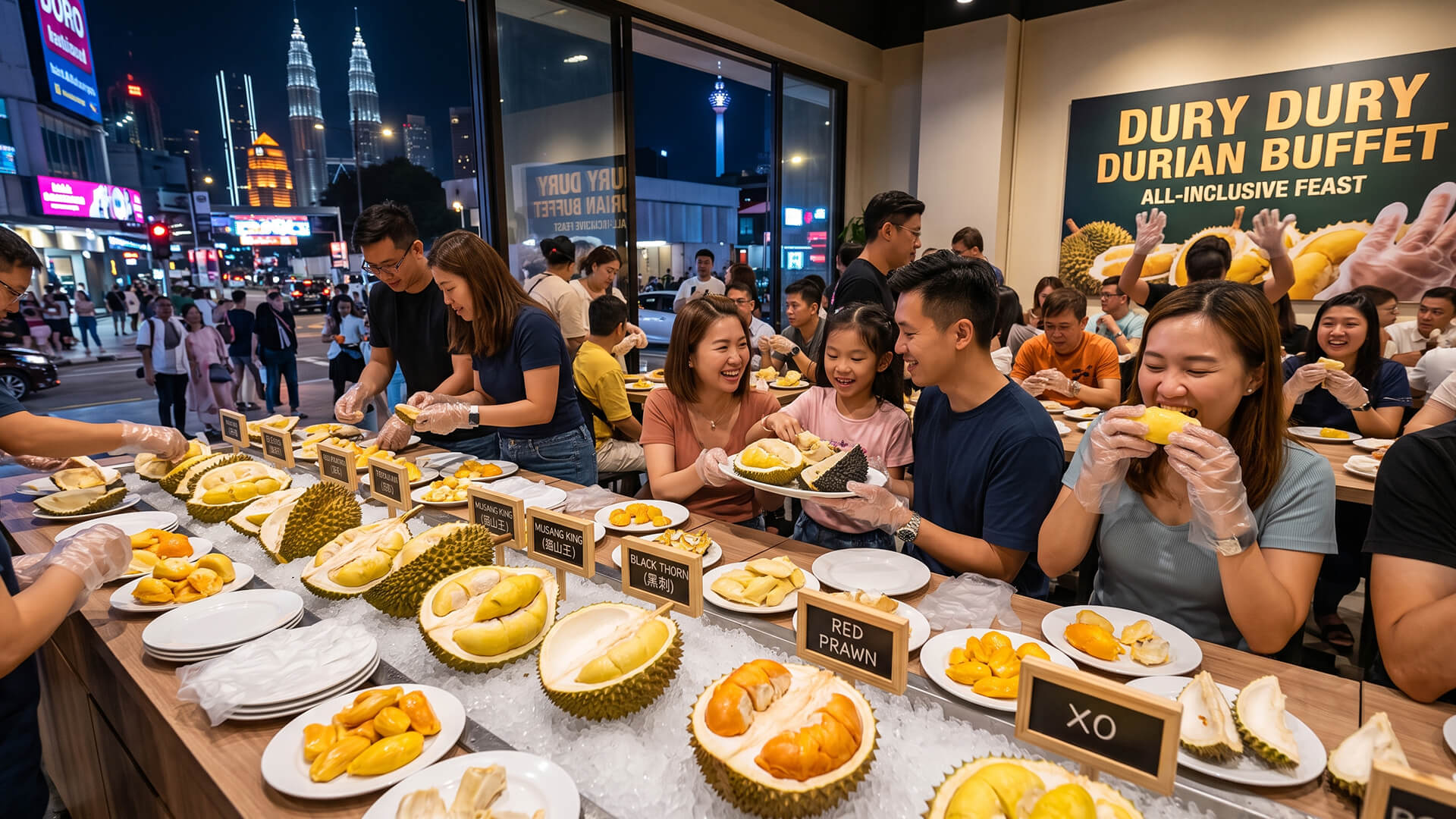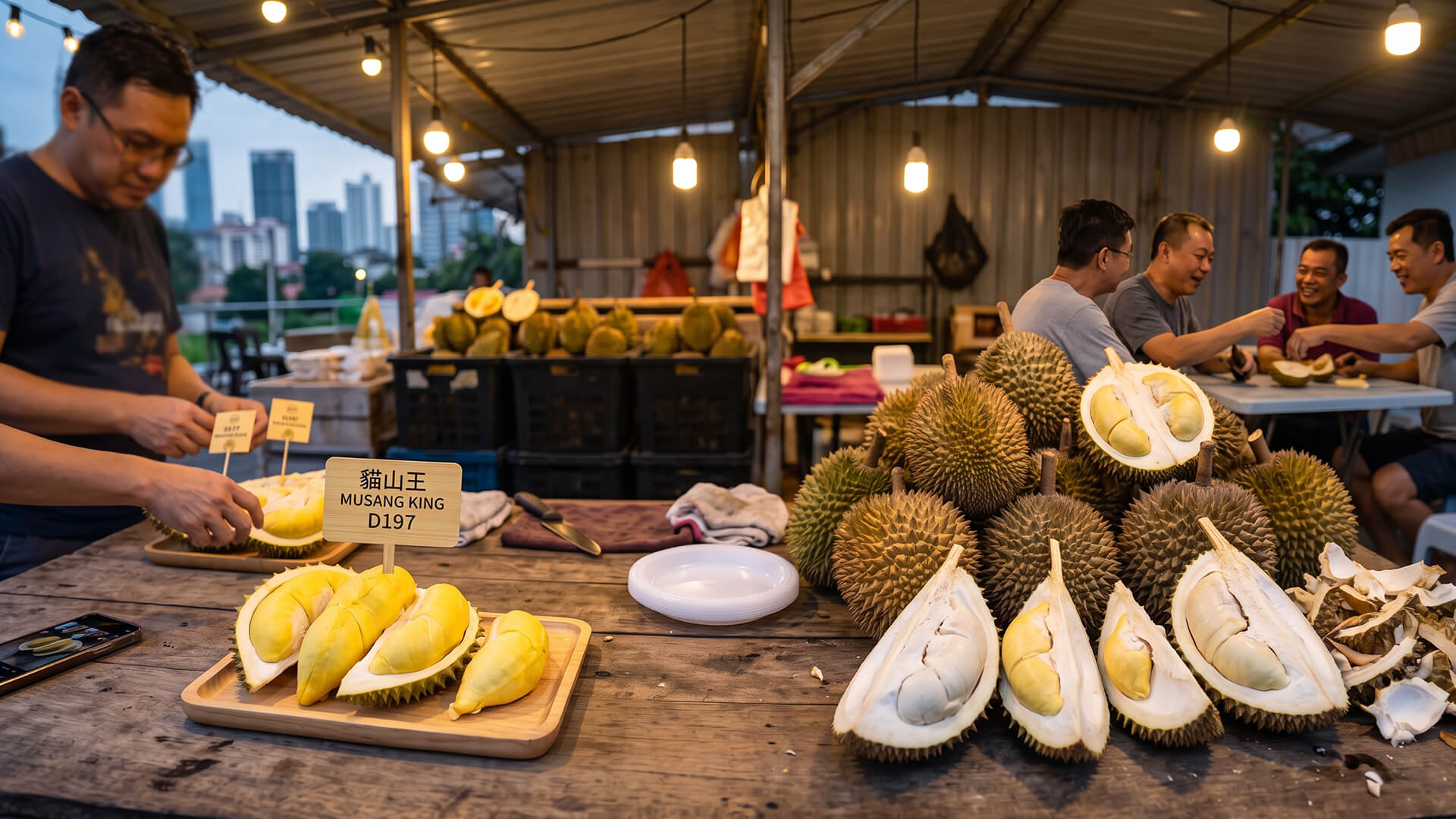
If you pull up a plastic stool at Dury Dury during the height of the Malaysian harvest season, you will notice two distinct types of tables.
At one table, you’ll find visitors carefully inspecting branded tags, taking high-res photos of brilliant golden pods, and savoring famous heavyweights like Musang King (D197) or Black Thorn (D200). At the table right next to them, you’ll see local veteran purists surrounded by a pile of small, mixed-shape husks, laughing and cracking open fruit after fruit with electric anticipation.
This highlights the fundamental split in modern durian culture: Premium Cloned Durians vs. Durian Kampung.
While both belong to Malaysia’s rich botanical identity, they offer entirely different dining experiences, price structures, and sensory journeys. Whether you are a curious tourist or a local looking to expand your palate, here is the ultimate breakdown of what actually separates a premium clone from a traditional village wild card.
1. Cultivation & Genetics: Standardized Royalties vs. Wild Lotteries
The core difference between these two categories starts long before the fruit ever drops from the tree. It comes down to botanical engineering versus natural open pollination.
Premium Clones (The Standardized Icons)
When you order a premium variety like a D24, Musang King, or 红虾, you are eating a fruit produced through vegetative propagation (such as grafting or budding). Every single Musang King tree in Malaysia is an exact genetic clone of a single parent tree originally registered with the Department of Agriculture.
Because the genetics are identical, the result is hyper-predictable. When you buy a premium clone, you know precisely what color the flesh will be, what texture to expect, and what flavor profile you are paying for.
Durian Kampung (The Genetic Loot Box)
The word “Kampung” simply translates to “village.” A Durian Kampung is any un-grafted durian grown naturally from a seed, rather than a standardized commercial clone.
Because bees and wind cross-pollinate blossoms from various trees across a village or jungle, every single seed grows into an entirely unique tree with its own distinct DNA. Eating Durian Kampung is like opening a culinary mystery box:
- One fruit might reveal pale white, vanilla-sweet flesh.
- The very next fruit from the same tree might feature greyish-green, highly alcoholic, bitter pods.
- No two fruits from different village trees will ever taste 100% identical.
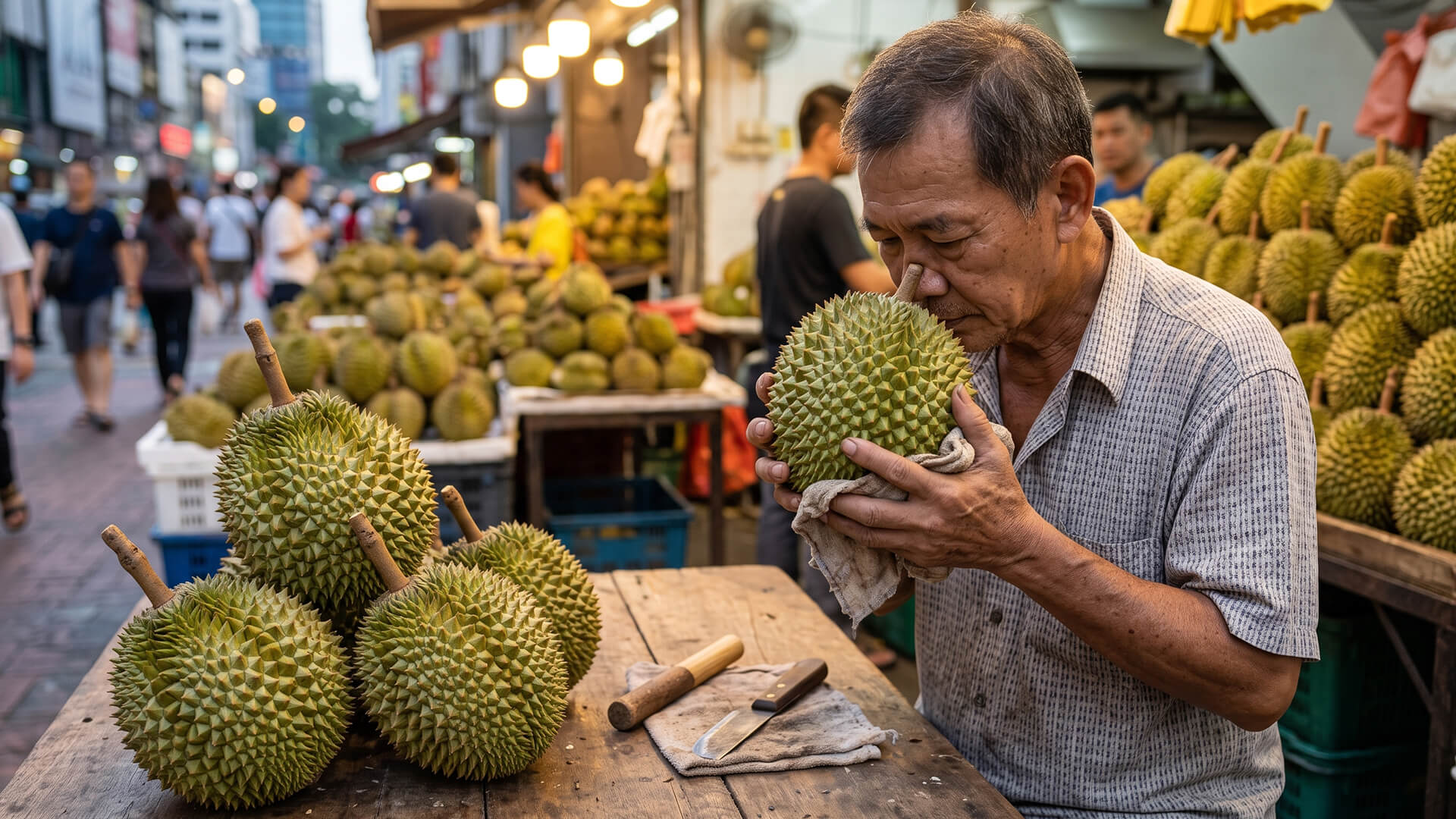
Notice the natural variation in husk size, spike density, and shape in the village collection above. Durian Kampung trades uniform visual perfection for raw genetic diversity.
2. Flavor & Aroma: Structured Luxury vs. Unfiltered Old-Tree Depth
Because their cultivation methods differ so drastically, their flavor profiles target completely different palates.
Premium Clones: Bold, Oily, and Intensely Satisfying
Premium clones have been selectively bred over decades to satisfy modern consumer desires. They prioritize high fat content, deep sweetness, and thick, pasty textures.
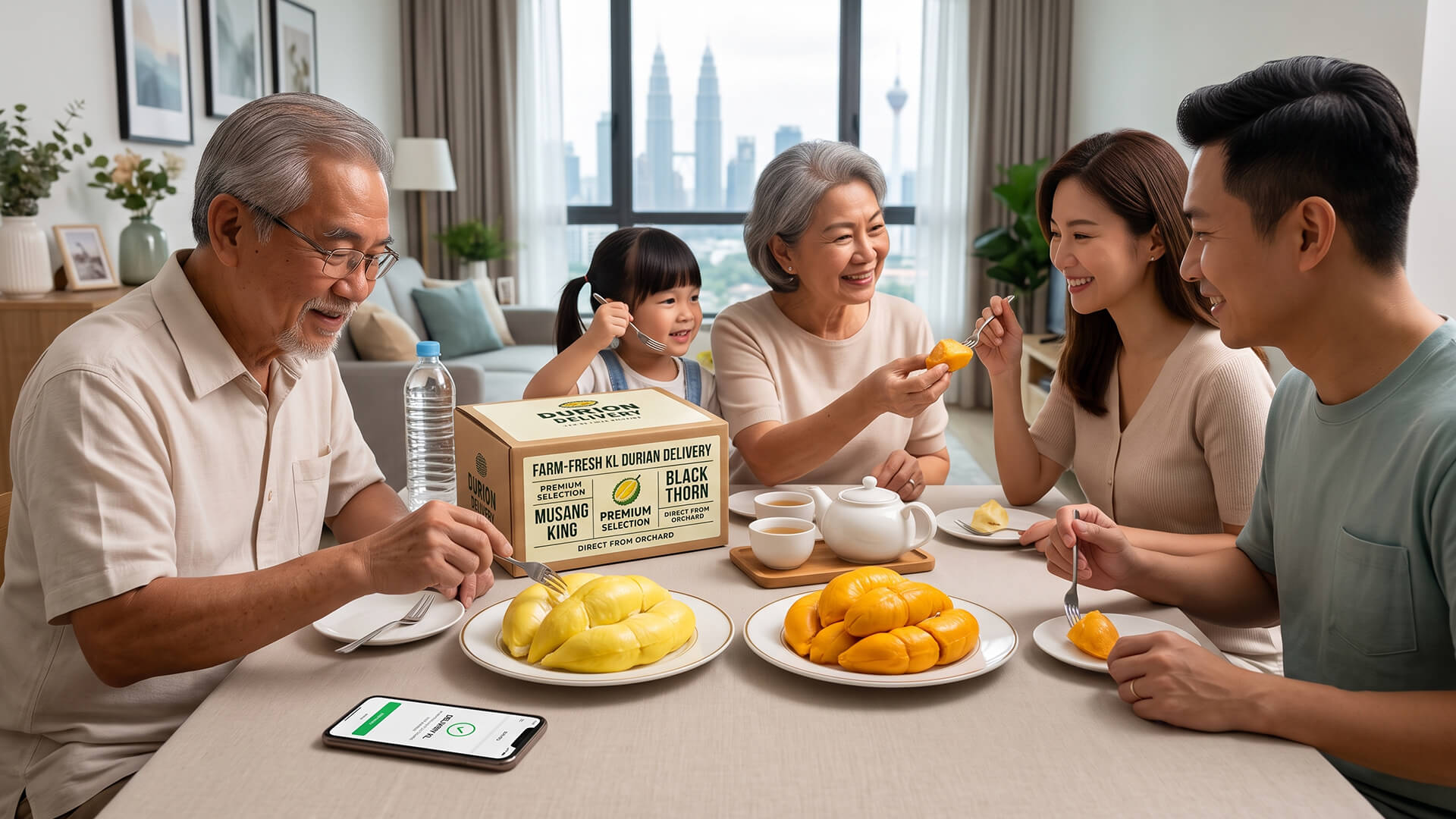
- Musang King hits you with a heavy, custardy, bittersweet punch that coats your mouth like rich butter fudge.
- Black Thorn offers an ultra-creamy, orange-red flesh with a distinct, sugary-sweet floral profile and a smooth, liquor-like finish.
Durian Kampung: Light, Complex, and Wildly Aromatic
While premium clones focus on heavy richness, Durian Kampung relies on the sheer power of tree age. Many village trees in Pahang, Johor, and Perak are 50 to 100 years old.
These massive, deep-rooted giants draw mineral complexity from deep beneath the soil, resulting in a lighter, silkier, and far more aromatic fruit. Kampung durians frequently feature a prominent “gassiness,” sharp herbal undertones, and a lingering, tongue-numbing bitterness that connoisseurs actively hunt for. Because the flesh is less dense and lower in heavy fats, you can eat several without feeling weighed down.
Look at the dense, velvety structure of the premium clone above. Cloned varieties are engineered to yield maximum meat thickness with minimal fiber.
3. Seed Yield and Value for Money
When it comes to your wallet, the gap between these two options is substantial.
Meat-to-Seed Ratio
Premium clones are prized for their efficiency. Varieties like Musang King feature flat, shriveled “abortive” seeds, meaning up to 80% or more of the fruitlet volume is pure, edible meat. Durian Kampung, being completely natural, usually contains large, round, fully formed seeds, requiring a bit more work around the core.
Price Point
Because premium clones require intensive orchard management and face massive international export demand, they command premium per-kilogram prices. Durian Kampung, abundant across local orchards, remains incredibly budget-friendly. It is the ultimate choice for large family gatherings where you want to feast on dozens of fruits without breaking the bank.
Direct Comparison Matrix
| Feature | Premium Clones (e.g., D197, D200, D24) | Durian Kampung (Village Durian) |
| Origin | Standardized, grafted clone trees | Seed-grown, wild/village heritage trees |
| 风味特征 | Predictable, rich, heavy, bittersweet | Unpredictable, light, highly aromatic, complex |
| 质地 | Dense, thick, pasty, custardy | Silky, smooth, slightly fibrous, watery-cream |
| Seed Size | Mostly flat, shriveled (high yield) | Regular, round, fully formed seeds |
| Consistency | 95%+ identical fruit-to-fruit | 100% unique profile per tree |
| 价钱 | Premium investment tier | Highly economical / Budget-friendly staple |
The Verdict: Which One Should You Choose?
There is no single “winner” in this matchup—it completely depends on what kind of experience you want:
Choose Premium Clones if
- You are hosting international guests or beginners who want a guaranteed, high-yield, world-class experience.
- You crave dense, heavy, butter-rich custard with flat seeds.
- You want a specific, reliable flavor profile (e.g., the intense bittersweet punch of Musang King).
Choose Durian Kampung if
- You are a seasoned enthusiast who loves the “thrill of the hunt” and testing different flavor profiles.
- You want to host a massive, casual feast with friends at a fraction of the cost.
- You appreciate old-tree complexity, lighter textures, and traditional Malaysian heritage.
Taste Both at Dury Dury
Why choose just one? The best way to understand the spectrum of Malaysian durian is to contrast them side-by-side! Start your session at Dury Dury in Kuala Lumpur with a few unpredictable, light, and aromatic Durian Kampung fruits to awaken your palate, then finish with the heavy, golden luxury of a peak-season Musang King.