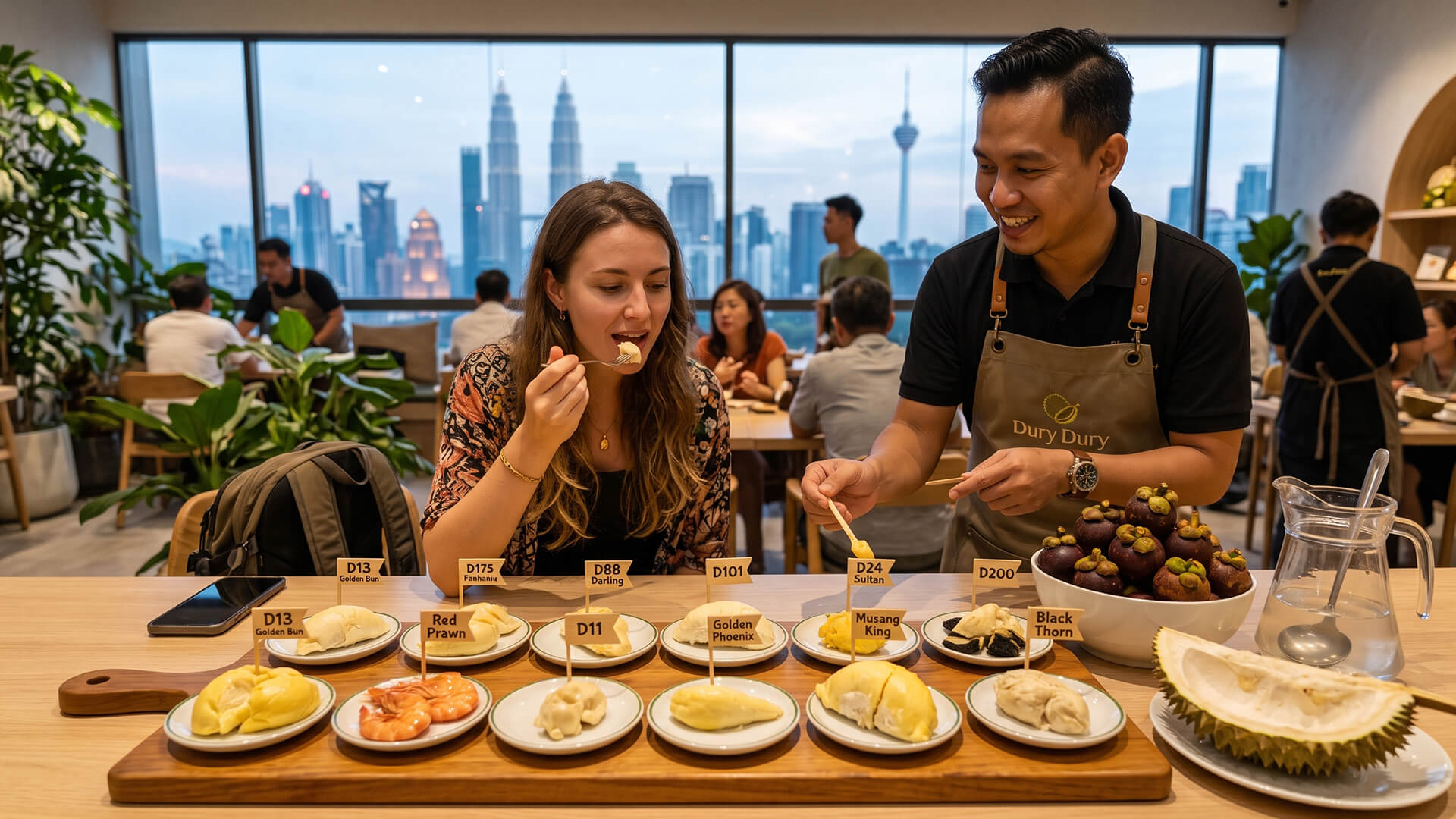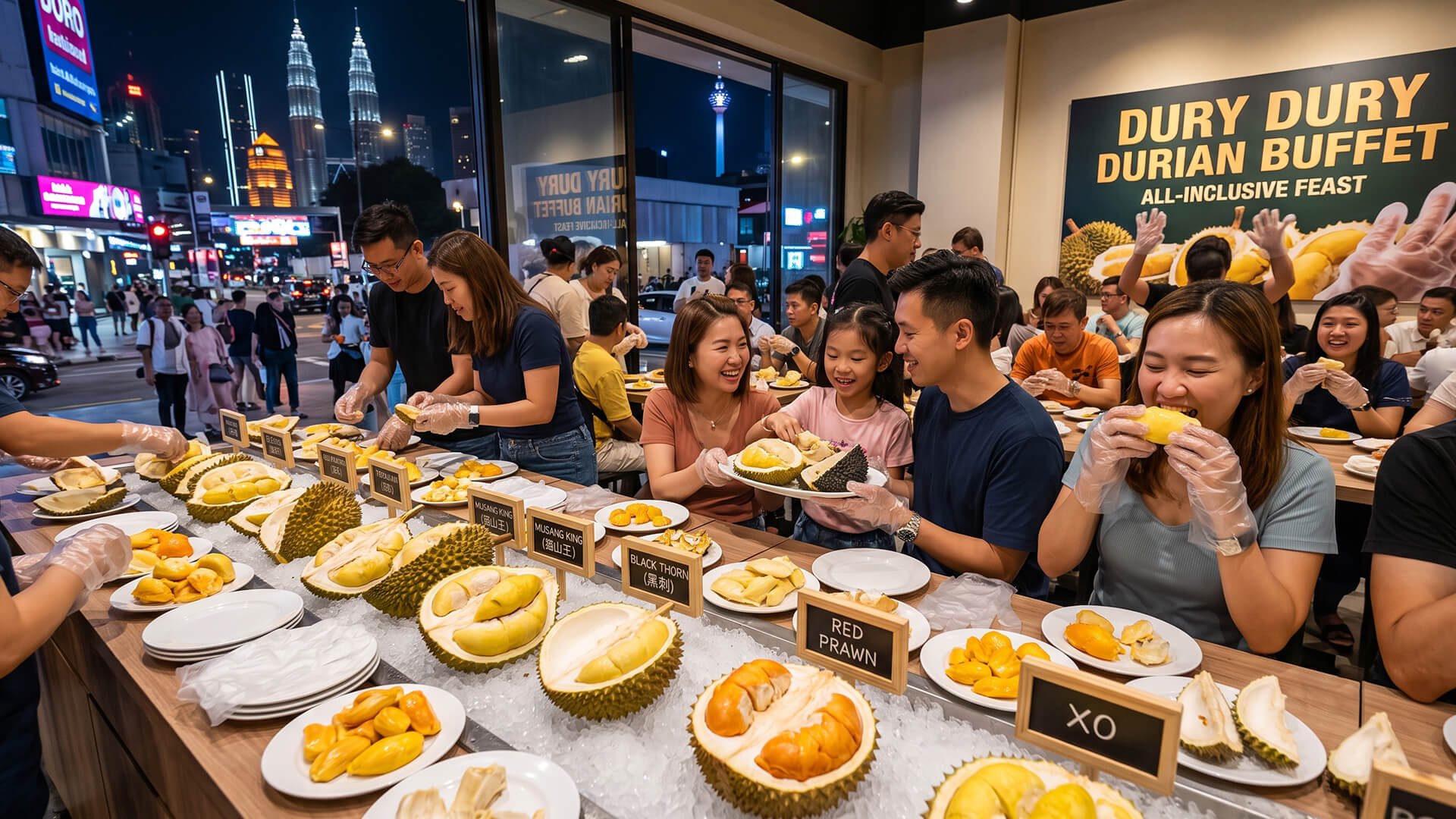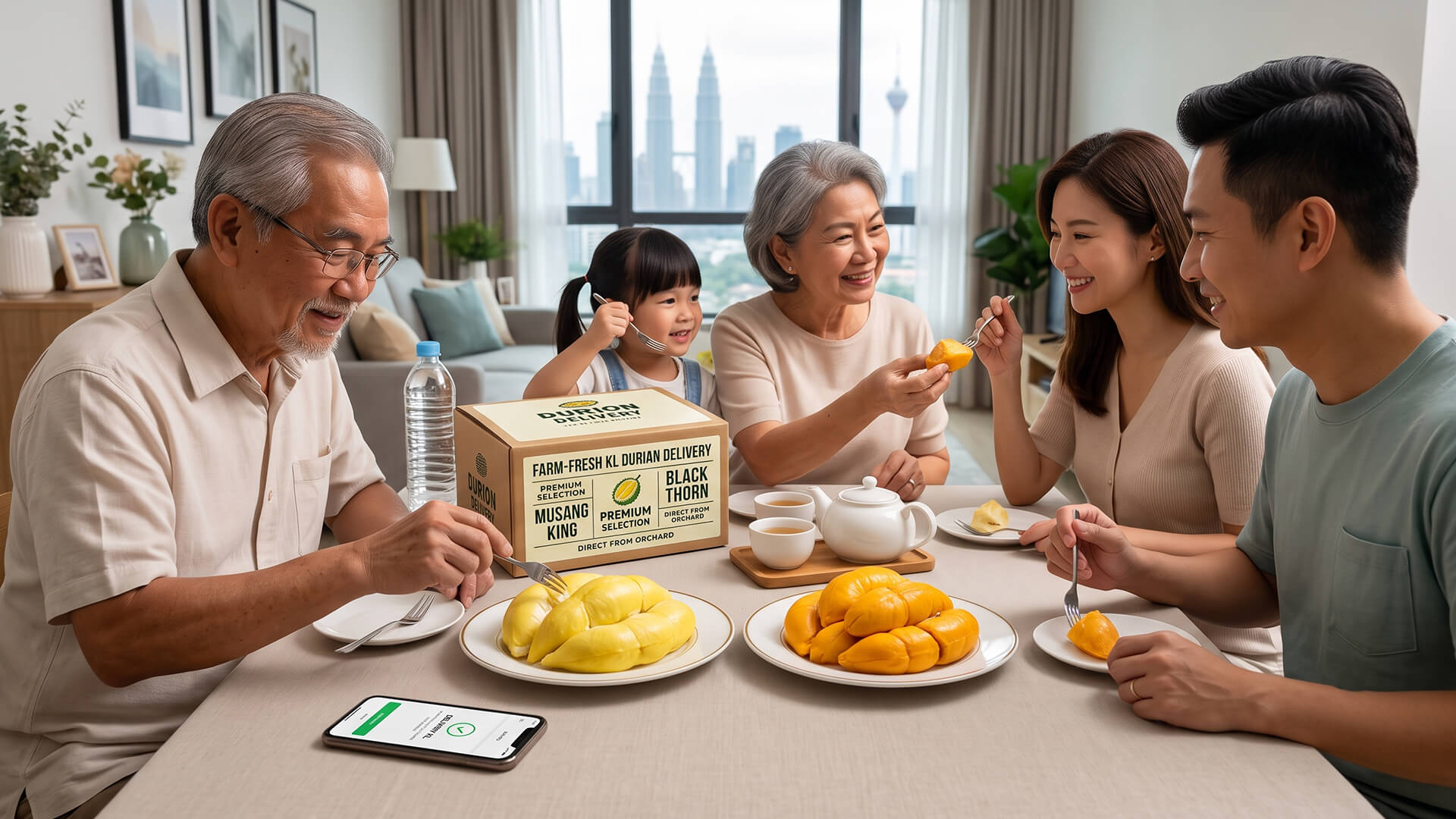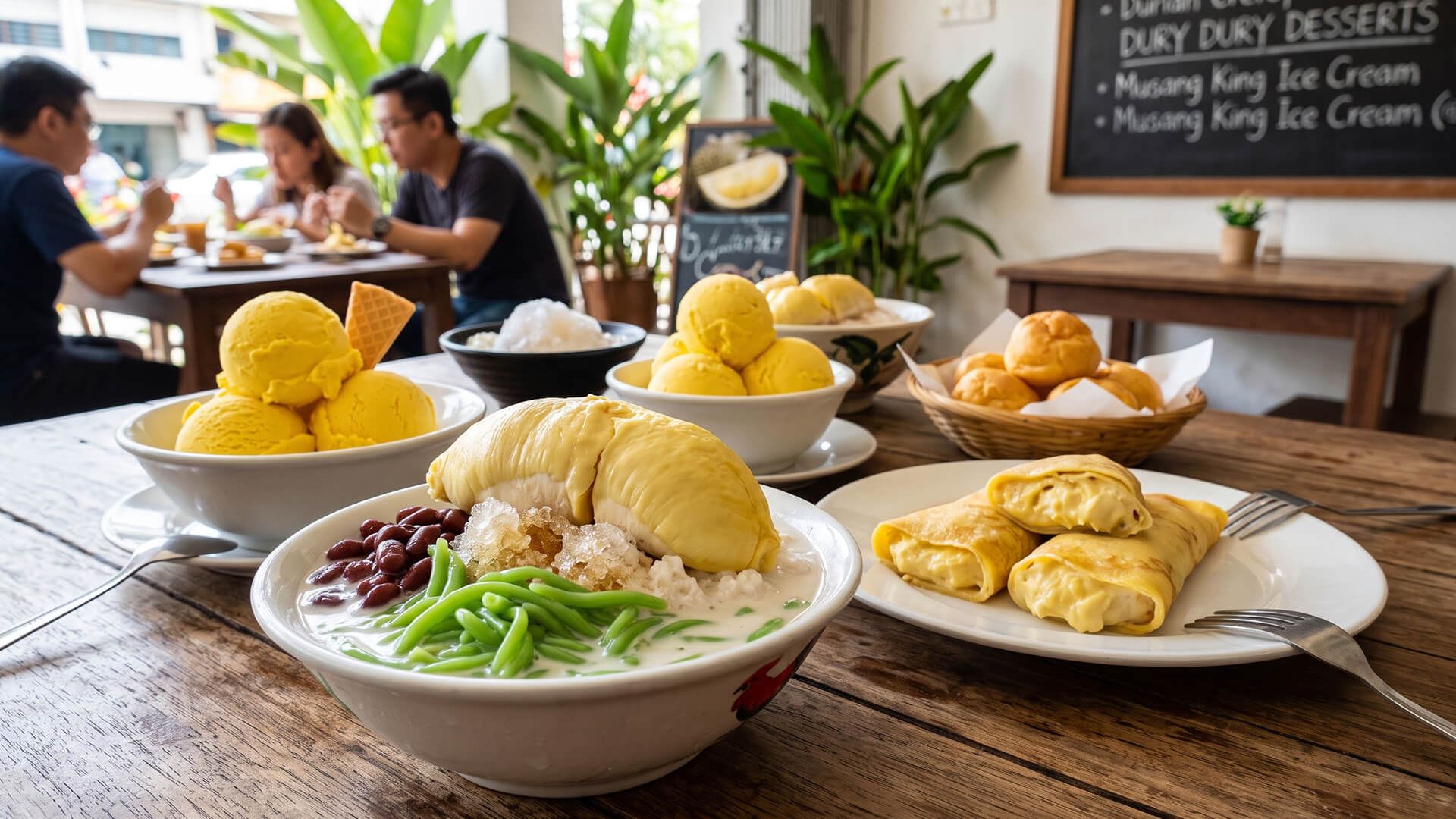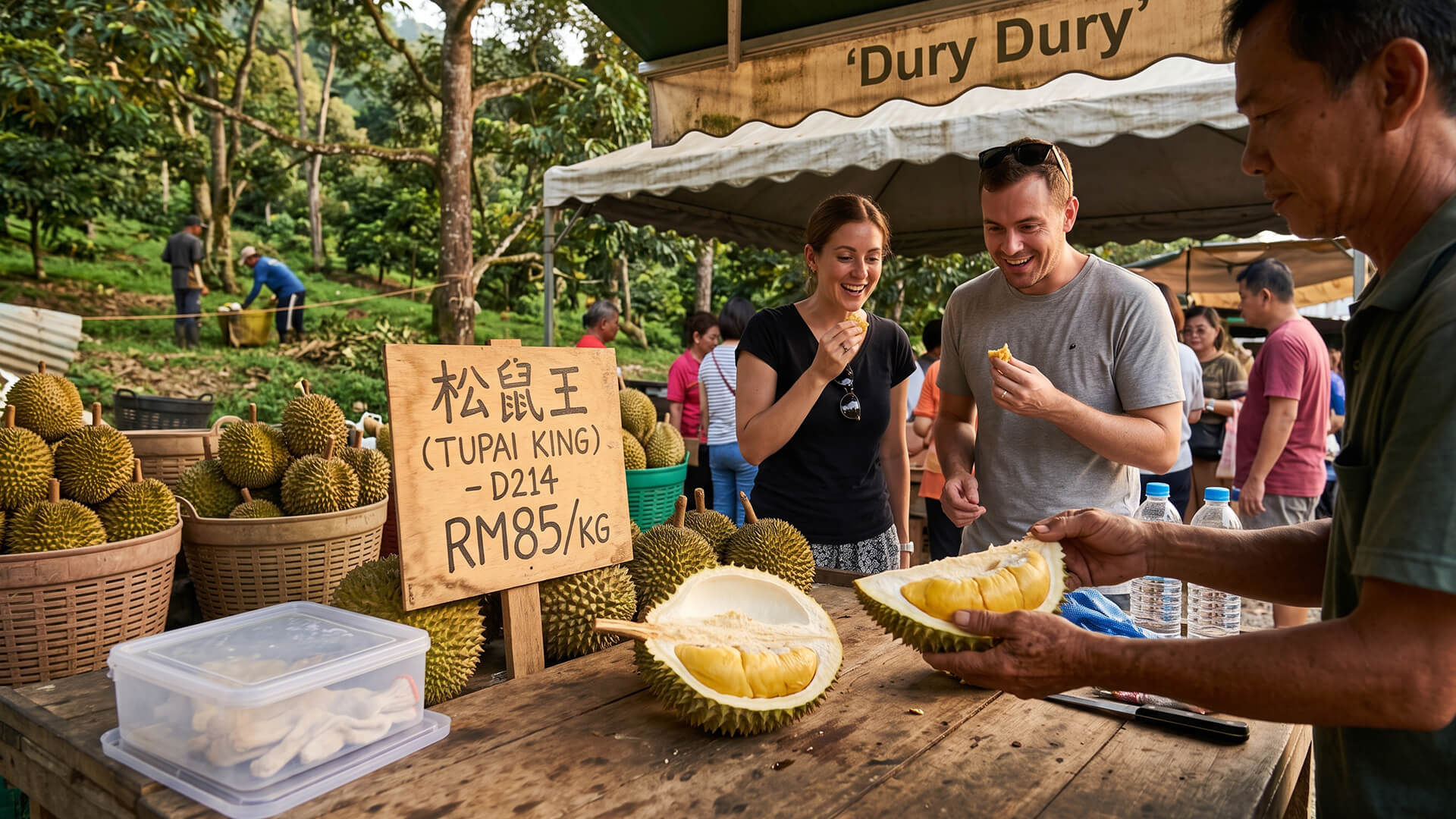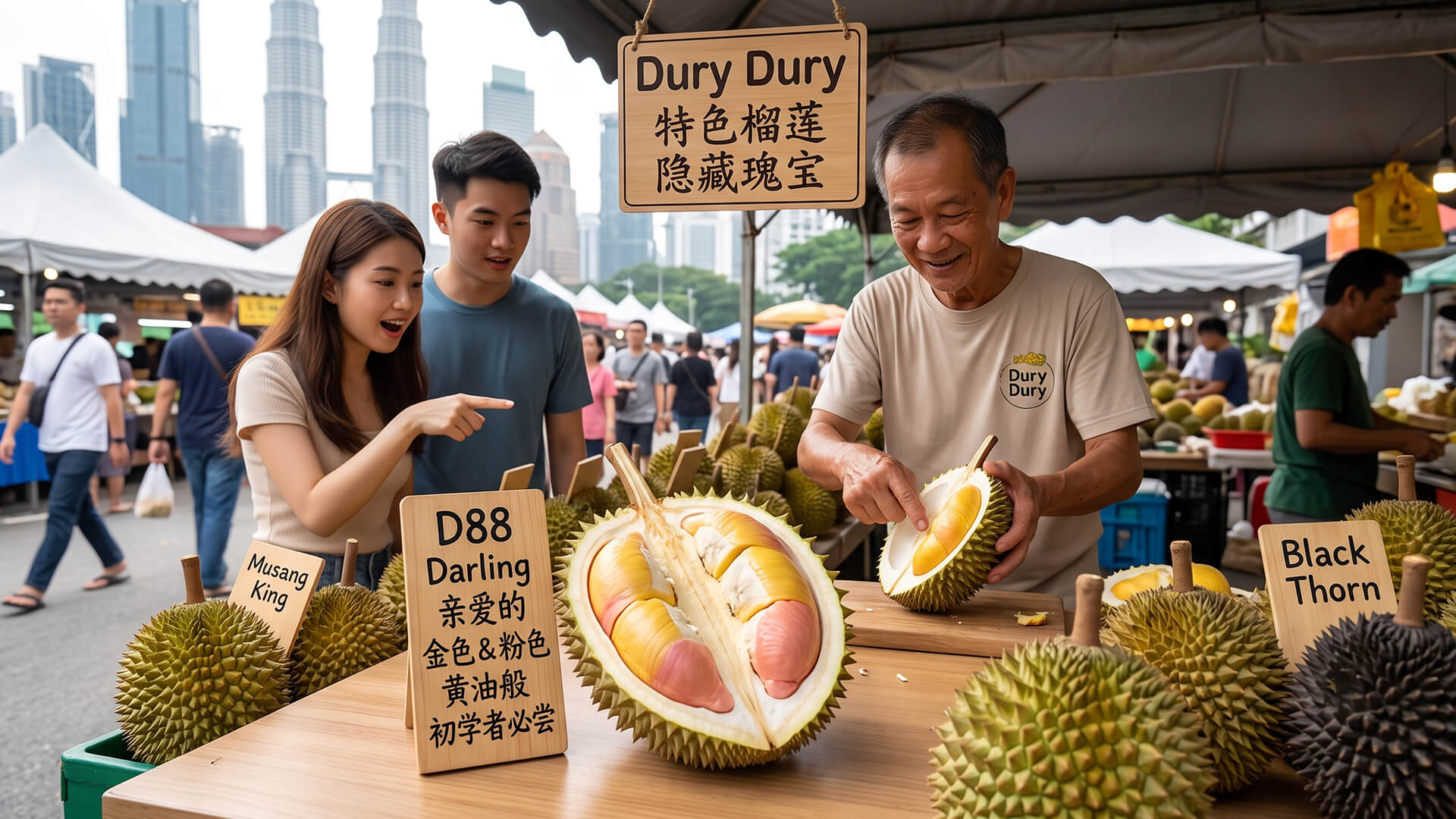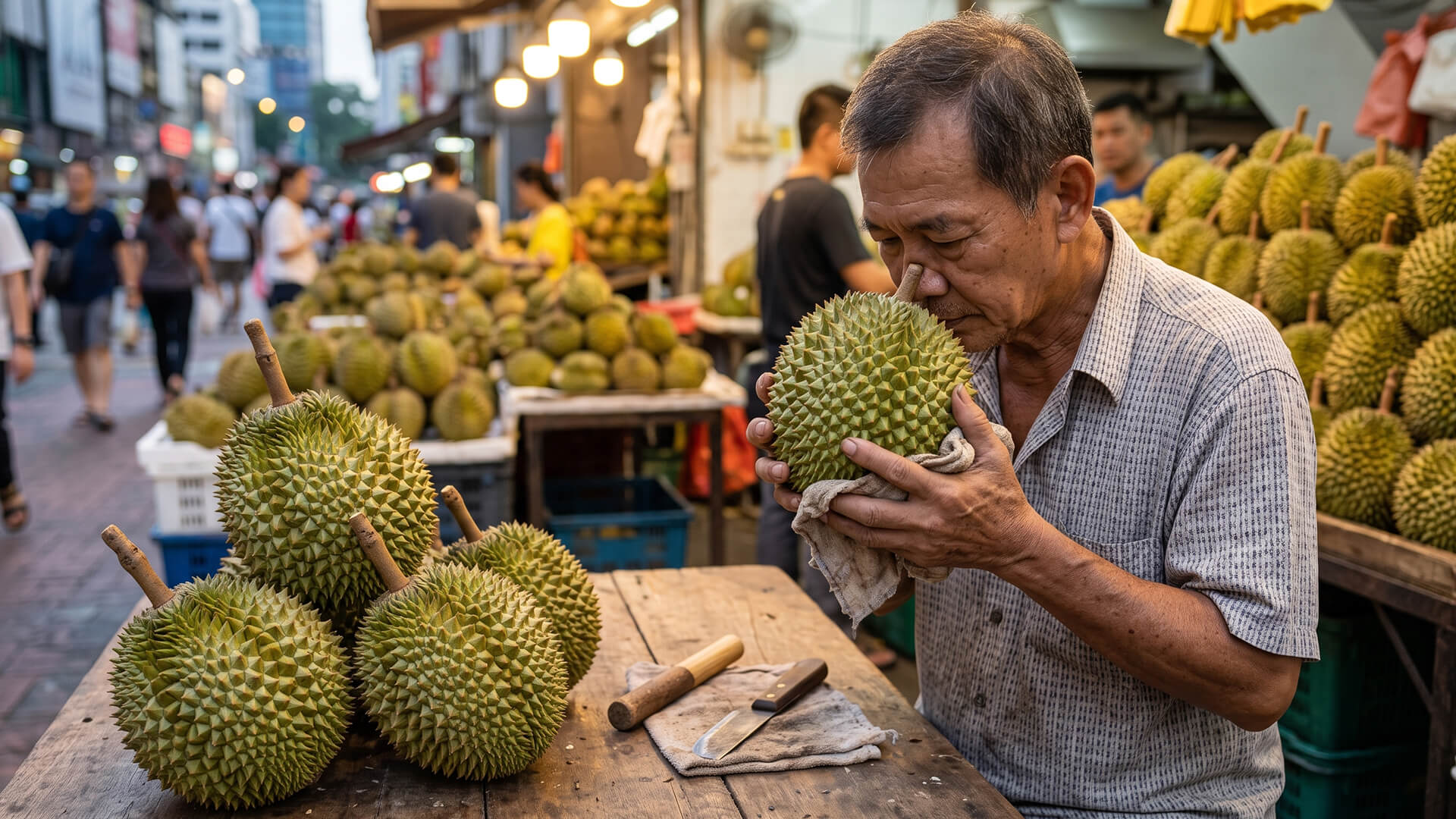
If you’ve ever stood in front of a sprawling durian stall in Kuala Lumpur, surrounded by hundreds of spiky green spheres and a wall of intense aroma, you know how intimidating it can be.
To the untrained eye, every fruit looks like a spiky green boulder. Pick the wrong one, and you risk taking home an under-ripe, rubbery disappointment or an over-ripe, watery mess. But watch a seasoned durian master at Dury Dury, and you’ll see a swift, confident ritual: a quick glance at the stem, a firm shake near the ear, a gentle tap with a wooden stick, and a deep inhale near the seams.
Selecting the perfect durian isn’t luck—it’s a science. Whether you are hunting for a creamy Musang King, an intense Black Thorn, or a nostalgic Durian Kampung, here is your step-by-step master guide to choosing a flawless fruit every single time.
Step 1: The Visual Inspection (Husk, Stem, & Thorns)
Before you even touch the fruit or bring it to your nose, your eyes can tell you 80% of the story.
1. Check the Stem (The Life Signal)
The stem (pedicel) is the ultimate indicator of freshness.
- Fresh & Hydrated: A top-tier, naturally dropped tree-ripe fruit will have a thick, solid, moist, and light-green stem. If you scratch the outer bark of the stem gently with a thumbnail, it should reveal a vibrant, moist green layer underneath.
- Avoid: A dark brown, dry, shriveled, or brittle stem. This indicates the fruit fell several days ago and is likely dehydrated or beginning to ferment excessively inside.
2. Inspect the Thorns (Spikes)
- Bright & Flexible: Look for thorns that are bright green or brownish-green with slightly darker tips.
- Gaps & Yield: Gently press two adjacent thorns together using your thumb and index finger. If the thorns give slightly and feel somewhat flexible, the fruit is ripe. If the thorns are completely rigid and rock-hard, the fruit is likely under-ripe.
3. Look at the Shape & Bulges
Don’t be fooled by a perfectly round, symmetrical fruit! While symmetrical durians look neat, slightly irregular or kidney-shaped fruits often house the thickest, creamiest chambers. Look for distinct, prominent bulges along the sides of the husk—these bulges indicate large, plump, fleshy arils waiting inside.
Step 2: The Sound Test (Listen to the Core)
If you see a seller tapping a durian with a wooden stick or a blunt knife, they aren’t just putting on a show. They are listening for internal movement.
[Under-Ripe] —> Solid, high-pitched “THUD” (Flesh is hard and glued to hull)
[Perfect] —> Hollow, muffled “DULL DRUM” (Flesh has shrunk slightly & loosened)
[Over-Ripe] —> Wet, sloshy, heavy sound (Flesh has liquefied/become watery)
How to do it yourself:
Pick up the fruit using heavy protective gloves or a thick cloth, hold it close to your ear, and give it a firm shake.
- What you WANT to hear: A subtle, faint knocking or slight rattling sound. This means the flesh inside has matured, softened, lost a small amount of moisture, and cleanly detached from the inner cell walls.
- What to AVOID: Absolute silence. If you hear nothing when you shake it, the flesh is still firm, hard, and firmly glued to the husk.
Step 3: The Smell Test (Finding the Sweet Spot)
The aroma is the final verification before cracking the shell. Never smell the very top or sides of the fruit where the husk is thickest; always bring the bottom seams (the star point or base) close to your nose.
Grass / No Smell
Under-ripe. The sugars have not yet developed.
Fresh, Sweet, Pungent & Nutty
Perfect! You should smell a rich, sweet, slightly buttery aroma that hints at vanilla, caramel, or subtle bitterness.
Sour, Pungent Alcohol / Harsh Ammonia
Over-ripe. The sugars have over-fermented into harsh alcohol and acid.
Quick Variety Cheat Sheet: What Should Your Favorite Taste Like?
Even a perfectly ripe fruit won’t satisfy you if you choose the wrong cultivar for your personal taste profile! Match your preference using our cheat sheet below:
| Cultivar | Visual Cue | Primary Flavor Profile | Texture |
| Musang King (D197) | Turmeric yellow, flat starfish base | Rich, complex bittersweet, sticky | Heavy, thick custard |
| Black Thorn (D200) | Deep orange-pink, round shape | Intensely sweet, floral, subtle bitter | Silky, ultra-creamy, light |
| D13 Golden Bun | Bronze-orange pods | Sweet, vanilla, subtle floral notes | Dense, firm, sticky |
| D165 Green Skin | Deep green husk, bottle-lip stem | Highly bitter, alcoholic, whiskey notes | Wet, glossy, melting butter |
| Durian Kampung | Unique shapes & wild colors | Wildcard! Sweet, bitter, or fermented | Light, silky, fibrous |
Let the Experts at Dury Dury Pick for You!
Mastering the selection process is a rewarding journey, but when you visit Dury Dury in Bukit Bintang, you don’t have to carry the pressure alone!
Our experienced fruit masters inspect every single harvest arriving daily from top-tier orchards across Pahang, Johor, and Penang. Whether you prefer ultra-bitter old-tree profiles or sweet, creamy beginner varieties, simply tell our team your taste preference, and we will hand-select, crack, and serve a certified, flawless fruit right at your table!