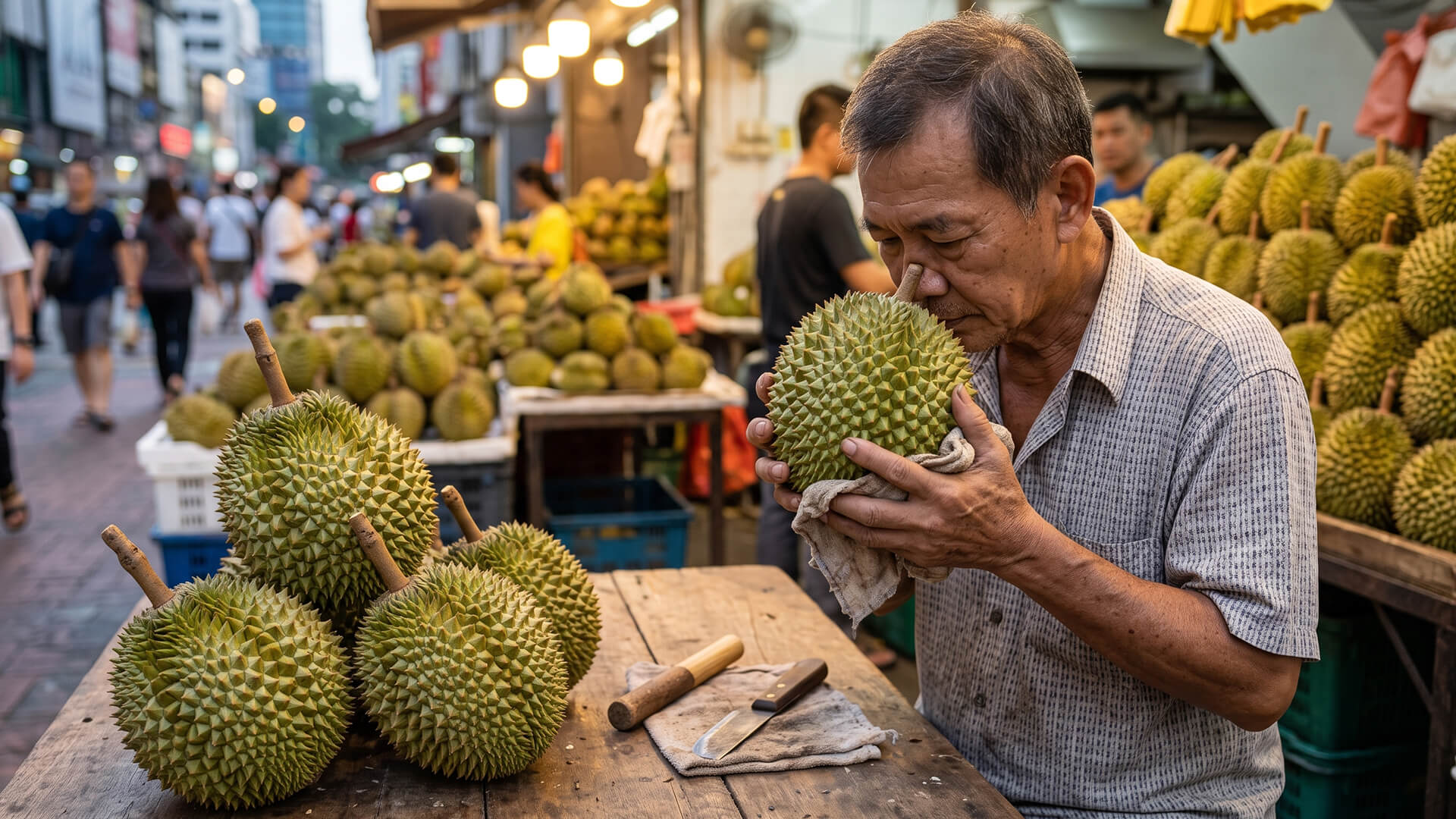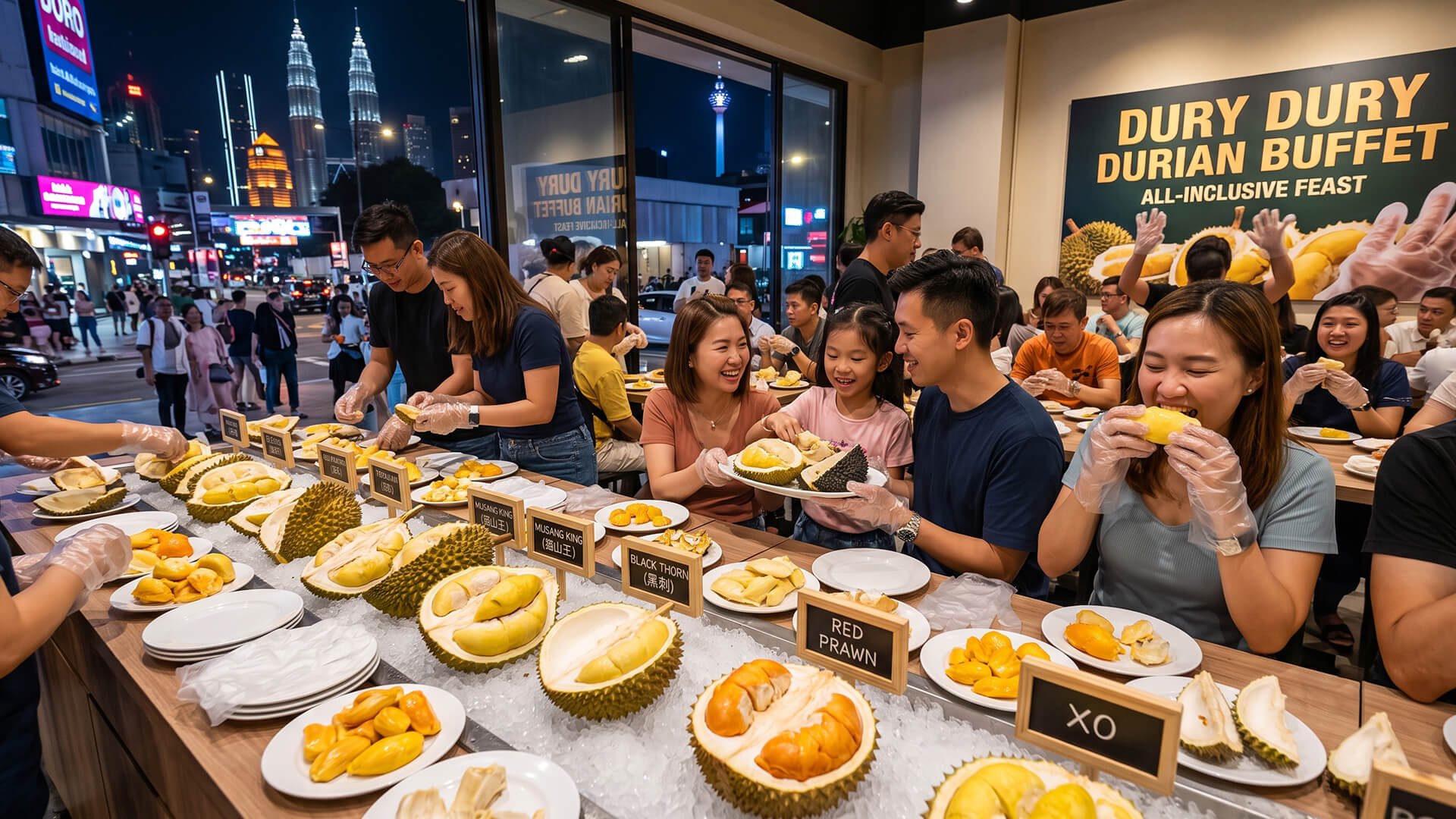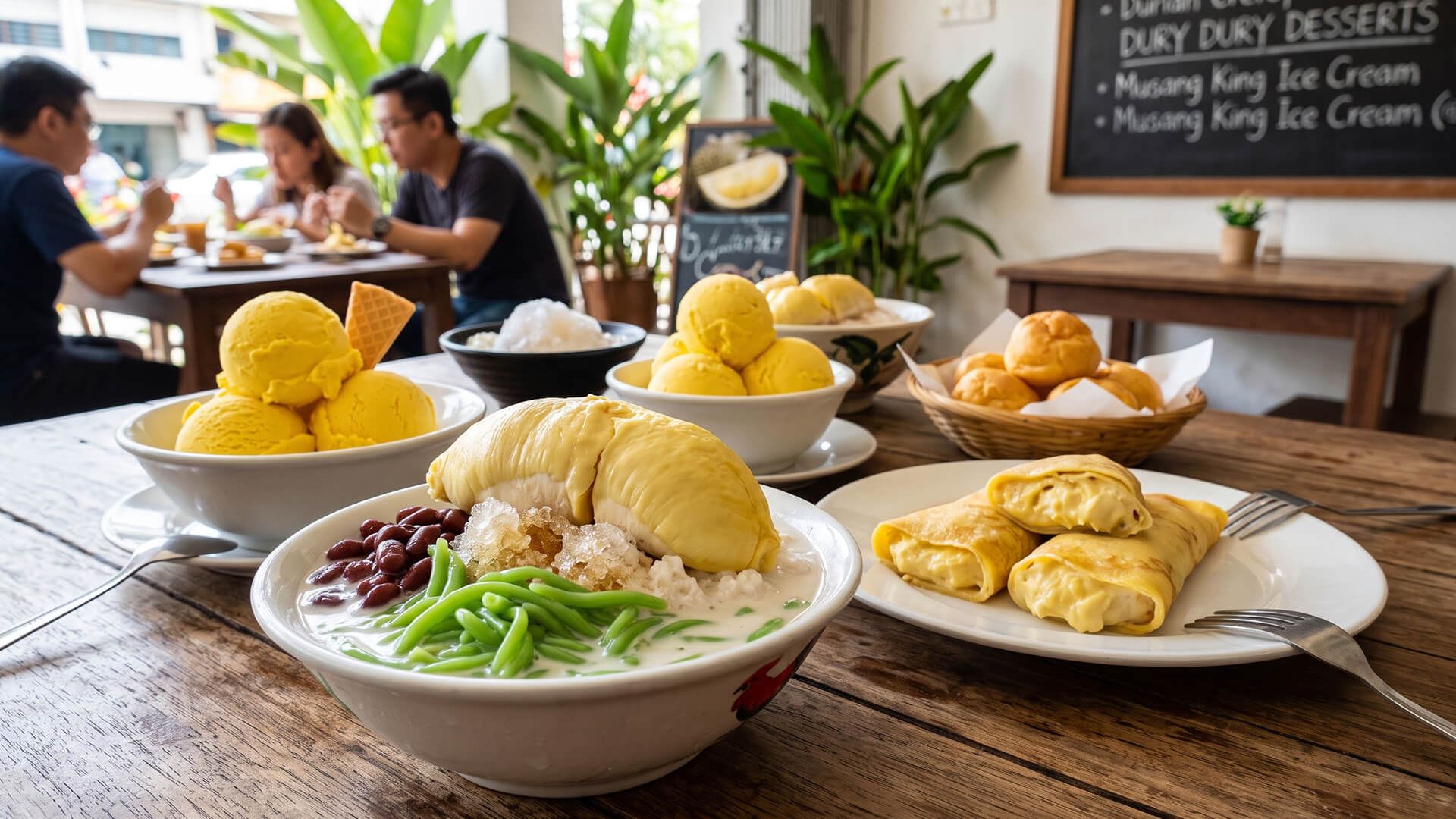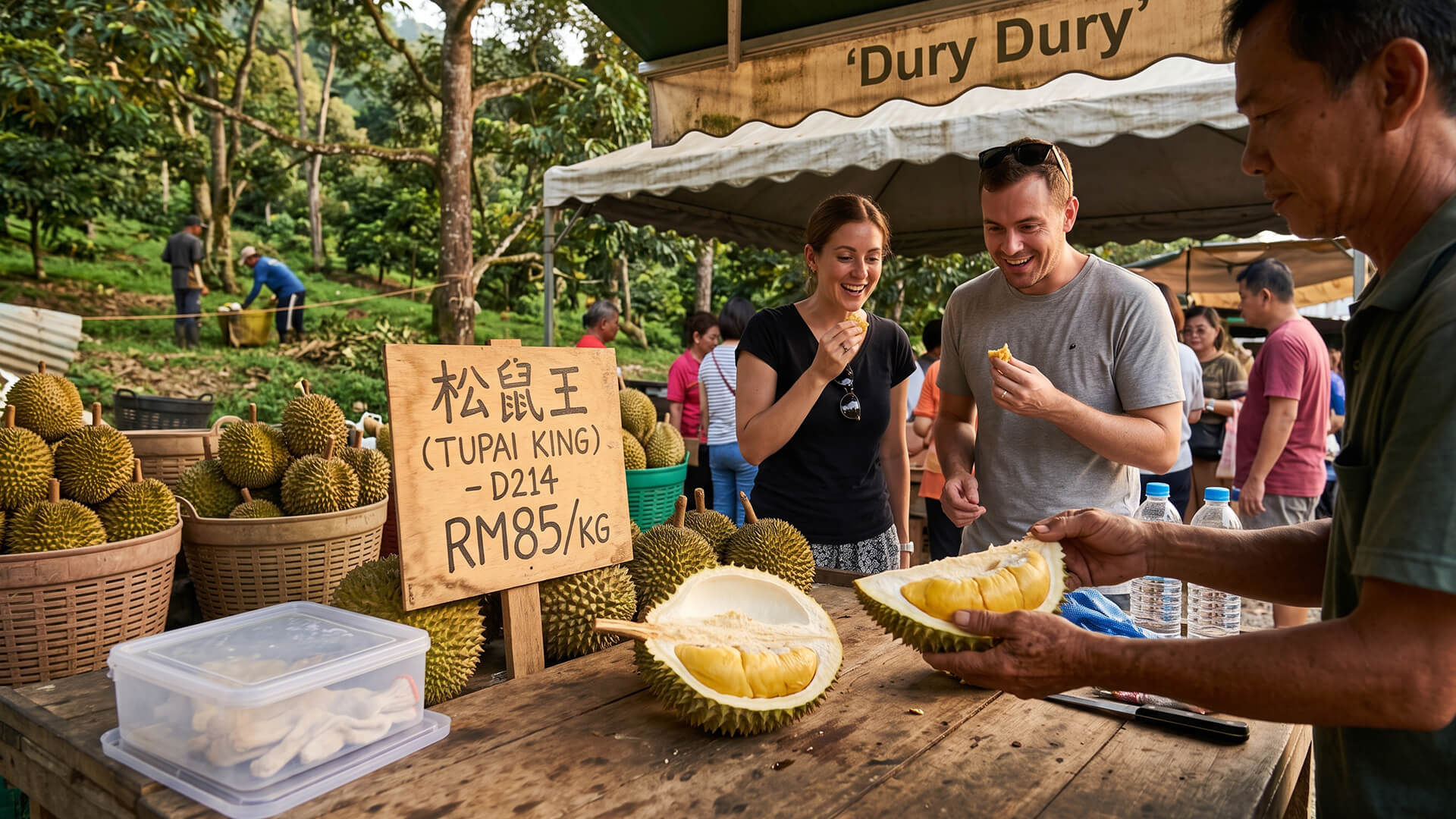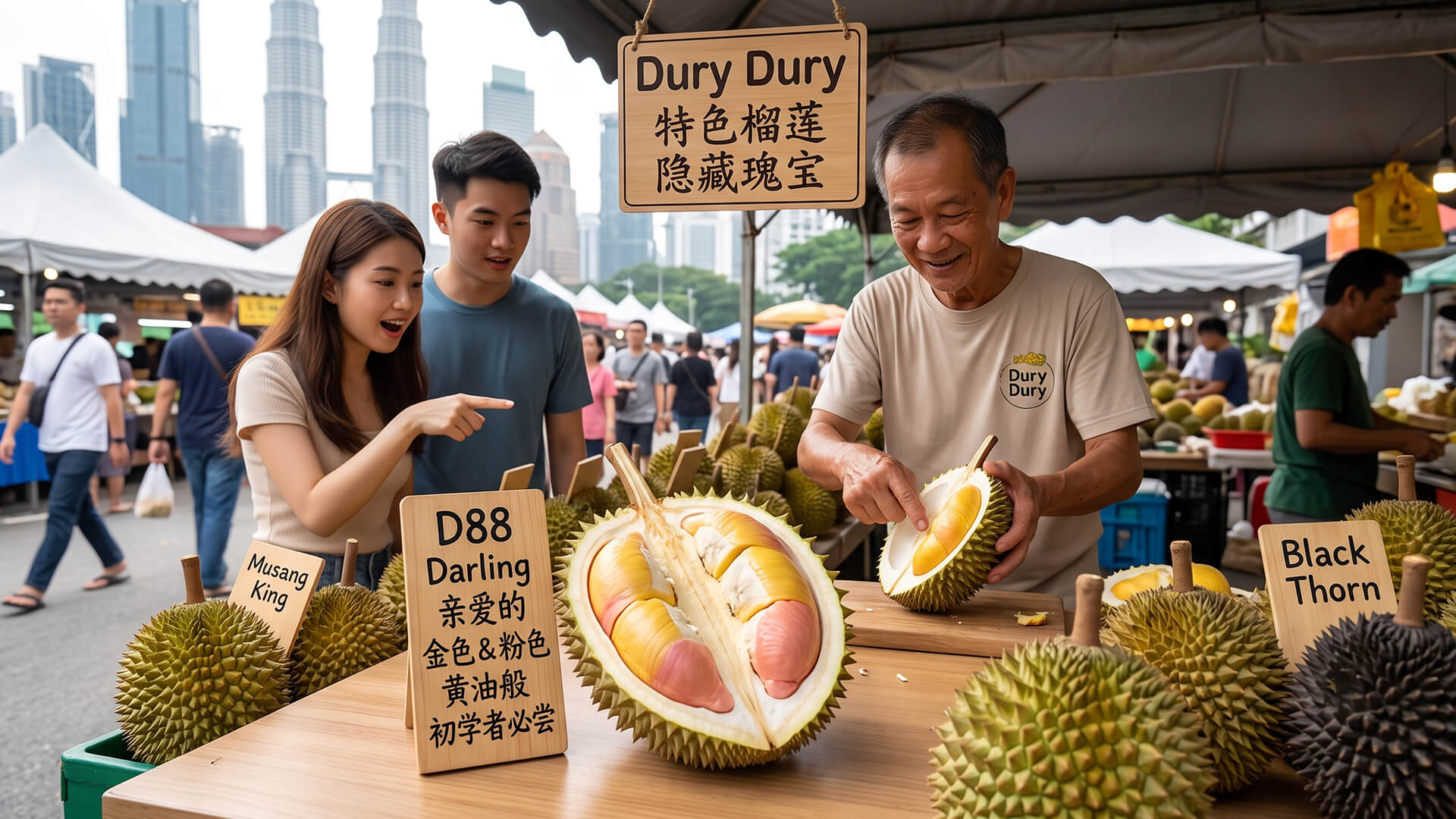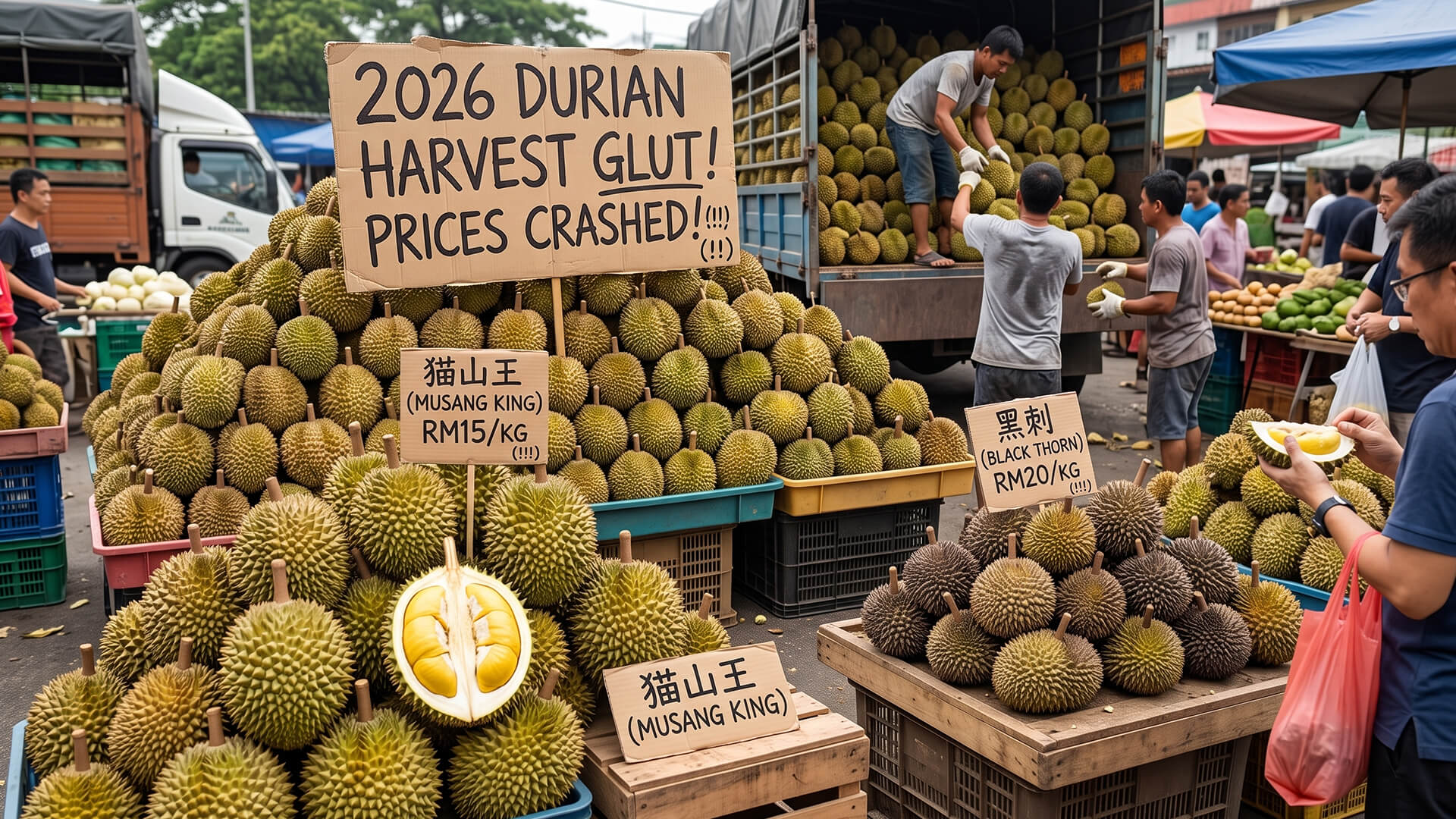
If you have been walking past the street stalls of Kuala Lumpur or scrolling through social media lately, you’ve likely seen the jaw-dropping images: pickup trucks stacked high with fruit, long queues forming at 8:00 AM, and signs flashing durian prices that look like typos.
We are officially living through the great 2026 Durian Glut.
For local enthusiasts and casual foodies alike, the mid-year season has turned into an absolute paradise. But what exactly triggered this dramatic price drop, how low are prices actually going for crown jewels like Musang King and Black Thorn, and how can you make the most of it? Let’s break down the mechanics behind this historic season.
The Visual Reality: Abundance Across the Market
The sheer volume of fruit hitting retail centers has completely transformed local stalls into high-volume hubs. Step into any major hotspot in the Klang Valley, and you’ll find vendors working around the clock to move stock while the quality is at its peak.
1. What Caused the 2026 Durian Price Crash?
This isn’t a minor seasonal dip; it is a textbook market saturation driven by three primary forces colliding all at once:
The "Perfect Storm" Weather & Simultaneous Ripening
Usually, Malaysia's durian-producing states harvest in a staggered wave. This year, ideal micro-climate weather patterns caused trees across Johor, Pahang, Penang, and Perak to drop fruit at the exact same time between June and August, resulting in a massive supply spike.
The Mature Orchard "Tsunami"
Many corporate and private plantations established over the last five to seven years have officially matured and reached peak bearing capacity, permanently scaling up the national baseline output.
Strict Export Culling
While high-grade exports to mainland China and Singapore remain steady, a significant portion of younger orchard harvests fell short of strict shape, weight, or aesthetic export standards. This massive volume of "imperfect but perfectly delicious" fruit has been redirected straight into the domestic market.
2. The 2026 Price Index: Cultivar Breakdown
To put this price drop into perspective, look at how the retail market has shifted in the Klang Valley compared to standard seasonal baselines. The bottom of the market has felt the heaviest impact, making heritage and premium clones incredibly accessible.
| Cultivar | Typical Retail Range (per kg) | Current 2026 Peak Price (per kg) | The Bottom Line |
| Durian Kampung | RM 15 – RM 25 | RM 1 – RM 4 | Cheaper than a bottle of water; sold in bulk packages. |
| D24 / IOI / D101 | RM 25 – RM 35 | RM 10 – RM 18 | Incredible value for baking, pastries, or casual family feasts. |
| Red Prawn (Udang Merah) | RM 35 – RM 45 | RM 12 – RM 22 | Ultra-creamy, sweet flesh at nearly half its usual cost. |
| Musang King (Mao Shan Wang) | RM 45 – RM 65 | RM 12 – RM 25 | Premium Grade A/B clones hitting record-low retail points. |
| Black Thorn (Ochee) | RM 75 – RM 95 | RM 15 – RM 29 | The ultimate luxury clone, now uniquely within budget. |
Market Note: While elite, top-tier Grade A export fruits bound for international markets still hold a premium baseline (around RM 30 to RM 40+ per kg at source), smaller grades and local orchard overflows have completely opened up the retail market for budget-conscious buyers.
3. What This Means for Buyers: The Game Plan
If you love durian, this is the ultimate window to indulge. To maximize the value of this historic season, keep these consumer strategies in mind:
Host Large-Scale Gatherings
Because vendors are heavily incentivized to move volume before the fruit over-ripens, bulk promotions are everywhere. It is the perfect opportunity to book a corporate team appreciation feast, throw a massive backyard family reunion, or treat clients to a high-end tasting without the high-end price tag.
Explore Downstream Processing & Freezing
With premium flesh so affordable, it's the ideal time to buy in bulk, separate the pulp, and vacuum-seal it for the freezer. This high-quality pulp can be used all year long for premium gelato, traditional pastries, durian cheesecake, or simply defrosted for a rich treat during the off-season when prices inevitably climb back up.
Support Local Farmers and Stalls
While consumers enjoy the bargain, the drop below typical farm-gate baselines puts pressure on independent orchard owners. Government agencies like FAMA have stepped in with collection centers and a guaranteed minimum price of RM 2.70/kg specifically to protect small-scale kampung farmers. Buying directly from local stalls ensures your consumer ringgit goes right back into supporting the hard-working agricultural community.
Summary: Enjoy the Windfall While It Lasts
A production glut of this magnitude is highly cyclical. The current oversupply is expected to plateau as we move toward the end of August, and prices will naturally correct and stabilize as the major harvest wrap up.
Whether you are a lifelong connoisseur of complex, bitter old-tree profiles or a casual fan of smooth, sweet custard notes, the message for mid-2026 is simple: pull up a chair at Dury Dury, grab a pair of gloves, and enjoy one of the most abundant Malaysian harvest seasons in recent memory!