D7
D7 Durian
A Vintage Malaysian Classic, Rich In Tradition And Creamy Flavor
Introduced as one of Malaysia’s earliest officially registered clones in 1934, D7 is a true pioneer of the nation’s rich durian heritage. Long before modern favorites took the spotlight, this classic variety was cherished by early orchardists for its thick, protective husk and remarkably accessible opening. Beneath its sturdy rind lies a pale golden flesh that delivers an unmistakable old-school lemak profile — a perfect harmony of rich, sticky creaminess and a gentle, natural sweetness that captures the pure, unadulterated flavor of Malaysian tradition.
The Origin of D7 Durian
The story of D7 traces back to the early 20th century in Selangor, Malaysia, long before commercial durian farming became the widespread industry it is today. Officially registered by the Department of Agriculture in 1934, D7 stands as one of the country’s earliest recognized heritage clones. Selected by pioneering local growers who prized its resilience and exceptional eating quality, this historic variety represents the foundational roots of Malaysian durian cultivation, offering a genuine taste of the nation’s agricultural history.
Characteristics of D7 Durian

Appearance
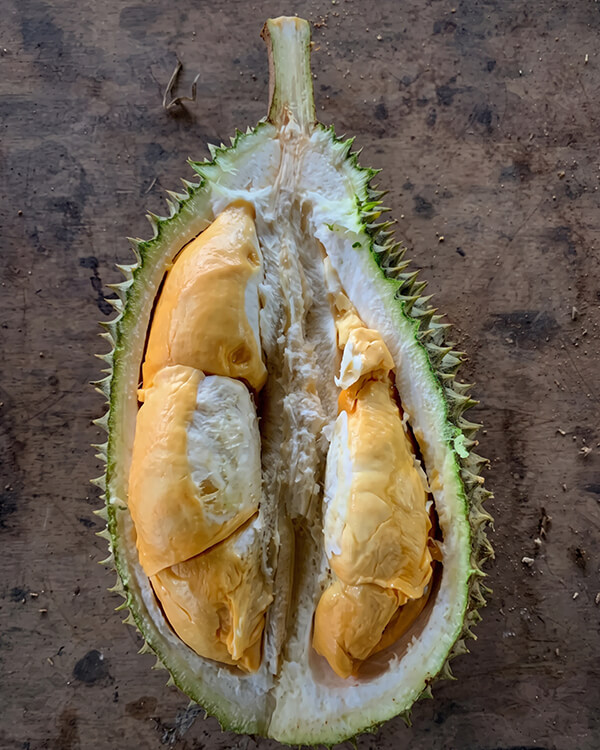
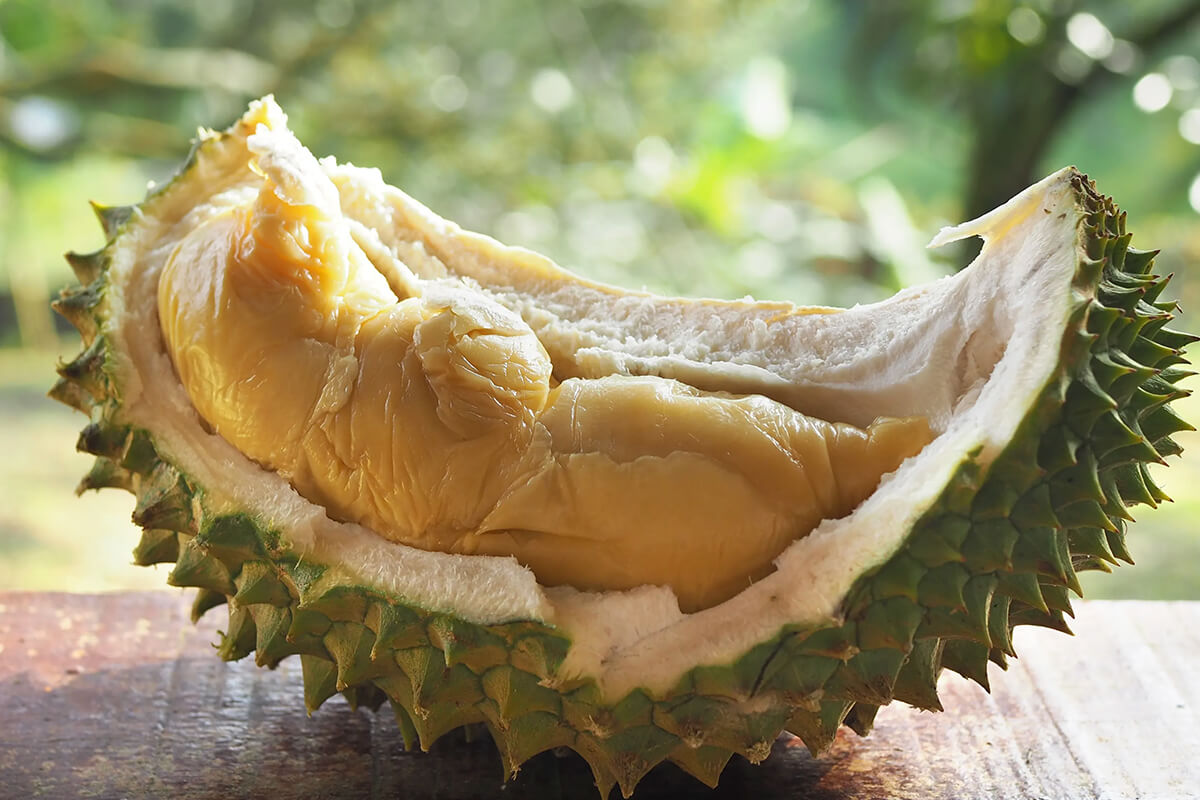
At first glance, D7 is distinguished by its classic, oblong shape and a noticeably sturdy, long stalk. Its exterior features a thick, robust husk shaded in yellowish, covered with prominent, relatively broad-based thorns. Once cracked open along its defined seams, the thick rind reveals generous, well-formed chambers filled with glossy, pale yellow to warm golden pods that boast a rich, smooth finish.

Aroma
Right from the moment it is opened, D7 announces itself with a powerful and unmistakable presence. It casts a strong, pungent aroma that fills the room, giving a robust combination of deep, caramelized sweetness and sharp, classic sulfur notes. This intense, lingering fragrance is the hallmark of a true heirloom durian, promising a deeply satisfying and traditional tasting experience.

Taste & Texture
On the palate, D7 offers an exceptionally satisfying textural contrast, providing a firm outer layer that gives way to a dense, sticky, and luxuriously creamy interior. Its flavor profile is defined by a deep, traditional lemak richness, striking a wonderful balance between intense, buttery sweetness and a subtle, pleasant bitterness at the end. The thick flesh clings satisfyingly to the seed, delivering an indulgent, long-lasting flavor that traditional durian enthusiasts crave.
Interesting Facts About D7 Durian
Health Benefits of D7
Beyond its rich taste, D7 packages an impressive range of natural health benefits into every pod. Like many traditional varieties, it is rich in dietary fiber, which promotes healthy digestion, as well as essential minerals like potassium that help support cardiovascular health and regulate blood pressure. Packed with antioxidants, vitamin C, and B-complex vitamins, D7 provides a clean energy boost and helps combat oxidative stress, proving that this heirloom treat is as nourishing as it is indulgent.
What's The Best Time for D7 Durian?
To experience D7 at its peak quality, the optimal time to indulge is during Malaysia's main durian harvest season, which runs from June through August. During these months, old-tree orchards in Selangor and Pahang drop naturally ripened fruit, resulting in the firmest, stickiest texture and the most potent aroma. For the best tasting experience, enjoy D7 within hours of harvest on dry, hot days, as excess rain during the late harvest can dilute its signature rich lemak flavor.
Cultivation & Harvesting
Growing Conditions
The D7 durian grows best in Malaysia’s tropical climate, thriving in warm, humid conditions with consistent rainfall and temperatures around 24–32°C. It prefers deep, well-drained, fertile soils that are slightly acidic to neutral, along with full sun exposure to support healthy flowering and fruit development. Trees should be spaced about 10–12 meters apart to accommodate its sturdy canopy growth, ensure good airflow, and reduce disease risk. Regular watering during dry periods, combined with proper fertilization, structural pruning, and pest management, helps D7 trees produce high-quality fruits with their signature sticky texture and rich, full-bodied flavor.
Cultivation Process
Since D7 is an established heritage variety, cultivation begins with grafting onto strong rootstocks to preserve the clone’s authentic flavor profile and fruit structure. During the early years, young trees require consistent irrigation and shade protection until fully established. As the trees mature, careful orchard management, including balanced NPK fertilization tailored for flowering cycles, canopy pruning for optimal sunlight penetration, and proactive monitoring against stem borers and phytophthora ensures consistent yields. Harvesting relies on natural fruit drop, where mature fruits naturally fall from the tree at peak maturity to guarantee maximum creaminess and full aromatic intensity.
Harvesting Methods
D101 durians are harvested when they naturally drop from the tree, signaling they are ripe and ready to eat. The fruits are collected early in the morning to preserve freshness, ensuring that they reach consumers at their peak flavor and texture.
Culinary Uses

Traditional Dishes
Thanks to its deep, traditional lemak profile and thick, sticky texture, D7 is a natural fit for classic Malaysian durian delicacies. Its high solids content makes it exceptional for simmering into Pengat Durian or Serawa, where its golden pulp breaks down into a rich, velvety coconut cream sauce served alongside sticky rice or net pancakes (Roti Jala). Additionally, its robust flavor stands up remarkably well to natural fermentation, making D7 pulp a popular traditional choice for crafting flavorful, fragrant batches of homemade Tempoyak.

Modern Culinary Innovations
D7's dense, sticky flesh and strong aroma make it an extraordinary ingredient for contemporary culinary creations. Artisan pastry chefs favor its bold profile in modern desserts like durian burnt cheesecakes, French macarons, and delicate mille crepes, where its intense flavor punches through heavy cream without artificial enhancement. Beyond baked goods, gourmet gelato makers and craft chocolatiers utilize D7 pulp to create small-batch durian ice creams and dark chocolate pralines, turning this 1930s heirloom clone into a high-end, modern gastronomic experience.
Conclusion
More than just a fruit, D7 stands as a living piece of Malaysia’s rich agricultural history. From its early registration in 1934 to its place on today’s gourmet plates, this heirloom clone continues to captivate durian lovers with its thick golden flesh, powerful aroma, and deeply satisfying lemak flavor. Whether enjoyed fresh off the tree during peak season or showcased in modern culinary creations, D7 offers an authentic, timeless taste that every true durian enthusiast should experience.
FAQs
What makes D7 durian stand out from its counterparts?
D7 stands out as one of Malaysia’s earliest officially registered heirloom clones, dating back to 1934. Unlike many modern commercial hybrids engineered primarily for sweet, pale pulp, D7 is prized for its old-school character: a thick, robust husk that is remarkably easy to crack open, a powerful and unapologetic traditional aroma, and a dense, sticky texture that delivers a deep, full-bodied lemak richness with subtle bittersweet undertones.
When is the best time to find D7 durians?
The optimal time to find fresh D7 durians is during the peak mid-year harvest season, which runs from June through August. During these summer months, mature old-tree orchards in regions like Selangor and Pahang drop naturally ripened fruit, ensuring you enjoy the fruit at its absolute peak in flavor, texture, and aromatic intensity.
What are the health benefits of consuming D7 durians?
Beyond its indulgent taste, D7 offers a variety of valuable nutrients. It is packed with dietary fiber that supports digestive health, as well as essential minerals like potassium to help maintain healthy blood pressure. Additionally, D7 contains B-complex vitamins for sustained energy and natural antioxidants, including vitamin C, which help combat oxidative stress and bolster overall immune defense.
How do I use D7 durians in culinary dishes?
D7 is incredibly versatile in the kitchen. In traditional cuisine, its thick, high-solid pulp makes it an excellent base for rich coconut-based desserts like Pengat Durian and Serawa, or for fermenting into flavorful Tempoyak. In modern culinary applications, its robust flavor cuts through heavy creams beautifully, making it a favorite for artisanal gelatos, durian burnt cheesecakes, French pastries, and specialty beverages.
Where does the D7 durian originate from?
D7 originated from the orchards of Selangor, Malaysia. It holds a historic place in Malaysian pomological history, having been officially documented and cataloged by the Department of Agriculture in 1934 during early efforts to identify and preserve the nation’s premier native durian varieties.
Other Durian Type

D200 Black Thorn

D197 Musang King

D175 Red Prawn

D24 XO

D28 Butter King

D198 Kim Hong

D163 Horloh

D13 Golden Bun

Tai Yuan

D160 Tekka

D101 Mas Muar

D158 Cheong Peng

Lao Tai Po

D2 Dato Nina

D10 Durian Hijau

D165 Green Skin

D18 Sunset

D3 Second Son

D164 Red Flesh

D1 Durian

D4 (Repok B2)

D5 Ibrahim

D6 Samsu

D8 Durian

D11 Durian

D29 Durian