Skip to content Skip to footer

D18 Sunset

D18 Sunset Durian

The Malaysian Classic, Draped In Twilight Hues

The D18 durian is one of Malaysia’s classic cultivars for durian lovers. Known by many names, amongst which are Xi Yang Hong and Big Bun, it is often revered by connoisseurs for its unique flavor profile that beautifully balances sweetness with a memorable bitter finish. This creamy durian type gets its name due to the rich, orange-yellow hue of its flesh, which is very reminiscent of a sunset. Though not as popular as its premium counterparts like Musang King, D18 is a durian which will bring a touch of serenity to every bite.

Origins of D18 Durian

While it’s one of the more popular durian variants in Malaysia, its origin is also widely contested. While it’s known that the D18 durian is one of the earlier registrations in the durian registry, the debate of whether the durian originated from the state of Pahang or Johor still rages on to this day. However, it doesn’t change that this durian is still one of the most beloved durian types to this day, despite having been around for at least a few decades.

Characteristics of D17 Lao Tai Po

Appearance

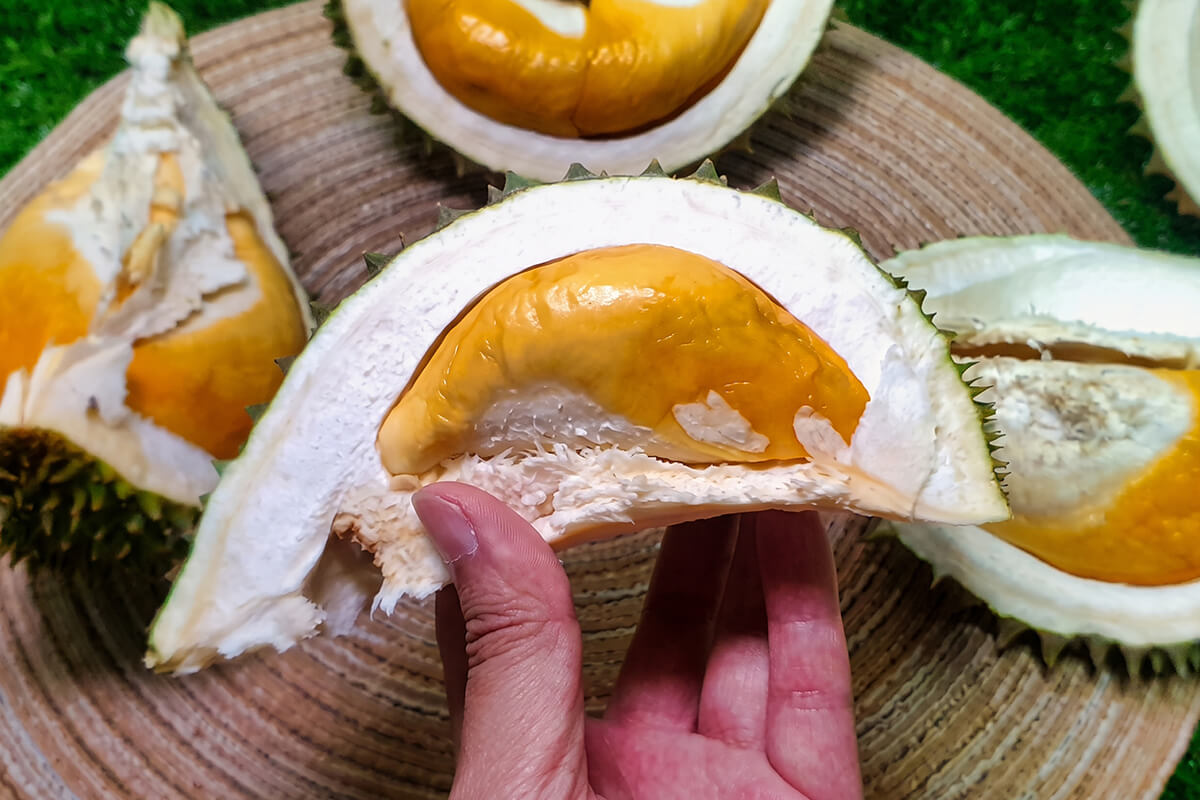
The D18 durian, also known as D18 Sunset, has a distinctive look that sets it apart from many modern varieties. The size of the durian typically ranges between being medium sized to large, often weighing below 2 kilograms. Its shape is mostly rounded, though at times it can be slightly elongated, giving it a shape similar to that of a jackfruit. The thorns on its husk are spaced out, short, and pointy at the tip, and the color of the husk altogether is described as an ash-like green. Once opened, the flesh within the husk has an orange-yellow color, similar to the shade of a setting sun.

Aroma

The D18 Sunset durian has a strong smell, though it is nowhere near as pungent as variants such as Musang King. The aroma of the durian has led to the D18 being compared to the Black Thorn durian, sometimes being referred to as the 'little sibling of Black Thorn'. This delicate fragrance complements its smooth, buttery flesh and contributes to the durian's overall impression of warmth and elegance, much like the calm of a sunset it's named after.

Taste & Texture

The taste of D18 durian (also known as D18 Sunset) is best described as smooth, balanced, and gently bittersweet. Its flavor doesn't strike as sharply as Musang King or Black Thorn. It instead offers a creamy sweetness with light bitter undertones, creating a mellow and harmonious profile. The texture is also wet, soft, and very smooth, complementing the balanced flavour tones, making it feel as if its melting in your mouth.

Interesting Facts About D18 Durian

Health Benefits of D18

The D18 Sunset durian offers not only a rich, creamy taste but also several health benefits. Packed with natural carbohydrates, healthy fats, and dietary fibre, it provides lasting energy and supports digestion. Its vibrant orange-yellow flesh is a sign of abundant antioxidants and vitamin C, which help fight free radicals and promote healthy skin. The fruit also contains potassium and magnesium for heart and muscle function, along with tryptophan, a natural compound that enhances mood and supports restful sleep. Enjoyed in moderation, D18 Sunset is both a delicious indulgence and a nourishing tropical fruit.

What's The Best Time For D18 Durian?

The D18 durian (also known as 'Sunset') is generally considered a mid-season to late-season variety. The best time to find it in peak quality is typically around June, which is often the start of the main durian season in Malaysia. Since its supply is less abundant than more popular varieties, checking with local fruit vendors for its current availability is the surest way to get it at its best.

Cultivation & Harvesting

Growing Conditions

The D18 durian is a mid-season variety usually available during the main durian harvest, which runs from around June to September in Southeast Asia, particularly Malaysia. Its peak availability is often considered to be around June. The fruit is typically cultivated under standard tropical conditions, requiring a hot and humid environment with temperatures between 24°C and 32°C. It needs deep, well-drained loamy soil with a slightly acidic pH to prevent waterlogging, which is critical since its roots are shallow. A short dry period is essential before the main season to encourage flowering, followed by consistent, high rainfall or irrigation during the fruit development stage.

Cultivation Process

The cultivation of D18 durian, like other Malaysian clones, involves propagating the tree by grafting onto a rootstock to ensure true-to-type fruit. Trees are planted in deep, well-drained, slightly acidic loamy soil with ample spacing, requiring a hot and humid climate with consistent high rainfall. Key management steps include regular application of balanced NPK fertilizers (with higher P and K during fruiting), pruning for canopy health, and controlling water flow to stimulate flowering. The fruit matures and is typically harvested by natural drop 3-4 months after flowering.

Harvesting Methods

D101 durians are harvested when they naturally drop from the tree, signaling they are ripe and ready to eat. The fruits are collected early in the morning to preserve freshness, ensuring that they reach consumers at their peak flavor and texture.

Culinary Uses

Traditional Dishes

Since D18 durian is a high-quality clone with sweet, creamy, orange-red flesh, it is excellent for traditional Malaysian applications, though recipes typically use durian generically rather than specifying the D18 variety. The most traditional uses include fermenting the pulp into Tempoyak, a salty paste used in savory dishes like curries or sambal; cooking it into a thick, sweet coconut milk sauce called Serawa Durian (or Pengat), which is classically served with Glutinous Rice (Pulut Durian); and slow-cooking the flesh with coconut milk and palm sugar to make the dense, sticky confection known as Dodol Durian.

Modern Culinary Innovations

Modern chefs and dessert makers have embraced the D18 Sunset durian for its creamy texture and mild aroma, using it in mousse cakes, mille crêpes, cheesecakes, and gelato. Its balanced flavor also shines in macarons, cream puffs, and bubble teas, offering a refined twist on classic treats. Some innovative uses include durian-infused truffles and custard tarts, showcasing how D18 bridges traditional Malaysian flavors with modern culinary creativity.
Dury Dury Half Durian

Conclusion

The D18 durian, known affectionately as Sunset or Big Bun, holds a valued but understated place in the durian pantheon. It distinguishes itself with its rich, orangey-red flesh and a heavy, creamy texture, delivering a taste profile that is primarily sweet yet often features a satisfyingly bitter complexity from older trees. Although its lower market supply means it’s often overshadowed by the premium cultivars, the D18 remains a beloved choice. It offers enthusiasts a classic, robust durian experience at a more accessible price point, affirming its enduring appeal for those who appreciate quality and depth of flavor outside the intense spotlight of varieties like Musang King.

Dury Dury Half Durian

FAQs

The D18 gets its name from the rich, orange-yellow hue of its flesh, which is highly reminiscent of a sunset. It offers a unique flavor profile that beautifully balances a creamy sweetness with a memorable, light bitter finish. The texture is wet, soft, and very smooth, making it feel as if it is melting in your mouth. Its aroma is strong but not as pungent as Musang King; this delicate fragrance has led to it being affectionately called the “little sibling of Black Thorn”. In appearance, it is typically medium to large (often weighing under 2 kilograms), featuring an ash-green husk with spaced-out, short, and pointy thorns.

The D18 Sunset is generally considered a mid-season to late-season durian variety. The best time to find it at peak quality is usually around June, which marks the beginning of Malaysia’s main durian season. Its main cultivation harvest across Southeast Asia typically runs from June to September.

It is packed with natural carbohydrates, healthy fats, and dietary fibre, which provide lasting energy and support digestion. The vibrant orange-yellow flesh indicates an abundance of antioxidants and vitamin C, helping to fight free radicals and promote healthy skin. It contains potassium and magnesium to support heart and muscle function. It is also a source of tryptophan, a natural compound known to enhance mood and support restful sleep.

In traditional Malaysian cuisine, the flesh can be fermented into Tempoyak (a savory paste), cooked into a sweet coconut milk sauce called Serawa Durian to serve with glutinous rice, or slow-cooked into a sticky confection known as Dodol Durian. Modern dessert makers utilize its creamy texture and mild aroma for mousse cakes, mille crêpes, cheesecakes, and gelato. Its balanced flavor profile is also highly effective in modern treats like macarons, cream puffs, bubble teas, durian-infused truffles, and custard tarts.

The D18 is one of the earlier registrations in the durian registry, meaning it has been an established variety for at least a few decades. Its exact origin remains widely contested, with an ongoing debate over whether it first originated in the state of Pahang or Johor.

Other Durian Type

Dury Dury one over four Durian