Every few decades, a new contender emerges in the Malaysian durian landscape that threatens to disrupt the established hierarchy. We saw it when D24 gave way to Musang King (D197), and again when Black Thorn (D200) claimed its spot at the pinnacle of luxury pricing.
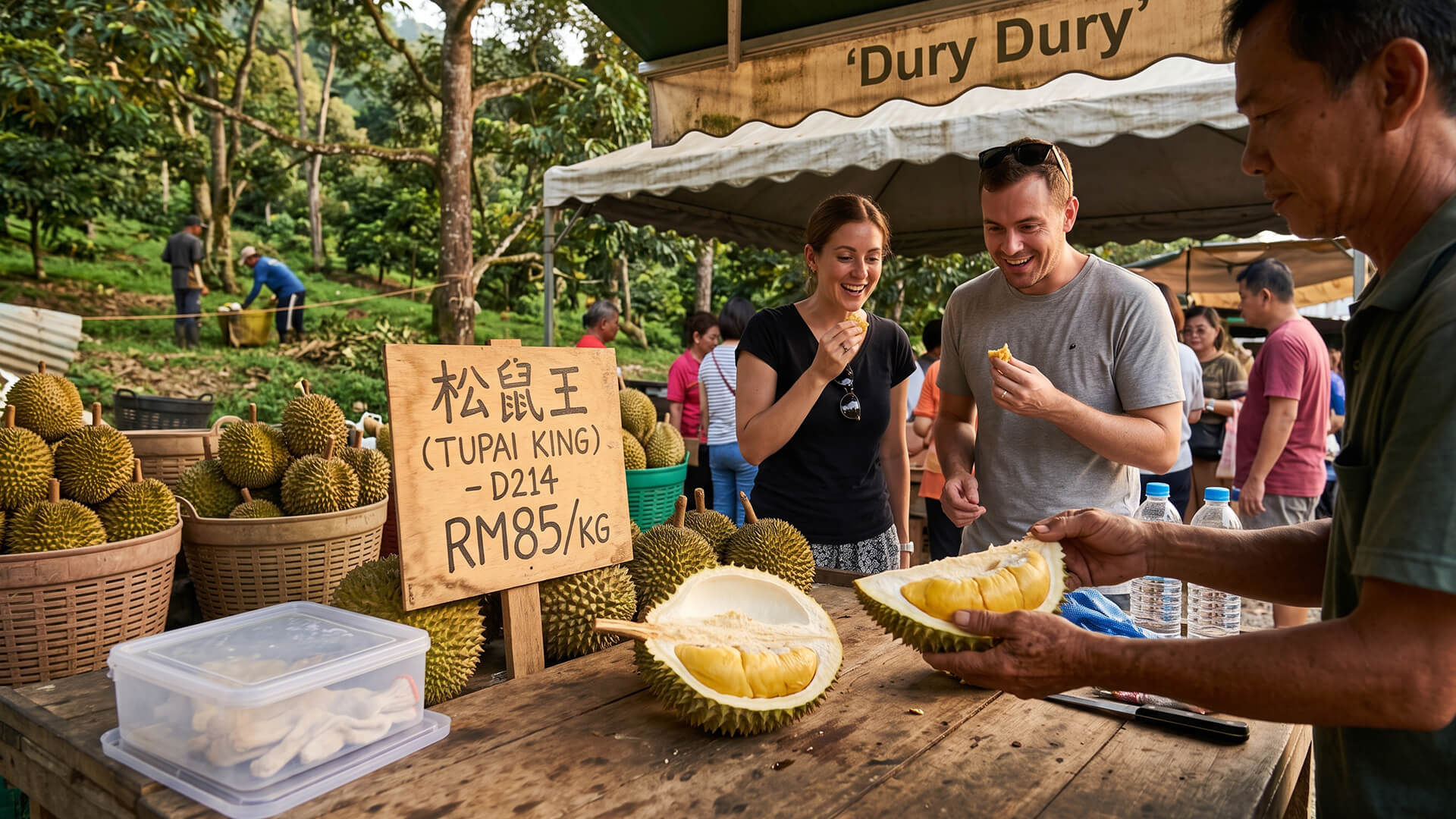
Now, serious connoisseurs and orchard collectors are turning their attention toward a rare, high-altitude champion hailing from Perak: Tupai King (officially registered as D214).
Known in Chinese as Tupai Wang (Squirrel King), this ultra-premium cultivar has rapidly evolved from a mythic orchard secret into one of the most expensive and sought-after durians in Southeast Asia.
If you are eager to understand what makes this newcomer worth every ringgit, here is your complete guide to the origin, flavor mechanics, and exploding popularity of Tupai King.
1. The Origin Story: Born in the Hills of Perak
The story of Tupai King begins in the lush, mineral-rich mountain terrain of Bukit Gantang near Taiping, Perak.
The Name Legend
Local lore tells us that the original parent tree attracted an unusual amount of wild squirrels (tupai in Malay). Orchards in the area noticed that despite having dozens of fruiting durian trees nearby, the squirrels would systematically bypass other varieties just to feast on this single tree. Farmers knew that if nature’s pickiest eaters were obsessed with it, they had something extraordinary on their hands.
Official Registration
After years of quiet cultivation and verification by master growers, the variety was formally recognized and registered by the Malaysian Department of Agriculture as D214, cementing its status as an elite lineage alongside D197 and D200.
2. Flavor Profile: Heavy Gas and Alcoholic Complexity
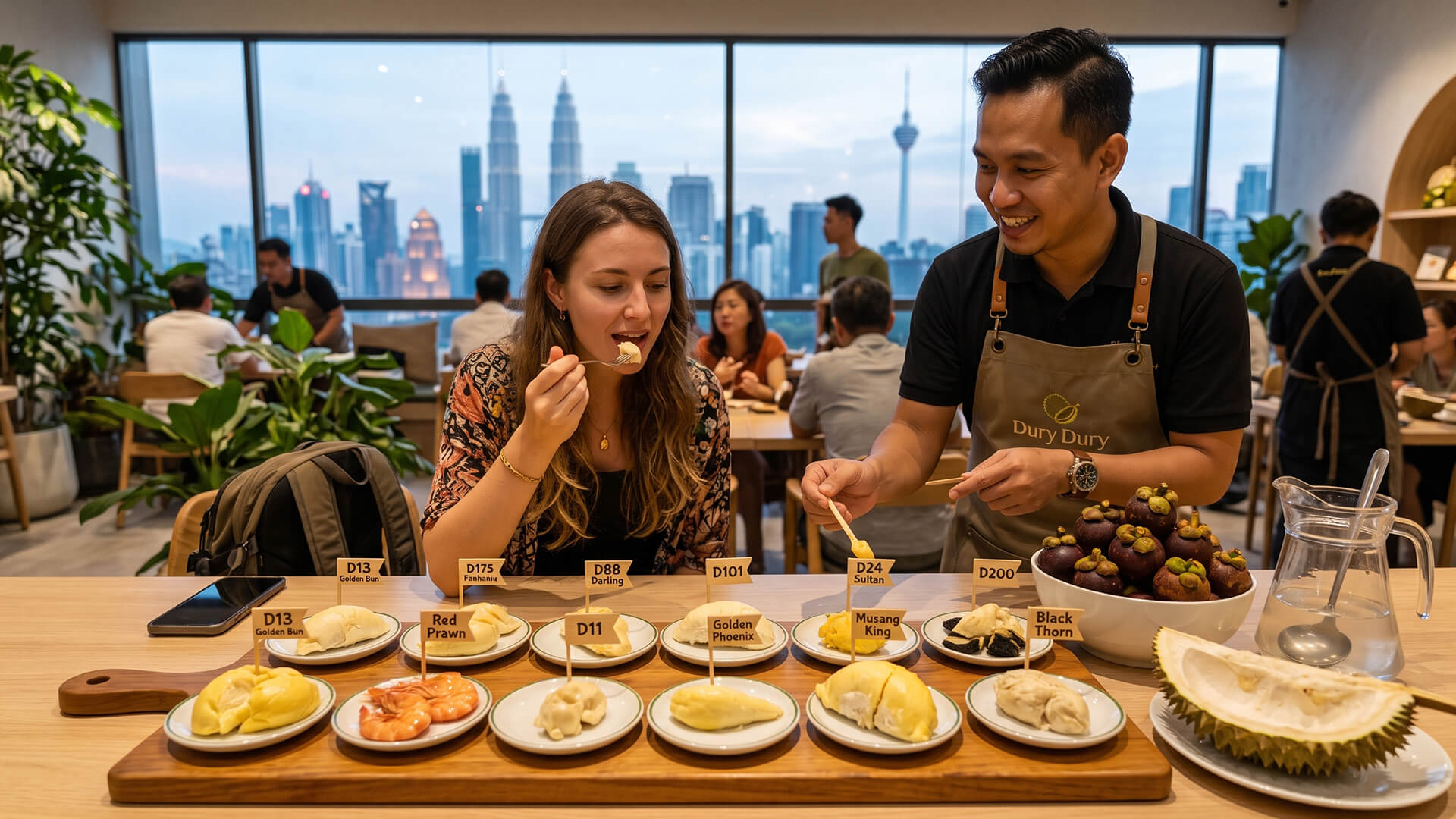
If you ask a seasoned taster at Dury Dury to describe Tupai King, they won’t describe it as merely “sweet.” D214 is an absolute powerhouse engineered for lovers of intense, old-tree complexity.
The Color & Appearance
Opening a Tupai King reveals long, plump pods boasting a rich amber-gold to deep mustard-orange skin. The surface often shows delicate, tight wrinkles-a sign of thick flesh and low water content.
The First Impact
The initial bite is densely sweet with strong caramel undertones, immediately followed by a massive surge of sharp, tongue-numbing bitterness.
The Aftertaste
What truly separates D214 from Musang King is its lingering “gas” profile. It leaves a distinct, warm, alcoholic sensation at the back of the throat that persists long after the flesh has melted away.
3. Texture: Dense Fudge with Small Cores
In terms of mouthfeel, Tupai King leans into maximum luxury.
The arils feature a firm outer membrane that gives way to an extraordinarily creamy, pasty, and dry interior. Unlike watery or overly fibrous street durians, D214 holds its structural shape beautifully while delivering a fudge-like density.
Additionally, top-tier harvests yield a high percentage of shriveled, flat seeds, ensuring that almost every bite delivers pure, uninterrupted meat.
4. Why Is Tupai King Growing So Popular?
Despite commanding prices that often surpass both Musang King and Black Thorn per kilogram, demand for D214 continues to outstrip supply during every harvest window.
| Driving Factor | Why It Matters to Connoisseurs |
| Scarcity & Exclusivity | Most mature D214 trees remain concentrated in Perak, meaning limited seasonal yield. |
| Tasting Prestige | It has become the ultimate “bucket list” fruit for hardcore enthusiasts hunting new flavor peaks. |
| Consistency | The cultivar is famously resistant to watery flesh, yielding dense, dry pulps reliably. |
Taste the Rare Royalty at Dury Dury
Tupai King represents the next chapter in Malaysia’s rich durian heritage-a fruit that honors traditional old-tree bitterness while offering a smooth, modern custard luxury.
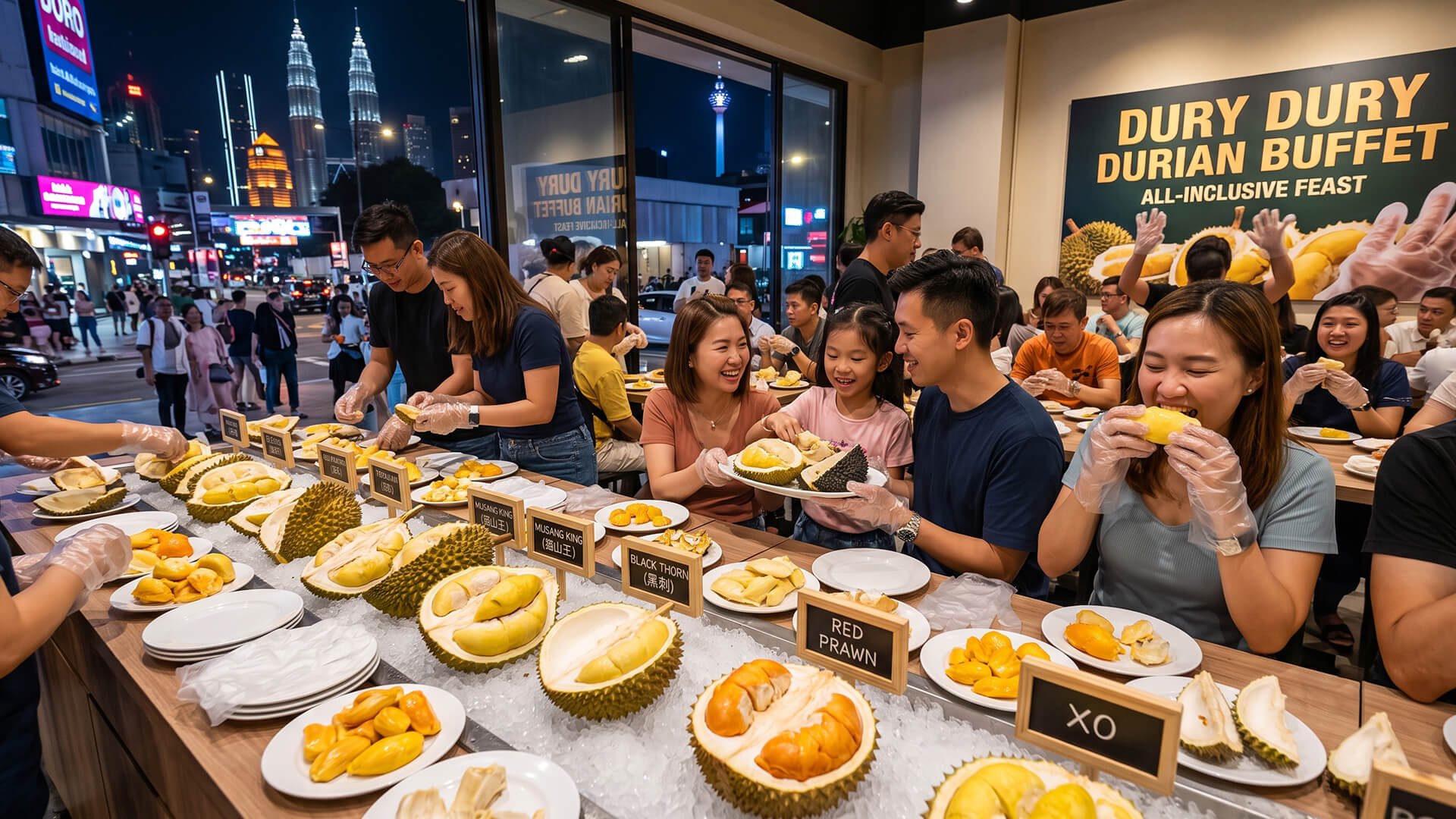
Because harvests from Taiping drop in limited batches during peak months, claiming a whole D214 requires timing and trusted sourcing. Keep an eye on our daily arrival boards at Dury Dury in Bukit Bintang, and reserve your seat to experience the Squirrel King in all its glory!