Durian is a well-renowned fruit native to Southeast Asia that is infamous for its sweet-bitter flesh but infamous smell. Easily recognized by its size, thorny husk, and creamy flesh, it is loved by millions all around the world, while also being a fruit avoided by just as many people. This divide stems from a person’s personal opinion on whether the strong smell of durian is worth bearing for the unmatched taste that the durian flesh has. This unique contrast has led to the question: if durian is stinky, why is it tasty?
Where Does The Strong Aroma Come From?
Durian's Sulfur Compounds
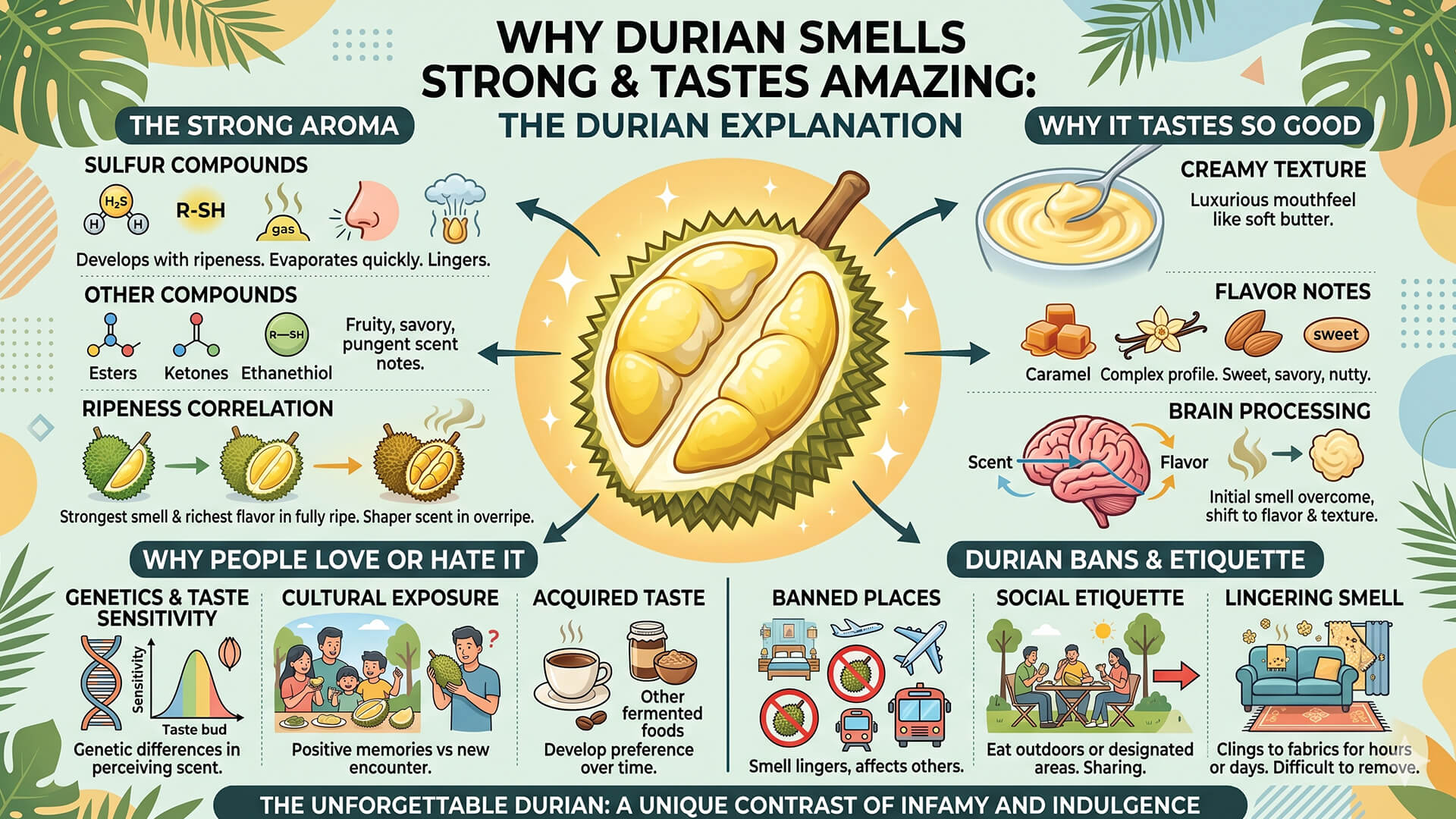
Durian is a fruit that contains a large variety of sulfur based compounds that develops as the fruit ripens. As the durian is opened, the sulfur compounds rapidly evaporate, allowing the smell to spread easily and linger in the air. The sulfur combines with some of the other compounds in the air to create savoury, sweet, or slightly fermented scent notes, which help to form durian’s distinctive and complex aroma.
Other Aroma Compounds
Aside from sulfur, durian also contains a wide range of other aroma compounds, which include ethanethiol, esters, and ketones. Mixed in together with the sulfur compounds, this creates a balance of fruity, savory, and pungent scent notes that contribute to the fruit’s signature smell.
Correlation Between Ripeness and Smell Intensity
As durian fruits continue to ripen, chemical reactions that take place within the fruit will increase the production of aroma compounds. Fully ripe durians typically produce the strongest smell and richest flavour. Overripe durians may produce an even sharper scent and a softer texture.
Why Durians Taste So Good Despite the Smell
The Creamy Texture of Durian
Durian flesh has a thick, creamy texture often compared to custard or soft butter. This luxurious mouthfeel contrasts sharply with expectations created by the fruit’s smell, making the tasting experience surprising and memorable.
Flavor Notes: Sweet, Savory, and Custard-Like
Durian offers a complex flavour profile combining sweetness with subtle savoury and nutty notes. Some varieties feature hints of caramel, vanilla, or almond, contributing to the fruit’s reputation as a rich and indulgent treat.
How Smell and Taste Work Differently in the Brain
Although smell and taste are closely connected, they are processed differently by the brain. Once people overcome the initial smell, the brain often shifts focus to flavour and texture. This transition allows many first-time eaters to appreciate durian more than expected.
Why Do Some People Love Durian While Others Hate It?
Genetics and Taste Sensitivity
Genetic differences can affect how people perceive certain aroma compounds. Some individuals are more sensitive to sulfur-related smells, which can make durian seem more unpleasant to them compared to others.
Cultural Exposure and First Impressions
People who grow up around durian often associate its smell with positive memories and traditions. In contrast, those encountering it for the first time without cultural context may focus primarily on the smell, shaping a negative first impression.
The Psychology of Acquired Taste
Like coffee or fermented foods, durian can be an acquired taste. Repeated exposure often allows people to appreciate its complexity and develop a preference over time.
Where and Why Are Durian Banned?
Durian Smell in Hotels, Airports, and Public Transport
Many hotels, airlines, and public transportation systems in Southeast Asia prohibit durian because the smell can linger in enclosed spaces. The scent can affect other passengers or guests long after the fruit is removed.
Social Etiquette Around Eating Durian
In many communities, durian is eaten outdoors or in designated areas. Sharing durian socially is common, but bringing it into confined or shared spaces is often considered impolite.
How Long the Smell Actually Lingers
Durian smell can persist for hours or even days depending on ventilation and surface absorption. The sulfur compounds can cling to fabrics, carpets, and upholstery, making the scent difficult to remove quickly.
Final Thoughts: Why Durian Is Both Infamous and Incredible
Durian stands as one of the most unique fruits in the world because of its dramatic contrast between smell and taste. Its powerful aroma challenges expectations, while its rich flavour and creamy texture reward adventurous eaters. Deeply rooted in Southeast Asian culture and increasingly recognised worldwide, durian continues to spark curiosity, debate, and admiration. Whether loved or avoided, durian remains an unforgettable fruit that perfectly demonstrates how complex and fascinating food can be.